




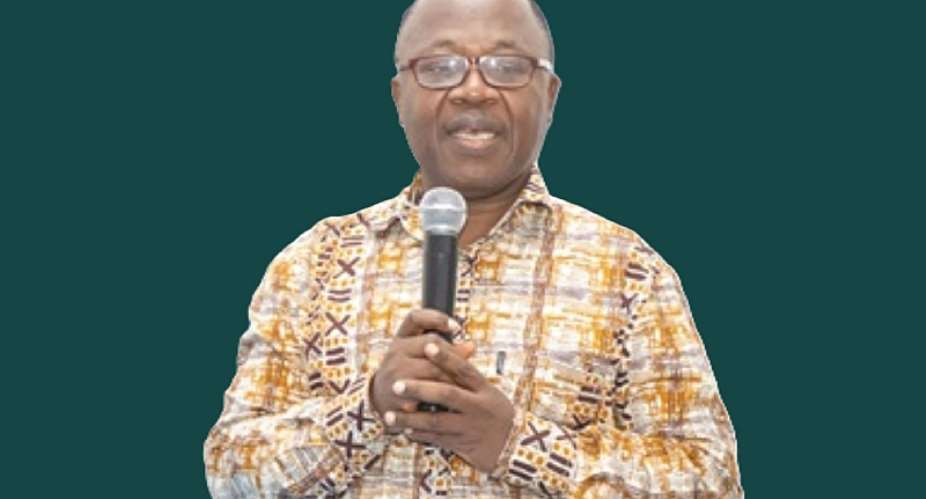
A former Deputy Director of the Ministry of Local Government, Chieftaincy and Religious Affairs, Mr Kweku Quansah, has described the cost of using public toilets as a daily financial burden on low-income households, arguing that the practice imposes an avoidable tax on the poor.
He said families in Accra, Kumasi and other major urban centres were compelled to spend money regularly to access basic sanitation, making toilet use an additional expense for households already struggling with limited incomes.
Mr Quansah, a Fellow of the West African Postgraduate College of Environmental Health (WAPCEH), described the expenditure as a “daily tax for dignity”, explaining that some households pay to avoid the indignity associated with open defecation.
“Consider a household of six in which each member pays a minimum of GHC2.00 for one visit a day to a public toilet. That household spends GHC12.00 daily, GHC84.00 weekly, approximately GHC360.00 in a 30-day month, and GHC4,320.00 annually,” he said.
He made the observation in an interview with the Media Coalition Against Open Defecation (M-CODe) in Accra as part of activities marking the 2026 World Toilet Day.
According to him, the estimated expenditure excludes inflation, additional daily visits and possible increases in public toilet charges, yet demonstrates the financial pressure sanitation costs place on vulnerable families.
He questioned why low-income households should continue paying repeatedly for an essential service when they could instead invest in household toilet facilities that would give them greater control over access.
Mr Quansah said the economic benefits of household sanitation extended beyond the money saved, encompassing convenience, privacy, time and the reliability of access to toilet facilities.
He argued that spending on sanitation should be viewed as an investment in household infrastructure rather than merely a recurring expense.
“Where a suitable system can be safely installed and maintained, the household gains an asset that offers greater control over access and reduces dependence on repeated user charges,” he explained.
However, he acknowledged that the initial cost of constructing household toilets remained a major obstacle for many families, despite their appreciation of the benefits.
He said rising inflation, transportation costs, expensive building materials and limited access to sanitation-specific credit had widened the affordability gap, preventing many households from acquiring their own facilities.
Mr Quansah cited the recently concluded Greater Accra and Greater Kumasi Metropolitan Sanitation and Water Projects, supported by the World Bank, as evidence that public financing could help low-income urban households acquire toilet facilities.
He said the projects had supported the construction of thousands of household toilets, demonstrating the potential of targeted public investment to improve access to sanitation.
To accelerate the transition, he proposed flexible financing arrangements as an additional pillar of Ghana's sanitation strategy.
He suggested the introduction of appropriately structured sanitation loans, support through Village Savings and Loans Associations and the development of sanitation financing products by rural banks.
He further called for targeted subsidies for households that genuinely lacked the financial capacity to construct toilet facilities, while encouraging those with greater means to contribute towards their own sanitation needs.
“The purpose of public support should be to close an affordability gap, not to replace household responsibility where that responsibility can reasonably be exercised,” he noted.
Using a Fante proverb, Mr Quansah said, “Fie pa yɛ ahotɔ fie,” meaning “A good home is a home of comfort and cleanliness”.
He argued that a home could not provide complete comfort when its occupants lacked access to a safe and dependable place to relieve themselves.
M-CODe calls for intensified campaign against open defecation
In a related development, the National Convenor of the Media Coalition Against Open Defecation (M-CODe), Mr Francis Ameyibor, has warned that Ghana has less than four years to achieve the United Nations Sustainable Development Goal 6 Target 2 on ending open defecation.
He appealed to the government and other stakeholders to intensify interventions at the local, regional and national levels to change public attitudes and eliminate the practice.
Mr Ameyibor said the coalition was strengthening partnerships with relevant institutions and stakeholders to accelerate progress towards the sanitation target.
"We are building up synergies with all stakeholders to ensure that we work together to achieve the set goals," he said.
He particularly urged traditional and religious leaders to take an active role in mobilising their communities and promoting behavioural change to end open defecation.
Mr Ameyibor also called on members of M-CODe and media practitioners across the country to participate in the 2026 World Toilet Day activities and support efforts to improve sanitation.
"Ending open defecation is in the general interest of everyone irrespective of where you stay.”
World Toilet Day is observed annually on November 19 as a United Nations initiative to raise awareness of the global sanitation crisis and promote progress towards Sustainable Development Goal 6, which seeks to ensure access to water and sanitation for all.
The observance highlights the importance of safe sanitation in protecting public health, human dignity and the environment, as well as preventing diseases such as diarrhoea and cholera.

 Patrick Boamah says GRA faces GH¢680m judgment debt in Safaritech dispute
 Police commander alerts drivers on accident-prone areas on Techiman-Tamale highw...
 Bank of Ghana ready to adopt ECO currency – Governor
 'Stop unlawful detention, searches, debt-related arrest, torture during criminal...
 Six Accra flood-control projects still await Finance Ministry’s clearance before...
 Ato Forson’s suspension of board sitting allowances very serious matter, must be...
 UG seeks legal clarity on Rent Control’s authority over its hostels due to natur...
 UAE imported $56.7bn worth of undeclared African gold in 2024 – Swissaid report
 Man arrested in Dublin over fatal stabbing of 21-year-old Ghanaian Thomas Oduro ...
 Speaker Bagbin proposes independent account audits, spending limits to regulate ...


