




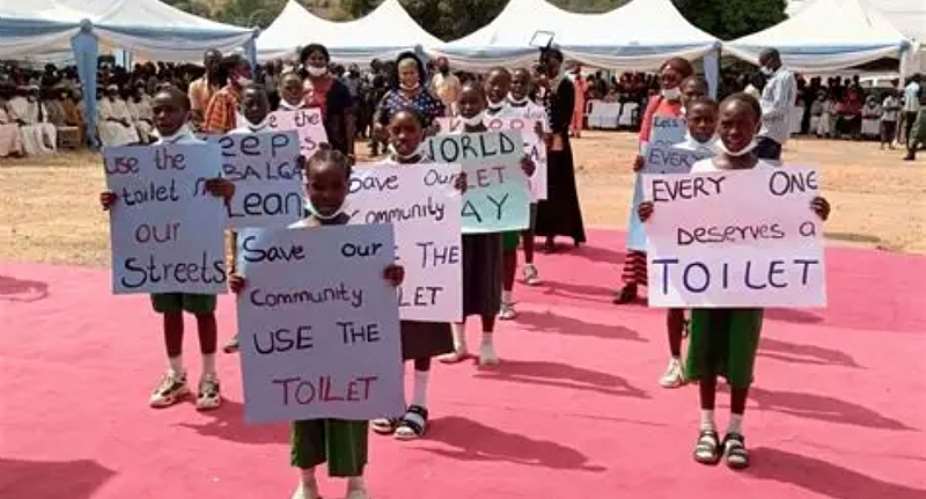
The lack of decent toilet facilities in schools and healthcare institutions continues to undermine the dignity, safety and wellbeing of many Ghanaians, with schoolchildren and patients often forced to cope with unhygienic conditions.
For some pupils, the start of the school day presents an uncomfortable choice between using filthy and broken toilets, resorting to nearby bushes or staying away from school altogether.
Patients seeking treatment at healthcare facilities also face similar challenges, with some institutions lacking decent toilet facilities and handwashing stations, exposing users to unhygienic conditions and the risk of infections.
These concerns formed part of the issues highlighted by World Vision Ghana's WASH Innovations and Partnership Specialist, Mr Yaw Attah Arhin, in connection with the 2026 World Toilet Day Special Draught Championship.
Figures cited by the organisers, drawn from the Education Management Information System (EMIS) 2020 and the Joint Monitoring Programme 2025, indicate that 26 per cent of public basic schools lack access to improved toilet facilities, while 84 per cent of healthcare facilities do not meet basic sanitation standards.
Mr Attah Arhin said access to proper sanitation was essential to creating environments that support effective teaching, learning and healthcare delivery.
"Toilets create conducive school environments for academic excellence," he said, while warning that "A healthcare facility without a toilet and handwashing facilities is a habitat for germs.”
He further highlighted the disproportionate impact of inadequate sanitation on women and girls, particularly adolescent girls who struggle to manage their menstrual hygiene in schools without private and clean toilets.
According to him, the absence of appropriate facilities can result in girls missing lessons during menstruation, falling behind academically and eventually dropping out of school.
Women are also exposed to harassment, embarrassment and disease when they are compelled to practise open defecation or use poorly lit public toilets.
The message, “Household Toilets: Dignity for Women and Girls,” was a central theme throughout the three-day programme, drawing attention to the relationship between sanitation, gender equality and human dignity.
The championship, scheduled for Saturday, November 21, at the Accra Sports Stadium, seeks to use the popularity of draught to draw public attention to Ghana's sanitation challenges.
World Vision Ghana is organising the event in partnership with the Ghana Draught Association, the Ministry of Local Government, Chieftaincy and Religious Affairs, development partners, Metropolitan, Municipal and District Assemblies (MMDAs), the Media Coalition Against Open Defecation (M-CODe), the Ghana WASH Journalists Network (GWJN), the Ghana Actors Guild and private sector organisations.
Other partners include the Musicians Union of Ghana (MUSIGA), the Ministry of Tourism, Culture and Creative Arts, the Ghana Tourism Authority and media organisations.
The initiative is intended to take sanitation advocacy beyond conventional public education campaigns by using sport, entertainment and cultural engagement to reach a wider audience.
As part of the activities, a special World Toilet Day quiz is scheduled for November 20 to educate students and young people on hygiene, proper toilet use and waste management.
Sensitisation exercises will also be conducted in markets, lorry parks and other public spaces where sanitation challenges are particularly evident.
The organisers believe that linking sanitation advocacy to sport, culture, celebrity participation and national pride can help change public perceptions and encourage broader participation in addressing the crisis.
They argue that sanitation should not be treated merely as a technical concern or an issue affecting low-income communities, but as a national development priority with implications for education, maternal health, productivity and public dignity.
The winner of the draught competition will be crowned National Sanitation Champion.
Dignitaries, participating players and selected members of the audience are also expected to sign an Environmental Sanitation Pledge Board, committing themselves to building, using and maintaining toilets while demanding improved sanitation standards from public institutions.
However, the organisers say the lasting impact of the campaign will depend on whether the advocacy translates into practical interventions, including increased investment in school toilets, improved sanitation infrastructure at health facilities and better access to menstrual hygiene facilities for girls.
Meanwhile, the National Convenor of the Media Coalition Against Open Defecation (M-CODe), Mr Francis Ameyibor, has called on members of the coalition and media practitioners across the country to participate in the World Toilet Day activities and support efforts to eliminate open defecation.
World Toilet Day is observed annually on November 19 as a United Nations initiative to raise awareness of the global sanitation crisis and promote progress towards Sustainable Development Goal 6, which seeks to ensure access to water and sanitation for all.
Coordinated by UN-Water, the observance mobilises individuals, institutions and organisations worldwide through public education, campaigns and events.
It draws attention to the billions of people who still lack safely managed sanitation and highlights the importance of proper toilet facilities in preventing diseases such as diarrhoea and cholera, protecting the environment and safeguarding human health and dignity.
The 2026 campaign focuses on the connection between sanitation and gender equality, emphasising how safe and accessible toilet facilities can protect the health, security and dignity of women and girls.
It also highlights the importance of providing secure toilets, clean water, soap and appropriate menstrual hygiene facilities in homes, schools, workplaces and healthcare institutions to ensure that women and girls can participate fully in education, employment and other aspects of society.

 How eight 'A's WASSCE graduate from Wesley Girls killed by speeding motorcycle w...
 GTEC freezes new PhD admissions nationwide pending audit of doctoral programmes
 NATO faces sovereignty dilemma as militaries rely on private tech, AI
 Afenyo-Markin demands answers over poor water quality in Central Region
 Mahama says Mayweather’s Ghana visit will boost tourism, boxing
 Police to develop human rights manual to strengthen professionalism and public t...
 How Korle Bu surgeons fixed back man's penis cut off whiles attempting to sit on...
 German President to visit Ghana for talks on trade and skills development
 Madina Court remands man over alleged GH¢18,500 theft from girlfriend
 Akufo-Addo left Mahama govt GH¢680bn debt bill for 2027-2030 — Isaac Adongo


