




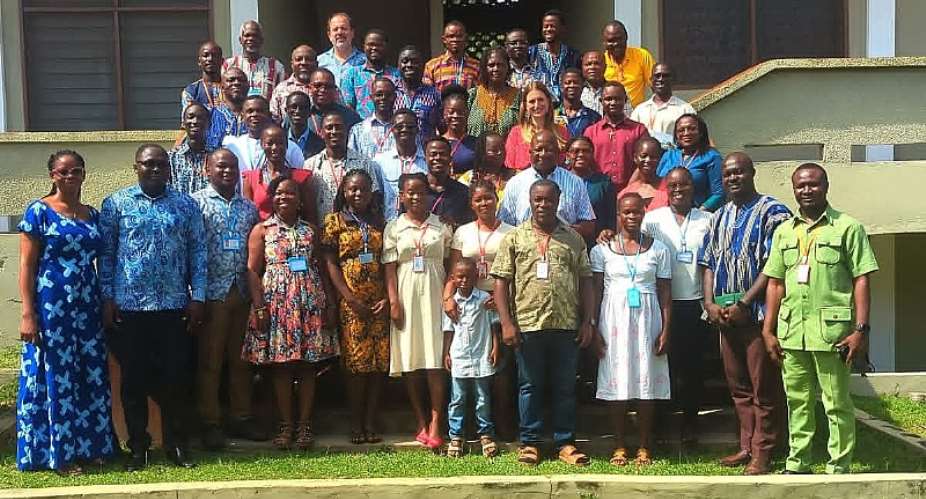
The KAAD Association of Scholars of West Africa (KASWA) has outlined a series of recommendations to the Government of Ghana to strengthen the implementation and long-term sustainability of the Free Primary Healthcare (FPHC) Programme.
The proposals were developed at the association's just-ended conference in Ho, the Volta Regional capital, which took place from November 12 to 15, 2026.
The conference brought together health professionals, policy implementers and scholars for presentations and plenary discussions on how to improve primary healthcare delivery, particularly under the government's flagship programme, currently being piloted in 136 districts ahead of its expected nationwide rollout next year.
A major concern raised during the discussions was that removing financial barriers to healthcare would not automatically guarantee quality services unless health facilities were adequately equipped, staffed and supplied.
Mr Stephen Nunoo, Acting Director of Health Services at Ho West, highlighted the practical requirements for implementing the programme, stressing the need for investment in the health system to ensure that patients receive reliable care whenever they need it.
His presentation underscored the importance of ensuring that free healthcare translates into accessible, adequately resourced and quality services, rather than merely removing the cost of treatment.
Dr Hubert Amu, Senior Lecturer and Head of the Department of Population and Behavioural Sciences at the Fred N. Binka School of Public Health, University of Health and Allied Sciences (UHAS), also emphasised community ownership, academic research and strategic partnerships as essential pillars for sustaining primary healthcare.
He argued that the success of the programme would depend not only on eliminating financial barriers but also on building public confidence, encouraging active community participation and securing the involvement of professionals and institutions across different disciplines.
Recommendations focus on facilities, workforce and service quality
Following the discussions, KASWA called for improvements in health facility infrastructure, equipment, staffing and logistics to enable providers to deliver the full package of primary healthcare services.
It also recommended strengthening medicine procurement and distribution systems, alongside regular supply-chain monitoring, to ensure essential drugs remain available and prevent stockouts that could expose patients to informal payments.
On workforce development, the conference urged government to improve the distribution of health personnel, particularly in underserved communities, while expanding continuous training, supervision and mentorship.
Participants also called for more effective referral arrangements, including improved transportation, coordination and collaboration between different levels of healthcare to ensure patients receive appropriate treatment.
To safeguard service quality, KASWA proposed stronger monitoring and accountability mechanisms, including patient feedback systems, community scorecards and regular audits. These measures, it said, would help ensure that services promised as free are delivered without hidden or unofficial charges.
The association further stressed the need for sustainable financing, effective institutional coordination, community involvement and continuous evaluation to support the programme beyond its initial implementation.
Communities urged to take active role in healthcare delivery
KASWA also wants communities to move beyond being passive beneficiaries of healthcare services and become active participants in planning, monitoring and improving them.
It recommended strengthening health committees and involving community volunteers, traditional authorities and religious leaders in efforts to improve local healthcare delivery.
The conference further called on government and healthcare providers to communicate clearly about the services covered under the programme, ensure respectful treatment of patients and establish effective channels for addressing complaints, particularly concerns about unofficial charges.
On research and capacity development, the association encouraged universities and researchers to generate practical evidence on the programme's implementation, challenges and effectiveness in different communities.
It recommended closer collaboration between academic institutions, health managers, frontline workers and local communities to identify workable solutions and improve service delivery.
Universities and other academic institutions were also urged to support the training of healthcare professionals and managers in programme implementation, community engagement, referral systems and monitoring.
KASWA calls for interdisciplinary partnerships
The association called for stronger collaboration among professionals in healthcare, economics, law, engineering, information technology, education and other fields to bring different expertise to bear on primary healthcare delivery.
It also proposed a more active role for KASWA members in supporting the programme through practical interventions.
These include establishing a working group on primary healthcare and community health, partnering with a Community-based Health Planning and Services (CHPS) zone and its health committee in each chapter area, and developing interdisciplinary research partnerships with universities.
Members were further encouraged to use the conference communiqué as a basis for committing to specific partnerships and follow-up activities.
The recommendations are intended to guide government, healthcare institutions, academic bodies and communities in strengthening the Free Primary Healthcare Programme as Ghana prepares for its wider implementation.


 NDC enjoying benefits of NPP's difficult economic decisions – Fuseini Issah
 Improved economy justifies purchase of new presidential jet – Toobu
 Eight Ghanaian seafarers return home after months in Iranian detention
 No one will be allowed to mess around with a Ghanaian and get away with it – Abl...
 Exim Bank case: Wontumi offers GH¢25m to secure end to prosecution
 Gov't finds $60.68m for presidential jet despite cost-of-living concerns – Abu J...
 Mahama orders performance assessment of all 261 MMDCEs
 Customs orders strict enforcement of permit requirement for right-hand steering ...
 Fitch Solutions projects cedi will weaken to GH¢12.40 against dollar in 2027
 I think Mahama done better than the first term – Archbishop Agyinasare


