




The European Union on Monday announced a new round of sanctions against Russia, targeting banks, oil infrastructure and companies linked to Moscow's so-called "shadow fleet" of tankers used to circumvent Western restrictions.
The latest measures include 113 new listings – 12 individuals and 101 entities – as Brussels seeks to tighten the economic pressure on Moscow over its invasion of Ukraine.
Among those sanctioned was Tatiana Kim, Russia's richest woman and CEO of online retail giant Wildberries, whose fortune is estimated at upto €7billion.
Kim faces an asset freeze and travel ban over allegations that her company has supported Russia's military operations in Ukraine. Tatiana Kim, founder of online retailer Wildberries, attends the Central Asian Women's Forum "BeWoman" in Almaty, Kazakhstan October 17, 2024. "Wildberries operates as a supply network for the Russian military by facilitating the sale of military and dual-use goods," Brussels said.
"Kim is supporting, materially or financially, and benefiting from Russia's military and industrial complex."
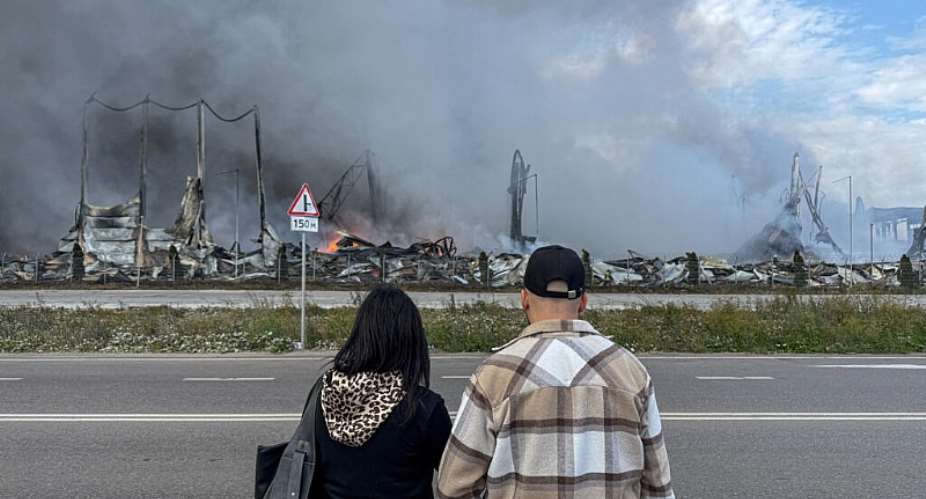
The online retailer, sometimes referred to as "Russia's Amazon", has repeatedly been targeted by Ukrainian strikes this year.
Zelensky says US move to waive sanctions 'rewards' Russia's Putin
Banks and oil exports targeted
The latest measures also targeted nearly 50 Russian banks and financial institutions, along with companies managing oil infrastructure, including a major oil terminal in Saint Petersburg, Russia's second-largest city.
The EU also blacklisted firms in the United Arab Emirates, China, Seychelles and Oman linked to purchases of Russian oil transported by Moscow's shadow fleet of ageing tankers.
The 27-nation bloc is seeking to maintain pressure on Moscow despite renewed diplomatic efforts to bring an end to the fighting in Ukraine.
Brussels is also preparing a broader package of sanctions that it hopes to introduce before the end of the year.
France slams Russian 'intimidation' as fresh EU sanctions come into force
Mounting pressure on Moscow
According to the EU's website, Brussels has progressively imposed restrictive measures on Russia since March 2014, initially in response to Moscow's annexation of Crimea.
The sanctions were expanded following Russia's full-scale invasion of Ukraine in February 2022 and its subsequent claimed annexation of four Ukrainian regions – Donetsk, Luhansk, Zaporizhzhia and Kherson.
The EU has now adopted 21 packages of sanctions, targeting more than 4,700 individuals and entities accused of undermining Ukraine's territorial integrity, sovereignty and independence.
Those sanctioned include Russian President Vladimir Putin, Foreign Minister Sergei Lavrov, members of the State Duma, senior military officers and prominent business figures.
(With newswires)
European Union on Monday imposed sanctions on Russia's richest woman Tatiana Kim, CEO of online retail giant Wildberries, in a fresh slew of punishment over the Ukraine war.
The asset freeze and visa ban on Kim, whose net worth is estimated at €7.3 billion, was part of a broader package also targeting Russian banks and oil exports.
"Wildberries operates as a supply network for the Russian military by facilitating the sale of military and dual-use goods," Brussels said.
"Kim is supporting, materially or financially, and benefiting from Russia's military and industrial complex."
The online retailer, sometimes referred to as "Russia's Amazon," was repeatedly targeted by Ukrainian strikes earlier this year. People watch the burning Wildberries warehouses following a Ukrainian drone attack, according to the regional governor, in the course of the Russia-Ukraine conflict, in Koledino, Moscow Region, Russia August 16, 2026.
Among other entities hit by sanctions was a key oil terminal in Russia's second city of Saint Petersburg.
Zelensky says US move to waive sanctions 'rewards' Russia's Putin
The EU also blacklisted firms in the United Arab Emirates, China, Seychelles and Oman linked to the purchase of oil from Russia's so-called "shadow fleet" of aging tankers.
The 27-nation bloc is seeking to keep the pressure on Moscow despite a renewed push for negotiations to halt the fighting. Brussels is currently working on a broader package of sanctions that it hopes to impose by the end of the year.
According to the EU's website, since March 2014, Brussels has "progressively imposed restrictive measures" on Russia in response to the 2014 annexation of Crimea, the 2022 invasion of Ukraine and the annexation of the Donetsk, Luhansk, Zaporizhzhia and Kherson regions of Ukraine in the same year.
To date, 21 packages of sanctions have been adopted as a reaction to Russia's "undermining or threatening the territorial integrity, sovereignty and independence of Ukraine" and they apply to "over 4 700 individuals and entities," including Russia's President, Vladimir Putin himself, as well as the Foreign Minister, Sergei Lavrov, members of the state Duma (parliament), company bosses, and high ranking military.
(With newswires)


 Lawyer withdraws from Sky Train trial over dispute on Asamoah's testimony
 "I don't wait to be chased out, I've made my choice" — Asiedu Nketia on leaving ...
 Afia Schwarzenegger sentenced to 63 days in prison for contempt of court in Samm...
 Otumfuo cautions against undermining businesses linked to past administrations, ...
 Otumfuo urges banks to increase lending to private businesses instead of relying...
 Mahama urges private investors to guarantee markets for local farmers
 'If you are a consumer and not a producer; you will never create jobs and prospe...
 I want to see Ghanaian firms supplying regional markets, establishing production...
 'I encourage you to invest in Ghana, one of Africa’s most stable and dependable ...
 Ghana Air Force receives new Falcon 6X presidential jet to replace 16-year-old a...


