




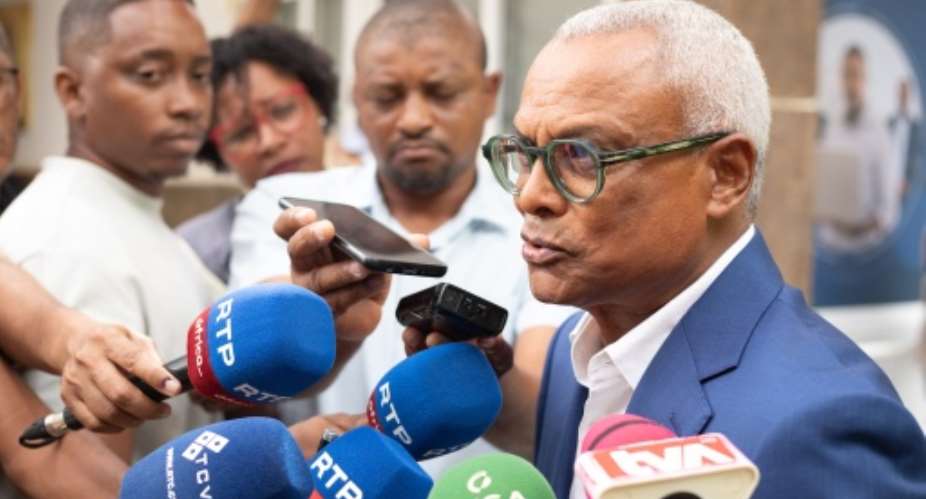
Cape Verde voted for a new president on Sunday, with incumbent Jose Maria Neves favoured to win a second term as head of state of the West African archipelago renowned for its democratic stability.
Among the contenders he faced was the country's first woman candidate, Joana Rosa Amado.
Voting ended at 1900 GMT and ballot counting has now begun, AFP journalists saw, with provisional results expected overnight.
"I hope that after the election there will be progress and what has been promised will be carried out," Suelene Delgado, a 31-year-old shop owner, said after voting in Mindelo, on the island of Sao Vicente.
"Because we need a more developed Cape Verde and a Cape Verde that looks after its youth and offers more opportunities."
"I hope the winner will be an honest person, who will work for the good of the country and for its residents, for the development of our nation," said another voter, 55-year-old cleaner Elisete Evora.
Nearly 420,000 people were eligible to vote. The election was watched by about 150 observers from the Economic Community of West African States, the African Union and the European Union.
Cape Verde, located in the Atlantic Ocean about 600 kilometres (375 miles) off the coast of Senegal, comprises 10 volcanic islands and is an increasingly popular tourist destination.
It made world headlines this year when its national football team reached the knockout stages in its first World Cup, and when a cruise ship containing people with hantavirus anchored off its shores.
Stability, hospitality
Unlike several of its West African neighbours where presidential elections have been tense in recent years, Cape Verde is known for its political stability and good governance.
It is considered a model of democracy in Africa, with strong economic growth.
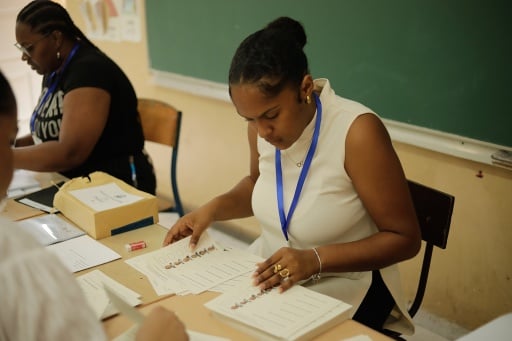 Nearly 420,000 people were eligible to vote. By Jose Correia (AFP)
The country is known for its "morabeza" ("hospitality", in local creole), openness and carnivals. It also has its own style of music.
According to the Mo Ibrahim Foundation 2026 index on global governance, Cape Verde ranks third out of 54 countries on the continent.
Politically, it has a semi-presidential system in which the executive is dominated by the prime minister.
The president does not govern but acts more as an arbiter, working to guarantee unity and uphold the constitution.
The head of state appoints the prime minister based on the results of legislative elections and represents the country abroad.
Frontrunners
Among the six candidates in the running on Sunday, two are frontrunners: incumbent Neves, 66, and Amado, 61, a lawyer and former justice minister.
Each is supported by one of the country's two main parties.
Neves was first elected president in 2021. From 2001 to 2016 he also served as prime minister and president of the African Party for the Independence of Cape Verde (PAICV). He has also been a mayor and a lawmaker.
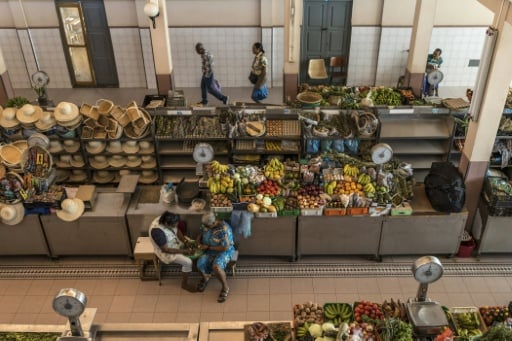 Cape Verde is considered a model of democracy in Africa. By PATRICK MEINHARDT (AFP/File)
Neves has the support of the PAICV, which won legislative elections in May.
"In these times of international uncertainty, it is essential that Cape Verde continues to have a patriotic, experienced president capable of inspiring Cape Verdeans," he said this week during a rally.
Amado, whose slogan is "Listen to Cape Verde", is supported by the main opposition party, the Movement for Democracy (MpD).
"The election of a woman to the presidency would show many young women and young girls that no government job is barred from them," she told reporters.
Among the other candidates is 45-year-old surgeon Gilson Alves, a hardline figure who is promising to fight corruption, allow gun ownership and reinstate the death penalty.
Challenges
In July, the World Bank classified Cape Verde as an upper-middle-income country thanks to economic growth in the tourism sector.
However, the country faces many challenges, including persistent social inequality, geographic isolation and a lack of affordable options for travelling between islands.
If elected, the main candidates have promised to implement measures to improve air and sea travel between the islands and also to construct new accommodation for tourists.
Among the population's major concerns are the increased cost of living, fuel prices and youth unemployment.


 Hundreds of thousands of Czechs protest in Prague over public media funding plan
 Miguel Angel Felix Gallardo, architect of Mexico’s drug trade, dies aged 80
 Elon Musk, Uber co-founder join calls to reinstate Jensen Huang as Nvidia chief
 Cape Verde's President Jose Maria Neves re-elected: provisional election results
 Nearly 2,200 migrants reach Spain's Canary Islands in two days
 Polls close in Cape Verde with incumbent president favoured to win
 Yemen's Houthis advance on Aden as government forces retreat to defend their cap...
 Mahama Commissions GH¢148.4m Cashew Factory, Creating 1,500 Jobs in Techiman
 21-year-old Ghanaian man stabbed to death in north London
 Another phone snatcher jailed 11 years in Ashaiman, marking second conviction in...


