




In Arkansas, the scales of justice may not simply have been tilted. According to prosecutors and state Supreme Court officials, someone entrusted with protecting those scales allegedly reached inside the machinery and changed the numbers.
At the center of this extraordinary controversy is Nancie Michelle Givens, former executive director of the Arkansas Supreme Court’s Office of Professional Programs, charged with 65 felony counts of tampering with public records.
According to Reuters' November 6 reporting, investigators uncovered alleged manipulation of Arkansas Bar Examination scores between July 2020 and July 2025. Givens has pleaded not guilty and remains presumed innocent unless proven guilty.
Reuters+1
But consider the implications.
Imagine investing three years in law school, accumulating enormous debt, sacrificing family time, surviving a pandemic, and finally sitting for the examination determining your professional future—only to discover that someone may have manipulated the score you earned.
Now imagine discovering that someone else allegedly received points that were never rightfully theirs.
That is not merely an administrative controversy. If proven, it represents institutional betrayal.
The Numbers Behind the Allegations
According to the Arkansas Supreme Court's November 5 statement, approximately 11,400 examination-related files and electronic records were deleted or rendered unavailable. Investigators identified discrepancies spanning at least eight examination administrations.
The court reported evidence that points were allegedly removed from certain examinees and added to others, elevating some to Arkansas's passing threshold of 270.
At least one candidate apparently received a failing result despite earning sufficient points to pass. Another candidate allegedly lost recognition for the highest examination score.
As Bloomberg Law reported, the accusations raise fundamental questions about the integrity of attorney licensing.
Arkansas Judiciary+1
The November 12 NEA Report investigation cited a probable-cause affidavit indicating at least 64 examinees had altered scores. Sixty-five felony counts and 64 affected examinees are different measures, and neither establishes the final number of victims.
NEA Report
This may be only the tip of the iceberg.
Race, Opportunity, and the Unanswered Questions
As a social historian and educator, I find one question especially troubling: Who lost opportunities, and who received opportunities they had not earned?
Were African-American examinees disproportionately harmed? Were white applicants disproportionately favored? Did socioeconomic status, personal relationships, or institutional connections influence the alleged manipulation?
These questions demand investigation—not assumptions.
Presently, publicly disclosed evidence does not establish the racial identities of the affected candidates or prove racial targeting. Nevertheless, the historical consequences of unequal access to professional credentials make independent racial-disparity analysis essential.
According to the Law School Admission Council's research, Black students represented only 7.4% of first-year law students nationally in 2025.
The American Bar Association's legal education statistics also provide essential information for examining disparities in enrollment and bar passage.
Those national patterns do not prove discriminatory misconduct in Arkansas. They do demonstrate why race cannot be ignored when investigating access to the legal profession.
The Law School Admission Council+1
Beyond Bowen: A Statewide Crisis of Confidence
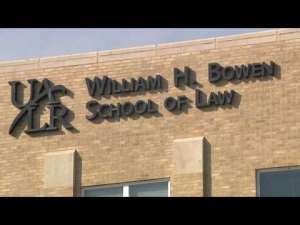
This controversy extends beyond the University of Arkansas at Little Rock's William H. Bowen School of Law. Graduates of the University of Arkansas School of Law in Fayetteville, alongside graduates of out-of-state institutions who took Arkansas's examination, also have reason to demand answers.
The available record does not yet establish how many graduates from each institution were affected.
The National Conference of Bar Examiners reported that 67,442 people took bar examinations nationally in 2025, with 63% passing. These examinations determine access to livelihoods, representation, and public trust.
As FindLaw's legal analysis explains, inaccurate results could create serious consequences for applicants and the licensing system.
The damage could extend beyond Arkansas through portable bar examination scores and professional mobility. Whether any improperly altered Arkansas results actually influenced licensing elsewhere remains unverified.
National Conference of Bar Examiners+1
Consider the economic possibilities: lost employment, delayed salaries, additional examination expenses, damaged reputations, and missed opportunities to establish law practices.
These are potential consequences requiring individualized investigation—not confirmed losses for every affected candidate.
COVID, Trump, Biden, and Institutional Accountability
The examination period crossed three presidencies: Donald Trump's first administration, Joe Biden's presidency, and Trump's second administration.
It also overlapped with COVID-19, when students faced extraordinary educational and economic uncertainty.
Neither president has been implicated in this scandal. The significance is historical: political administrations changed while the alleged examination irregularities continued.
According to Arkansas Business, investigators discovered allegations involving the manipulation of scores and destruction of records.
Was money exchanged? Did beneficiaries know? Were others involved?
No publicly verified evidence establishes bribery, racial favoritism, or a broader conspiracy. No plea agreement has been confirmed. These possibilities should be investigated without being presented as established facts.
Arkansas Business
What Does Scripture Say About Justice?
Three biblical passages should guide our moral examination:
Proverbs 11:1 (KJV): "A false balance is abomination to the LORD: but a just weight is his delight."
Proverbs 17:15 (KJV): "He that justifieth the wicked, and he that condemneth the just, even they both are abomination to the LORD."
Micah 6:8 (KJV): "What doth the LORD require of thee, but to do justly, and to love mercy, and to walk humbly with thy God?"
If the allegations are proven, the manipulation of earned scores represents precisely the injustice these scriptures condemn.
The Tip of the Iceberg
Arkansas needs an independent forensic audit, transparent demographic findings, corrected examination records, and meaningful remedies for demonstrably harmed candidates.
The Arkansas Supreme Court's announced corrective measures are necessary, but public confidence requires more than promises.
Arkansas Judiciary
Who benefited? Who suffered? Who knew? And who was responsible for oversight?
Sixty-five felony counts may eventually represent only the beginning of understanding this controversy.
Because when the institution responsible for certifying those who practice justice cannot guarantee the integrity of its own examinations, the public is entitled to ask one final question:
If justice itself can allegedly be manipulated before an attorney ever enters a courtroom, how can citizens trust the system entrusted with protecting their rights?
Edmond W. Davis is a social historian, journalist, media strategist, and professor of History and U.S. Government in Arkansas. His commentary examines education, civil rights, institutional accountability, and American democracy.

 Hundreds of thousands of Czechs protest in Prague over public media funding plan
 Miguel Angel Felix Gallardo, architect of Mexico’s drug trade, dies aged 80
 Elon Musk, Uber co-founder join calls to reinstate Jensen Huang as Nvidia chief
 Cape Verde's President Jose Maria Neves re-elected: provisional election results
 Nearly 2,200 migrants reach Spain's Canary Islands in two days
 Polls close in Cape Verde with incumbent president favoured to win
 Yemen's Houthis advance on Aden as government forces retreat to defend their cap...
 Mahama Commissions GH¢148.4m Cashew Factory, Creating 1,500 Jobs in Techiman
 21-year-old Ghanaian man stabbed to death in north London
 Another phone snatcher jailed 11 years in Ashaiman, marking second conviction in...


