




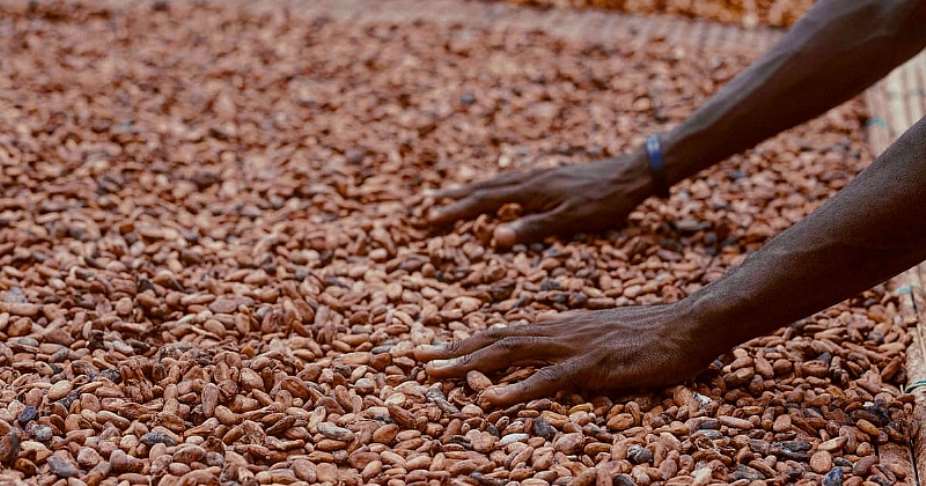
Ghana is preparing to phase out exports of unprocessed cocoa beans by 2030, with the government setting targets to increase domestic processing to 50% by 2028 and 100% by the end of the decade.
Finance Minister Dr Cassiel Ato Forson announced the policy direction during his presentation of the 2027 Budget to Parliament on Thursday, November 12, describing it as the final stage in the country's planned transition away from exporting raw cocoa.
The strategy is intended to ensure that more of the economic benefits generated by cocoa remain within Ghana through local processing and the production of finished goods.
Government pushes cocoa value addition
The proposed transformation goes beyond the initial grinding of cocoa beans to cover the production of cocoa liquor, butter, cake, powder, chocolate, cosmetics and other finished products.
The government also expects local businesses, researchers and Ghanaian brands to play a greater role in the cocoa value chain.
"The country that grows the bean must retain a far greater share of the industry built around it," Dr Forson told Parliament.
The policy follows similar calls by Trade, Agribusiness and Industry Minister Elizabeth Ofosu-Adjare, who earlier in November stressed the need for Ghana to process at least half of its cocoa locally to reduce the economy's exposure to fluctuations in international market prices.
Cocoa Marketing Company Managing Director Wisdom Dogbey has also called for increased investment in domestic processing capacity.
Cocoa sector performance and global market conditions
The government's plans come after a relatively strong 2025/26 cocoa season, during which production reached 771,000 metric tonnes as of August 2026, while cumulative purchases stood at 690,000 tonnes.
The Ghana Cocoa Board's (COCOBOD) debt stock also declined from GH¢32.5 billion in March 2025 to GH¢30.55 billion by August 2026.
Meanwhile, liabilities associated with cocoa roads fell from GH¢21 billion to GH¢6.9 billion following a field verification exercise.
However, the industry is facing pressure from declining international cocoa prices. The commodity averaged US$4,543.15 per tonne during the first 9 months of 2026, representing a 48.9% drop compared with the corresponding period in 2025.
Despite the price decline, Ghana generated US$3.0 billion in cocoa export earnings during the period, an increase of 15.9% year-on-year, according to figures contained in the 2027 Budget.
The Budget Statement also projects a decline in cocoa production in 2027, attributing the anticipated downturn to the effects of El Niño.
Concerns have also emerged over the impact of rising temperatures on cocoa crops, with a crop scientist at the University of Cape Coast warning that heat conditions are already causing "serious flower abortion" across the country's cocoa-growing areas.
Questions remain over implementation
Although the government has set 2030 as the target for ending raw cocoa exports, the Budget Statement does not identify the specific legislation that will enforce the proposed restriction or provide a precise implementation date beyond the overall deadline.
It also does not outline the financing arrangements that will enable local processors to expand their capacity to meet the targets.
The document further leaves unanswered questions about how the transition could affect cocoa farmers' producer prices and Ghana's export earnings before the planned phase-out takes effect.

 Man arraigned for allegedly posing as Foreign Affairs Minister's rep in Jordan, ...
 GAF details GH¢130,000 support for Kumasi recruitment stampede victim Sandra Baa...
 2027 Budget: Ghanaian youth need jobs, not ‘fantasy’ New Economy – Tampuli jabs ...
 Court releases Baffour Awuah's passport for parliamentary duties as AG refuses t...
 Ghana targets end to raw cocoa exports by 2030 – Ato Forson
 Owabi Water Treatment Plant shut down after heavy rains disrupt operations
 Govt to introduce Natural Resource Management Act to replace Petroleum Revenue M...
 Govt to merge MIIF and GIIF into Ghana Sovereign Wealth Fund to support 24-hour ...
 In haste to remove the Big Six, NDC used wrong image of Theodosia Okoh on new GH...
 Disgraced Nvidia ex-CEO Jensen Huang to testify before US Congress


