




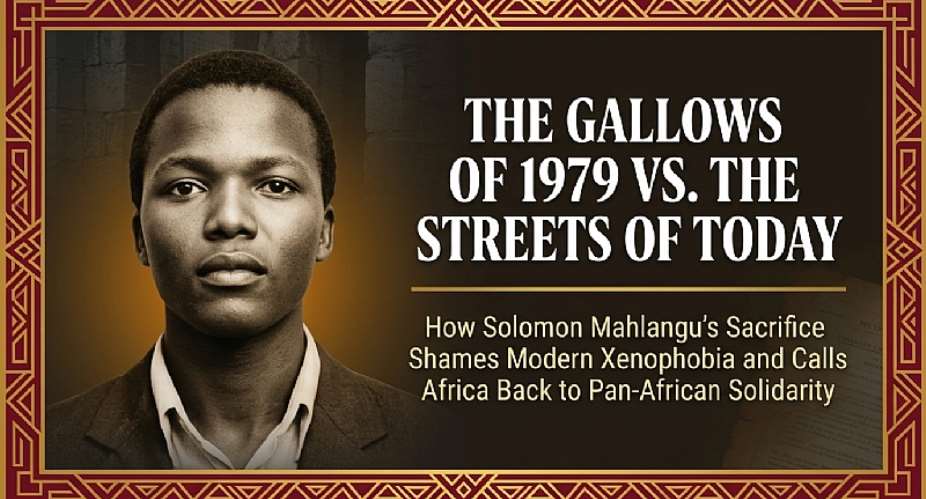
On April 6, 1979, a 22-year-old South African walked calmly toward the gallows at Pretoria Central Prison. His name was Solomon Kalushi Mahlangu. He had not fired the shots that killed anyone, yet the apartheid regime sentenced him to death under the notorious "common purpose" doctrine. Before the trapdoor fell, he left behind words that echoed across a bleeding continent: "Tell my people that I love them. They must continue the fight. My blood will nourish the tree that will bear the fruits of freedom."
Over four decades later, the tree Solomon Mahlangu watered with his blood stands tall, yet its fruits are turning bitter. As recurring waves of xenophobic violence, vigilante harassment, and anti-immigrant rhetoric erupt across South African townships, one painful question confronts the conscience of Africa: Have the beneficiaries of continental solidarity forgotten who helped them survive?
The Forgotten History of Continental Sacrifice
Long before South Africa became a democracy, its freedom fighters could not survive within their own borders. They survived because African nations opened their doors, emptied their treasuries, and buried their own citizens in solidarity.
- Trained in Exile: After the 1976 Soweto uprisings forced him out of Mamelodi High School, Solomon Mahlangu found refuge and military training in Mozambique and Angola. Those two nations endured devastating cross-border raids and civil wars sponsored by apartheid Pretoria precisely because they refused to abandon Black South Africans.
- Educated in Tanzania: In 1978, the government of Julius Nyerere donated 600 acres of land in Mazimbu, Tanzania, to establish the Solomon Mahlangu Freedom College (SOMAFCO). While Bantu Education at home designed Black youth for servitude, SOMAFCO educated thousands of exiled South African youths—who went on to become cabinet ministers, doctors, and leaders in post-1994 South Africa—with teachers recruited from Nigeria, Zambia, Tanzania, and across the globe.
- Funded by West Africa: Nations thousands of miles away treated apartheid as a personal wound. Nigeria spent an estimated $61 billion supporting liberation movements and collected "Mandela taxes" from ordinary civil servants and students. Ghana issued diplomatic passports to stateless South African icons like Miriam Makeba and mobilized generations of students against white minority rule.
A Mirror of Shame on Modern Streets
To watch young South African men and women today attack fellow Africans—branding Nigerians, Ghanaians, Zimbabweans, Mozambicans, and Somalis as "enemies" responsible for economic hardship—is a profound betrayal of Solomon Mahlangu’s memory.
- Misidentifying the Real Enemy: Solomon Mahlangu died fighting systemic poverty, state-sponsored injustice, and the denial of human dignity. Today, high youth unemployment, corruption, and failing public services are real crises in South Africa—but they were not caused by an African shopkeeper in Soweto or a migrant worker in Johannesburg.
- Amnesia in the Classroom: While South Africa’s post-apartheid curriculum honors liberation icons—and major landmarks like Solomon Mahlangu House at Wits University and Solomon Mahlangu Freedom Square bear his name—classroom history too often stops at domestic heroism. Without teaching the full Pan-African story of SOMAFCO, the Frontline States, and West African solidarity, a generation has grown up believing they liberated themselves alone.
- The Cry of a Beloved Country: When Alan Paton wrote Cry, the Beloved Country in 1948, he warned of a society broken by fear, hatred, and lost moral bearings. Today, every viral video of mob justice against an African neighbor fulfills that tragic prophecy.
Recommendations and Actionable Path Forward
Honoring Solomon Mahlangu requires more than annual wreaths laid every April 6. It demands urgent, practical steps from South African leaders, educators, and the African Union:
- Reform History Education: The South African Department of Basic Education should embed mandatory modules on Pan-African liberation solidarity—specifically detailing the sacrifices of the Frontline States, SOMAFCO in Tanzania, and West African support—so young citizens understand their historical debt to the continent.
- Enforce Zero-Tolerance Accountability: Law enforcement and the judiciary must treat vigilante groups and xenophobic instigators with strict legal consequences rather than political appeasement, upholding the human rights obligations emphasized by the African Commission on Human and Peoples' Rights (ACHPR).
- Operationalize AU Migration Frameworks: Ahead of the January 2027 African Union Summit, member states—led by voices from Ghana, Nigeria, and Southern Africa—must move beyond diplomatic statements to harmonize regional labor migration, border management, and economic integration under the African Continental Free Trade Area (AfCFTA).
- Revive Cultural and Youth Exchanges: Revitalizing initiatives like the SOMAFCO Trust and university exchange programs between South Africa, Tanzania, Ghana, and Nigeria can rebuild grassroots brotherhood among African youth before misinformation hardens into hatred.
Solomon Mahlangu was only 22 when he gave his life so that Black South Africans could walk in dignity. True honor to his name will only be paid when every African can walk the streets of Johannesburg, Durban, and Pretoria with that very same dignity.
Author Bio & Signature Block (For Modern Ghana)
About the Author:
The writer is a retired Ghanaian senior citizen residing in Teshie-Nungua, Accra, who grew up during the height of Africa’s anti-colonial and anti-apartheid movements. Having first encountered the moral tragedy of apartheid through Alan Paton’s Cry, the Beloved Country in secondary school in 1965, he writes to remind younger generations across the continent of the shared blood, sacrifice, and Pan-African solidarity that secured Southern Africa’s liberation.
✍️ By A Concerned Retired Senior Citizen
For and on behalf of all Senior Citizens of the Republic of Ghana 🇬🇭
Location: Teshie-Nungua, Accra
Email: [email protected]

 Man arraigned for allegedly posing as Foreign Affairs Minister's rep in Jordan, ...
 GAF details GH¢130,000 support for Kumasi recruitment stampede victim Sandra Baa...
 2027 Budget: Ghanaian youth need jobs, not ‘fantasy’ New Economy – Tampuli jabs ...
 Court releases Baffour Awuah's passport for parliamentary duties as AG refuses t...
 Ghana targets end to raw cocoa exports by 2030 – Ato Forson
 Owabi Water Treatment Plant shut down after heavy rains disrupt operations
 Govt to introduce Natural Resource Management Act to replace Petroleum Revenue M...
 Govt to merge MIIF and GIIF into Ghana Sovereign Wealth Fund to support 24-hour ...
 In haste to remove the Big Six, NDC used wrong image of Theodosia Okoh on new GH...
 Disgraced Nvidia ex-CEO Jensen Huang to testify before US Congress


