




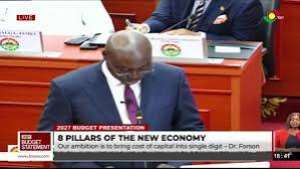
Ghana's 2027 Budget Statement and Economic Policy, presented to Parliament on November 12, 2026, by the Minister of Finance, Dr Cassiel Ato Forson, offers an opportunity to revisit a subject that deserves considerably more public attention than it receives: the relationship between the investment performance of the Social Security and National Insurance Trust (SSNIT) and the welfare of the pensioners whose contributions provide the foundation of the pension scheme.
The Finance Minister's presentation outlined Government's ambitious economic transformation programme, branded New Economy, New Ghana: Jobs and Prosperity. The four-year programme, covering 2027 to 2030, is expected to mobilize approximately US$10 billion, with GH¢30 billion allocated for implementation in 2027. Its objectives include commercial agriculture, industrialization, energy infrastructure, value addition to minerals, tourism, pharmaceuticals and technology. These are important national development objectives. Ghana needs productive investments, employment opportunities, industrial expansion and a stronger economic foundation. Nobody should begrudge the Government its ambition to transform the economy.
However, as I listened to the Minister's presentation, my attention was particularly drawn to his announcements concerning SSNIT's proposed investments in hotels and tourism infrastructure, as well as his brief remarks about the safety of pension funds and the importance of prudent investment. These two subjects deserve serious examination.
The question I want to raise is not whether SSNIT should invest or whether hotels can be profitable. Rather, it is whether the proposed investment programme is sufficiently justified, whether contributors' money is adequately protected and, perhaps most importantly, whether the institution's investment ambitions are matched by an equally strong commitment to improving the living conditions of pensioners. After all, what is the ultimate purpose of a pension fund if not to provide financial security and dignity to workers after their years of active service?
SSNIT and the New Hotel Ambitions
During his presentation, the Finance Minister spoke about plans for SSNIT to undertake hotel developments in different parts of the country, including Accra, Kumasi, Elmina and the northern part of Ghana. The proposals form part of the wider tourism development agenda. The budget coverage also identifies five new four- and five-star hotels and an international convention center at the La Trade Fair site as part of the tourism programme. There is no doubt that tourism has considerable potential to contribute to Ghana's economic development. Our historical heritage, beaches, cultural attractions, hospitality industry and geographical position provide opportunities for investment. Hotels can create employment, generate foreign exchange, stimulate local businesses and contribute to government revenue.
SSNIT itself is not a stranger to the hospitality industry. It has investments in hotels and related businesses, including Labadi Beach Hotel, Elmina Beach Resort and La Palm Royal Beach Resort through its hospitality investment interests. In October 2025, SSNIT's Director-General, Kwesi Afreh Biney, disclosed that the Trust was exploring partnerships to revamp some of its hotel investments, particularly Elmina Beach Resort. He explained that the intention was to improve their performance rather than dispose of the assets outright. He also pointed to the dividends generated by Labadi Beach Hotel. This is relevant because it demonstrates that SSNIT already has exposure to the hotel business. The proposed developments therefore represent an expansion of an existing investment interest, rather than an entirely new investment direction. But that expansion must be approached with caution.
A hotel is not automatically a profitable investment simply because it is located in a tourist destination. Its success depends on occupancy rates, management quality, operating costs, competition, maintenance, marketing, financing costs and the ability to attract customers throughout the year. A five-star hotel can become a financial burden if the capital invested is excessive, operational costs are poorly managed or projected patronage fails to materialize. The same applies to an international convention center. Its construction may be attractive from the perspective of national development, but the financial returns must be properly assessed against the capital required, operating expenditure and expected demand. We must therefore distinguish between an investment that is commercially attractive and one that is merely politically or economically appealing. SSNIT must not commit contributors' money to ambitious projects simply because the projects sound impressive.
The Question of Prudent Investment
One of the reassuring aspects of the Minister's presentation was his reference to the safety of SSNIT funds and the need for prudent investment. I consider this an important acknowledgement of the responsibility that comes with managing pension contributions. However, prudent investment must be more than a reassuring expression. It must be demonstrated through transparent decisions, proper valuation of assets, independent risk assessments, effective corporate governance and regular reporting to stakeholders.
SSNIT itself identifies yield, safety, liquidity, diversification, capital preservation, investment time frame and overall returns as important considerations in managing its investment portfolio. These principles should guide every proposed hotel project. I would therefore expect SSNIT to make public the business case for each proposed development. Contributors and pensioners deserve to know the projected capital expenditure, the source of financing, the expected completion dates, anticipated occupancy rates, projected annual revenues and the period within which the investments are expected to recover their costs.
If private-sector partnerships are contemplated, the terms should be transparent. If SSNIT intends to finance the developments directly, the implications for the pension fund must be disclosed. There must also be clear separation between the responsibilities of Government and those of SSNIT.
Government may determine that tourism is a strategic national priority. That is legitimate. But SSNIT must independently determine whether a particular tourism project meets its investment criteria and serves the long-term interests of the pension scheme. The Trust must never become an instrument for financing projects simply because Government considers them desirable. The pension fund belongs to the contributors whose earnings have been deducted over the years. Its managers are custodians of those resources, not their owners.
Who Owns SSNIT?
This brings us to a fundamental question that is sometimes overlooked in public discussions. Who owns SSNIT?
The contributors and beneficiaries have a direct financial interest in the institution. Workers contribute during their active years in the expectation that they will receive retirement benefits when they qualify. Employers also contribute, while the Trust administers and invests the resources under the national pension framework. Consequently, SSNIT should not be regarded as an ordinary government-owned commercial enterprise whose investment decisions need only satisfy the immediate preferences of its political and administrative superiors. It is a social security institution with a responsibility to protect the retirement interests of millions of workers. Its investment decisions must therefore be subjected to a higher standard of accountability.
I would like to see a system in which pensioners and contributors are meaningfully represented in discussions concerning the direction of the institution. This is one of the reasons the Pensioners Association for Reforms (P4R) and the Concerned SSNIT Pensioners Forum (CSPF) have consistently advocated reforms in pension administration and governance. We cannot continue to speak about protecting pension funds while excluding significant sections of the people whose financial security depends on those funds. Pensioners are not strangers to SSNIT. They are beneficiaries of a system they helped finance throughout their working lives.
The Forgotten Pensioners
Now let us turn to what should arguably be the most important consideration in this discussion. What did the 2027 Budget offer pensioners? The Minister did refer to pensioners affected by the debt restructuring as among the groups that must benefit from Ghana's economic recovery. That acknowledgement is welcome. However, recognition of their difficulties is not the same as a specific intervention to address them.
In the reports of the Budget presentation examined for this article, I have not identified a specific new commitment to increase SSNIT pensions beyond the normal annual indexation, introduce a 13th-month pension, provide mid-year cost-of-living adjustments or undertake a special programme to restore the purchasing power pensioners lost during the economic crisis. We must distinguish between the ordinary statutory pension adjustment and additional measures that would demonstrate a deliberate commitment to pensioners' welfare.
The 2026 indexation, for instance, was announced at 10%. Through the redistribution arrangement, pensioners previously receiving GH¢300 were scheduled to receive GH¢409.56, while the minimum pension for new retirees was set at GH¢400. These adjustments were welcome, particularly for pensioners at the bottom of the payroll. But let us not confuse an increase in nominal pension payments with the restoration of the purchasing power that was lost during the economic crisis. Pensioners buy food, pay rent, settle electricity and water bills, pay transport fares and purchase medicines. They do not pay their bills with inflation statistics or GDP growth figures. A reduction in the inflation rate does not mean that the prices of goods and services have returned to their previous levels. If the price of a bag of rice doubles and inflation subsequently falls, the price of that rice does not automatically return to where it was before. This is an important distinction that policymakers must appreciate.
A pensioner receiving GH¢500 or GH¢700 monthly may hear that the economy has improved, inflation has declined and the cedi has stabilized. But the practical question remains: How much can that pensioner afford at the end of the month? That is the measure of economic recovery that matters to the ordinary pensioner.
The Minimum Pension and the National Minimum Wage
I have repeatedly argued that the minimum SSNIT pension must be examined in relation to the national minimum wage. The national minimum wage represents the officially negotiated minimum remuneration for workers covered by the wage framework. It is therefore reasonable to ask why a person who has completed a working life and contributed to the national pension scheme should be expected to survive on a retirement benefit that may be considerably below the earnings of a minimum-wage worker.
We must recognize that the minimum pension and the minimum wage serve different purposes and are determined under different legal and administrative arrangements. Nevertheless, that distinction should not prevent Government, SSNIT, NPRA and organized labour from examining the adequacy of retirement benefits. A pension is not a gift. It is an earned entitlement.
I would therefore urge Government to initiate discussions with SSNIT and NPRA towards a sustainable framework for progressively bringing the minimum pension closer to the national minimum wage. Such a framework must be actuarially sound and must take account of the long-term obligations of the pension scheme. But the question should no longer be whether pensioners deserve adequate retirement incomes. The question should be how the country can achieve that objective sustainably.
The Case for a 13th-Month Pension and Mid-Year Adjustments
Another issue that deserves serious consideration is the introduction of a 13th-month pension payment. In Ghana, some workers receive a 13th-month salary as an additional annual benefit. Why should the possibility of a similar arrangement for pensioners not be examined? I am not suggesting that SSNIT should introduce such a payment without an actuarial assessment. Rather, I am asking that the proposal be formally considered, costed and discussed with pensioner representatives.
There is also the question of mid-year pension adjustments. The current annual indexation arrangement may not always respond adequately to sudden economic shocks. A significant increase in the cost of food, transportation, electricity, medicines or other essential goods can erode the purchasing power of pensioners long before the next annual adjustment. A mechanism for reviewing pensions when exceptional economic circumstances arise would offer additional protection. We should not wait until pensioners have exhausted their meagre resources before acknowledging that economic conditions have changed.
Act 766 Needs a Comprehensive Review
The 2027 Budget discussion also provides an opportunity to revisit the National Pensions Act, 2008 (Act 766). The Act has served as the foundation of Ghana's three-tier pension arrangement for 18 years. However, the passage of time, changing economic conditions and the experiences of pensioners and contributors make a comprehensive review necessary.
There are several matters that deserve attention:
- The calculation of First Tier pensions must be examined. Contributors should have a clearer understanding of how their eventual retirement benefits are determined. The existing arrangements, including the use of the best three years of salary, deserve a fresh examination to establish whether they adequately reflect the realities of modern employment and earnings.
- The administration of Tier Two pensions requires greater transparency. Contributors should be able to identify their fund managers, monitor their accumulated contributions and understand the benefits due to them at retirement. Delays in the payment of Tier Two benefits, uncertainties surrounding fund managers and questions about the management of pension assets cannot be allowed to persist.
- The governance of SSNIT and NPRA must be strengthened. We need an independent and comprehensive examination of pension fund management, investment performance, administrative expenditure and the responsibilities of the various institutions involved.
I have previously advocated forensic scrutiny of pension investments and the administration of Tier Two funds. These are not accusations of wrongdoing against any individual or institution. They are legitimate demands for accountability over resources belonging to workers. A pension scheme must command public confidence. That confidence cannot be sustained through assurances alone. It must be supported by verifiable information.
The Government Must not Forget the Contributors
There is another dimension to this discussion. The Government's economic transformation programme is expected to generate employment, expand industrial production and strengthen private-sector investment. That is commendable. But we must remember that today's contributors are tomorrow's pensioners.
If the Government succeeds in creating jobs but fails to ensure that employers register workers and pay their statutory pension contributions, the country will simply be creating another generation of workers who may reach retirement without adequate protection. The Minister's presentation should therefore be accompanied by stronger measures to ensure compliance with pension contribution obligations.
SSNIT has previously indicated that millions of people registered with the scheme are not necessarily active contributors. In October 2025, its Director-General disclosed that, out of approximately four million subscribers, only about 2.5 million were active at the time. This is a serious issue.
Government must work with SSNIT, NPRA and employers to expand coverage, formalize employment and ensure that pension contributions are paid promptly. The success of the pension system cannot be measured only by the value of its investment portfolio. It must also be measured by how many workers are protected, how reliably their contributions are accounted for and how adequately pensioners are supported.
What Should SSNIT and NPRA Do Now?
I believe the 2027 Budget should serve as an opportunity for Government to initiate a broader national conversation about pension reform.
I would propose the following measures:
- Publish a comprehensive investment report --- SSNIT should provide contributors and pensioners with detailed information on its investments, returns, risks, liabilities and the financial performance of its major subsidiaries.
- Subject the proposed hotel projects to independent feasibility assessments --- The proposed hotels and convention center should have independently verified business cases, transparent procurement arrangements and measurable investment-return targets.
- Establish a pension adequacy programme --- Government should engage SSNIT, NPRA, organized labour and pensioner associations to develop a sustainable framework for improving minimum pensions.
- Examine the 13th-month pension proposal --- An actuarial assessment should establish the feasibility, financing requirements and possible implementation arrangements.
- Introduce a framework for exceptional mid-year adjustments --- Pensioners should not be left entirely exposed when sudden economic developments significantly erode their purchasing power.
- Review Act 766 comprehensively --- The review should address benefit calculations, Tier Two administration, investment governance, transparency and pensioner representation.
- Institutionalize regular engagement with pensioners and contributors --- SSNIT and NPRA should organize regular, properly advertised town-hall meetings across the country. These engagements should not be restricted to pensioners' associations alone. Active contributors are also stakeholders whose retirement savings are at stake. Pensioners should be given an opportunity to ask questions, obtain answers and make recommendations concerning the management of their funds.
A Message to the Finance Minister
Dr Cassiel Ato Forson deserves acknowledgement for recognizing the importance of prudent investment and the protection of pension funds. His emphasis on economic transformation, productive investment and job creation is understandable.
However, I wish to remind the Minister that economic transformation must include the people who have already completed their working lives. The elderly are not an economic liability to be tolerated. They are citizens who have contributed to the development of this country through decades of public and private service.
Some worked as teachers, nurses, doctors, civil servants, farmers, bankers, industrial workers and administrators. They paid taxes, contributed to pension schemes and helped build the institutions that sustain Ghana today. Many are now struggling to meet basic household expenses.
The Government must not wait until every pensioner is reduced to depending on relatives or charitable assistance before making their welfare a national priority. If SSNIT can be entrusted with ambitious investments in hotels, tourism facilities and convention infrastructure, it must also be expected to demonstrate how those investments will strengthen the retirement security of its members.
We must never lose sight of the fundamental purpose of social security. The objective is not merely to accumulate assets. It is to provide financial protection when workers are no longer able to earn regular employment income. A pension fund that grows while its beneficiaries remain trapped in financial insecurity must constantly examine whether its investment success is translating into the protection it was established to provide.
My Final Thoughts: Hotels are Important, but Pensioners are More Important
Ghana's 2027 Budget presents an ambitious vision for economic transformation. The proposed investment in tourism infrastructure, including hotels and an international convention center, may contribute to national development if properly planned, financed and managed. SSNIT can participate in these investments, provided they satisfy sound commercial and fiduciary standards. But there must be no confusion about priorities.
The pension fund exists to secure the retirement interests of contributors and beneficiaries. Hotels are investment instruments, not the ultimate purpose of the pension scheme. The Minister's general assurance about prudent investment and the safety of pension funds should therefore be translated into practical transparency and accountability. At the same time, Government must move beyond acknowledging pensioners in speeches and make their welfare an identifiable component of national economic policy. We cannot celebrate economic recovery while ignoring the purchasing power of people who have spent their productive years contributing to the national economy. We cannot talk about prosperity while a pensioner struggles to afford basic medicines. And we cannot measure the success of SSNIT exclusively by its assets, investments and commercial expansion without examining the lives of those who depend on it. My appeal to the Finance Minister, the Minister responsible for pensions, SSNIT and NPRA is simple: Let us build the hotels, develop the tourism industry, protect the pension funds and create jobs. But let us also remember the pensioners. They have earned their retirement. They deserve to enjoy it with dignity. Our Contributions, Our Rights!
FUSEINI ABDULAI BRAIMAH
+233208282575 / +233550558008
[email protected]

 NAIMOS uncovers illegal mining activities in forest reserve as miners allegedly ...
 Roads minister orders 10 speed-calming structures on Bolgatanga–Paga highway
 NRSA warns Uber moto riders against road safety violations
 'Too early to discuss presidential bid’ – Dr. Ato Forson
 Ghana’s $250m AI centre to focus on practical applications; not competing US, Ch...
 'They did not even talk about the Women's Bank, where is it?' — Afenyo-Markin qu...
 Government to train over 2,000 scientists for Ghana's nuclear power programme – ...
 Elderly man reportedly apprehended by residents in Koforidua after travelling fr...
 ‘We are living within our means’ – Finance Minister defends no-new-taxes for 202...
 Global Microsoft outage knocks out Outlook and other services


