




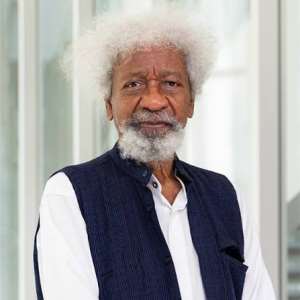
The legendary Nigerian writer, Wole Soyinka, once said, "The man dies in all who keep silent in the face of tyranny." Those words came out of a prison cell, and they have outlived the men who put him there.
Soyinka is also a man with a wicked sense of humour. At a 1962 literary gathering in Kampala, when the Négritude movement was the fashion, he is widely remembered for saying that a tiger does not proclaim its tigritude, it pounces. The room heard it as a joke. Africa heard it as a lesson: stop announcing your greatness and show it by doing. Years later, when death rumours about him kept spreading on social media, he reportedly quipped that he had probably read news of his own death more often than he had read his own works. That is how you laugh at the grave while still standing.
So let me take you through the journey of a man who deserves his place in any hall of fame we can build.
The boy from Abeokuta
Akinwande Oluwole Soyinka was born on 13 July 1934 in Abeokuta, in what was then colonial Nigeria. His father, Samuel Ayodele Soyinka, was a school headmaster. His mother, Grace Eniola, a trader and fierce community activist, was nicknamed "Wild Christian." She was part of the women's movement of Abeokuta that stood up to colonial taxation. You can already see where the fire came from. Soyinka later gave us the world of his childhood in the memoir Aké: The Years of Childhood, a book every young African writer should read.
He studied at Government College Ibadan and University College Ibadan, then went to the University of Leeds in England, where he took his degree in English. In London he worked with the Royal Court Theatre, sharpening the craft that would make him Africa's most formidable dramatist. Along the way, as a student in Ibadan in 1952, he co-founded the Pyrates Confraternity, the first of the "campus confraternities," a fact that still draws wry comments in Nigeria today.
The pen, the stage and the prison
He returned home as Nigeria approached independence, and his play A Dance of the Forests was staged for the independence celebrations of 1960. That was bold, because it did not flatter the new nation. It warned it. Then came The Lion and the Jewel, The Trials of Brother Jero, the novel The Interpreters, and the towering Death and the King's Horseman, a play about duty, custom and colonial interference that remains one of the great works of world theatre.
His courage cost him dearly. In 1967, as Nigeria slid into civil war, Soyinka was arrested after trying to stop the bloodshed. He spent about two years in detention, much of it in solitary confinement, with no trial. He wrote on whatever he could find, including toilet paper, and those scraps became The Man Died: Prison Notes. Think about that for a moment. Locked up for refusing to cheer a war, and he answered with literature.
Nobel, exile and a motorbike
In 1986 the Nobel Committee awarded him the Prize in Literature, making him the first African to receive it. In his lecture, "This Past Must Address Its Present," he dedicated the honour to Nelson Mandela, then still in prison. That was typical Soyinka: take the spotlight and point it at the oppressed.
When General Sani Abacha's regime tightened its grip in the 1990s, Soyinka became one of its loudest critics. He was forced into exile, reportedly escaping Nigeria on a motorcycle, and was later charged with treason in absentia. The dictator died in 1998, and Soyinka returned home. The writer outlasted the general.
Awards, chairs and giving back
Beyond the Nobel, he has been honoured by his country, including the national honour of Commander of the Order of the Federal Republic, and by institutions around the world. He has taught at universities in Nigeria, Britain and the United States, including Cornell and Emory. He delivered the BBC Reith Lectures in 2004, published as Climate of Fear, reflecting on terror and fear in modern life. He served as UNESCO Goodwill Ambassador for the Promotion of African Culture, Human Rights and Communication. His memoirs, including You Must Set Forth at Dawn, and his later works kept him a working writer long after most people retire. Even his 2021 novel, Chronicles from the Land of the Happiest People on Earth, was a sharp, funny satire of Nigeria.
He has been married more than once, is a father, and is, by all accounts, a private man who guards his family away from the cameras.
A voice on the issues of our time
Soyinka never confined himself to the library. He has spoken against military rule, religious extremism, corruption and bad governance, and the wave of insecurity in Nigeria. In 2016 he said he would tear up his US green card if Donald Trump won the presidency, and he followed through. In October 2025 he disclosed that the US had revoked his visa. In July 2026 he was still calling on President Tinubu to reopen unresolved killings and end the impunity. At 92, he has not lowered the volume.
For people like me, that is the real lesson. Talent is common. Consistency of conscience is rare.
A personal word to the professor
Dear Prof, I write this as a junior writer and novelist who has grown up in the shadow of your sentences. I never sat in your lecture hall, but your books taught me that a writer is not a decoration of society, but its witness, its irritant and sometimes its shield. You showed my generation that fear is not a reason to stay quiet. Where we have felt discouraged, your story consoled us, because if you could write from a prison cell, then no excuse we have is big enough. May God grant you long life, strength and peace. May the young Africans you have inspired, myself among them, carry your torch with the same courage and a little of your humour. Thank you, Baba, for everything.
Chief Tutu Baffour Asare Brownsy Williams is an author, columnist, filmmaker and founder of Brownsy Silva Company, based in Accra, Ghana.


 Man arraigned for allegedly posing as Foreign Affairs Minister's rep in Jordan, ...
 GAF details GH¢130,000 support for Kumasi recruitment stampede victim Sandra Baa...
 2027 Budget: Ghanaian youth need jobs, not ‘fantasy’ New Economy – Tampuli jabs ...
 Court releases Baffour Awuah's passport for parliamentary duties as AG refuses t...
 Ghana targets end to raw cocoa exports by 2030 – Ato Forson
 Owabi Water Treatment Plant shut down after heavy rains disrupt operations
 Govt to introduce Natural Resource Management Act to replace Petroleum Revenue M...
 Govt to merge MIIF and GIIF into Ghana Sovereign Wealth Fund to support 24-hour ...
 In haste to remove the Big Six, NDC used wrong image of Theodosia Okoh on new GH...
 Disgraced Nvidia ex-CEO Jensen Huang to testify before US Congress


