




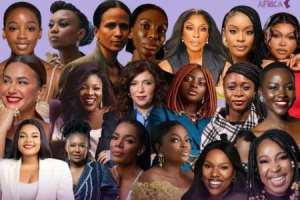
Every so often a list lands in my timeline that makes me stand up straighter. This one comes from Leading Ladies Africa. It names 19 women it says are making movie magic across the continent: actresses, directors, producers and screenwriters. Two of them are Ghanaian: Leila Djansi and Kuukua Eshun. Ghanaian outlets such as AmeyawDebrah.com picked it up quickly, and Kuukua herself thanked Leading Ladies Africa on LinkedIn, calling it an honour to be recognised alongside such remarkable women.
I love every woman on this list, so I will walk through all 19. But I will start where my heart is, at home.
Leila Djansi: the girl who started at 19
Leila Djansi's story begins in Ghana, not Hollywood. According to her biography on IMDb, she began her filmmaking career at 19 with the Ghana Film Company. Another profile says her first feature, Babina, was written and produced with Aak Films Ghana when she was 19. She then went to the United States on an Artist Honors Scholarship to study film at the Savannah College of Art and Design, and she began working in film while still a student.
Her early record is hard to ignore. Her film Grass Between My Lips won the Platinum Award for Best Film at the 2009 WorldFest International Film Festival. Her historical drama I Sing of a Well received 11 nominations at the African Academy Awards and won three, according to a 2013 speaker biography. Sinking Sands, which she wrote, produced and directed, received nine nominations and three wins at the 2011 Africa Movie Academy Awards, including Best Screenplay and Best Makeup, according to Wikipedia.
Then she kept going. The Hollywood Reporter announced in 2013 that Garcelle Beauvais would star in her film And Then There Was You. She later released Like Cotton Twines in 2016. One film blog noted that by about that time she had directed five feature films since 2009, in both the United States and Ghana, an almost annual pace that few Black women filmmakers had managed.
I also like what she says about the business. In a talk reported by the3as.org, she argued that Africa is lucrative for filmmakers but has to build its own market and its own distribution outlets. That is not a celebrity speaking. That is a producer who has done the maths.
Kuukua Eshun: the new generation
If Leila is the pioneer, Kuukua Eshun is the proof that the line continues. She was born in Accra in 1994 and hails from Aburi in the Eastern Region, according to Wikipedia. She studied art and science at Columbus State Community College in the United States, and she splits her time between Ohio and Accra.
She founded Filming as Woman, a women-led production company based in Ghana. In an interview with iMullar she described owning that company as a young, Black African woman as a beautiful testimony, and said she is grateful to tell African stories.
Her work is deliberate. Her documentary Unveiling, about sexual violence against women, was commissioned by the ANO Institute of Arts & Knowledge and premiered at the Museum Ostwall in Dortmund, Germany, according to MyJoyOnline and iMullar. It was nominated for Best Documentary at the 2021 Ghana Movie Awards. In December 2021 she directed a short film with Wizkid for his Grammy-nominated album Made In Lagos, reported by AmeyawDebrah.com. Her film Born of the Earth premiered at the DAK'ART Biennale in Dakar before reaching Detroit's Norwest Gallery, according to Spectator and Metro Times. Her client list, according to MyJoyOnline, includes Michaela Coel, Wizkid, Vic Mensa, Facebook and Variety.
Here is the connection I find beautiful. Leila started in Ghana, trained abroad and made films across two continents. Kuukua does something similar a generation later. Both treat the diaspora as a bridge, not an exit.
The other 17
The Nigerians
Mo Abudu is the business mind of the list. Forbes has called her "Africa's Most Successful Woman," and The Hollywood Reporter named her among the 25 most powerful women in global television. Her EbonyLife company produced Netflix's first Nigerian original series, Blood Sisters, which made the global top ten, according to The Culture Custodian.
Funke Akindele is the people's queen of Nollywood. Her comedy character Jenifa made her a household name, and her recent films have broken box-office records at home, a record I recommend you verify against Nigerian box-office reports before quoting.
Kemi Adetiba moved from music videos to features with The Wedding Party. Okay Africa noted that six of Nollywood's ten most successful films at that point were produced by women, including Adetiba, Mo Abudu and Omoni Oboli.
Bimbo Ademoye began acting in 2014 in the short film Where Talent Lies, according to her Wikipedia entry. Daily Trust noted her role as Queen Arolake in Anikulapo. By 2025 her YouTube channel had reached 1.25 million subscribers, according to Glazia.
Ruth Kadiri was born in Benin City, grew up in Lagos's Ajegunle neighbourhood and started in Nollywood in 2007 with Boys Cot, according to Showmax and other profiles. She has since moved into screenwriting and producing. Glazia noted she was honoured by YouTube as one of Nigeria's top female creators.
The South Africans
Gugu Zuma-Ncube (the list spells her surname slightly differently) graduated from AFDA in 2007 and acted in Isidingo and Rhythm City. She later co-produced the SABC1 drama Uzalo, according to Channel24, and has described being "the president's daughter first" as something that comes with the territory.
Gugu Gumede won audiences as Mamlambo on Uzalo and later as Joyce Gomora on The Polygamist. Briefly News reports she is also an executive producer and co-founder of Stained Glass TV. Notably, she told the Sowetan she wanted to be known beyond being her late mother's daughter.
Connie Ferguson, Nomzamo Mbatha and Thuso Mbedu complete the South African group. Connie built her career on Generations and her production company with her late husband, Shona Ferguson. Nomzamo moved from South African television to Hollywood with Coming 2 America. Thuso became an international name with The Underground Railroad. I am working from general knowledge on these three, so check the details before publishing.
The directors who win at the world's biggest festivals
Apolline Traoré of Burkina Faso trained in the United States and returned home full-time in 2008, according to Wikipedia. Her film Borders won Best Narrative Film at the Pan African Film Festival and prizes at FESPACO in 2017. Her 2023 film Sira won the Etalon d'Argent at FESPACO, according to African Business.
Hend Sabry is a Tunisian-Egyptian actress who landed her first lead role at 13 in The Silences of the Palace, according to Wikipedia. She later starred in Kaouther Ben Hania's documentary Four Daughters.
Kaouther Ben Hania, the Tunisian director of Four Daughters, has been one of North Africa's most celebrated directors in recent years. I am relying on general knowledge for her awards history, so verify before quoting.
Mati Diop, the French-Senegalese director, became widely known with Atlantics at Cannes, and has since won major prizes with her documentary work. Verify the exact awards before quoting.
Wanuri Kahiu is the Kenyan director whose film Rafiki was banned in Kenya and still reached Cannes. Verify the details before quoting.
The global faces
Lupita Nyong'o won an Oscar for 12 Years a Slave and carried an African presence into Hollywood. Michaela Coel, the British-Ghanaian creator of I May Destroy You, also shows how far the Ghanaian line extends. Kuukua Eshun's client list includes her, according to MyJoyOnline.
The counterpoint
A fair critic will ask whether lists like this mean much. Leading Ladies Africa curated these 19. Others could have been named, and Ghana has many more women worth celebrating, including Ama K. Abebrese, whose performances in Djansi's films have earned her Best Actress recognition at the Africa Movie Academy Awards. A list is an invitation, not a ranking.
I agree, and I would add this. Two Ghanaians out of 19 is a good showing, but it should push us to ask what else Ghana can do. Kuukua told Business & Financial Times that she is often one of the few women in the room and has struggled to find other women in film in Ghana to work with. That should worry us more than any list excites us.
What I take from all this
The common thread is not fame. It is ownership. Mo Abudu owns a studio. Kuukua owns a production company. Leila writes, produces and directs her own films. Apolline came home. These women decided not to wait for permission. For a young Ghanaian filmmaker reading this on a phone in Kumasi or Tamale, that is the lesson.
A note from me
I make films and write books myself, so this list is personal. When I read that Leila started at 19, I thought about how many young Ghanaians are 19 right now with a script and no door to knock on. I want my columns to knock on a few. Congratulations to Leila Djansi and Kuukua Eshun. Ghana is proud of you.
Sources: Leading Ladies Africa (list as shared via LinkedIn and AmeyawDebrah.com); Wikipedia, IMDb and the3as.org (Leila Djansi); The Hollywood Reporter (2013); MyJoyOnline, Spectator, Metro Times, iMullar, AmeyawDebrah.com and Business & Financial Times (Kuukua Eshun); The Culture Custodian, Okay Africa, Glitz Africa and Pulse Nigeria (Nollywood); Showmax, Glazia and Daily Trust (Ruth Kadiri, Bimbo Ademoye); Channel24, Sowetan, Briefly News (Gugu Zuma-Ncube, Gugu Gumede); African Business (Apolline Traoré); Wikipedia (Hend Sabry). Reporting current as of November 12, 2026.
About the Author
Chief Tutu Baffour Asare Brownsy Williams is an author, columnist and filmmaker based in Accra, Ghana. He is the founder of Brownsy Silva Company, a creative platform covering novels, film, opinion writing and engineering content, and an opinion columnist for Modern Ghana with readers across the UK, USA, Canada and Germany. He studies at Accra Technical University and is a UN Online Volunteer.


 Man arraigned for allegedly posing as Foreign Affairs Minister's rep in Jordan, ...
 GAF details GH¢130,000 support for Kumasi recruitment stampede victim Sandra Baa...
 2027 Budget: Ghanaian youth need jobs, not ‘fantasy’ New Economy – Tampuli jabs ...
 Court releases Baffour Awuah's passport for parliamentary duties as AG refuses t...
 Ghana targets end to raw cocoa exports by 2030 – Ato Forson
 Owabi Water Treatment Plant shut down after heavy rains disrupt operations
 Govt to introduce Natural Resource Management Act to replace Petroleum Revenue M...
 Govt to merge MIIF and GIIF into Ghana Sovereign Wealth Fund to support 24-hour ...
 In haste to remove the Big Six, NDC used wrong image of Theodosia Okoh on new GH...
 Disgraced Nvidia ex-CEO Jensen Huang to testify before US Congress


