




Since 2022 the European Union has largely cut Russian crude out of its economy, from about 27 percent of imports to about 1 percent. Slovakia and Hungary, two landlocked member states, have not. Hungary’s Russian share of crude imports rose from 61 to roughly 93 percent between 2021 and 2025, and of gas imports from 60 to 90 percent, according to the Center for the Study of Democracy. That divergence is the Carpathian anomaly. It is real and measurable, and it is not geographic: when the Soviet-era pipelines failed, alternative routes worked. It is a rent, protected by a derogation that had no clock.
Between January 2025 and October 2026 that rent met two supply shocks, a binding EU law, a change of government in Budapest and a US sanctions statute that Washington suspended within a month. The anomaly is no longer one thing. In gas it is closing on the EU’s timetable. In oil it is stuck. In nuclear fuel it never was an anomaly. The decisions that matter now sit in Budapest, which must decide who builds Paks II, and in Bratislava, which has just reopened its channel to Moscow ahead of a parliamentary election due in 2027.
1. A rent built on two pipelines
Druzhba has carried Soviet, then Russian, crude to Central Europe since the 1960s; Bratstvo carried gas. Slovakia earned a discount on the crude, transit fees and a resale margin. By 2026 the southern branch of Druzhba was the last route bringing Russian crude into the EU, feeding two refineries built for Urals grade: MOL’s Duna in Hungary and Slovnaft in Slovakia. Both belong to MOL Group, so the commercial logic is one company’s. Slovakia is the more exposed, with one large refinery and less storage.
Gas changed route, not source. Ukraine let the Gazprom transit contract expire on 31 December 2024; Kyiv had said well in advance that it would not renew, yet the closure landed in Slovakia as a shock, ten days after Prime Minister Robert Fico travelled to Moscow without a matching visit to Kyiv. Within a month Gazprom was delivering to the Slovak importer SPP through TurkStream and Hungary. Delivery moved from the east of the country to the south, and Budapest gained leverage over Bratislava it never had. The firm capacity of the Hungarian–Slovak link is about 3.5 billion cubic metres a year, roughly three quarters of Slovak demand. SPP’s contract runs to 2034, and Bratislava argues that obeying the EU ban would leave it paying for gas it cannot take.
2. A derogation without a clock
The sixth sanctions package of June 2022 banned Russian seaborne crude but exempted pipeline oil (Article 3m of Regulation 833/2014), citing the landlocked position of Hungary, Slovakia and Czechia. It was meant to buy time. Czechia used it: for about EUR 65 million it upgraded the TAL pipeline and ended Russian oil imports in April 2025. Hungary and Slovakia did not. Instead, Regulation (EU) 2025/395 of 24 February 2025 added a second derogation, allowing the two countries to sell each other petroleum products refined from pipeline crude.
Gas followed a harder path. Regulation (EU) 2026/261, adopted on 26 January 2026 by 24 votes to 2, bans Russian LNG under long-term contracts from 1 January 2027 and pipeline gas from 30 September 2027. Penalties start at EUR 2.5 million for individuals and EUR 40 million, or 3.5 percent of global turnover, for companies. The Commission rested it on trade and energy law, not foreign policy, so that no veto would apply. Slovakia challenged it at the Court of Justice on 24 April (Case C-398/26), arguing that such a measure needs unanimity; Hungary’s Orbán government filed its own action in February, and its fate under Magyar is unclear. No ruling had been reported by 27 October, and no interim measure had been reported; proceedings of this kind can take up to three years. The Union changed the decision rule to defeat the veto; the dissenters now contest the rule.
Oil is the missing piece. The Commission promised a permanent ban by end-2027 and scheduled its proposal for 15 April, then on 24 March postponed it, citing the Gulf war and the Druzhba dispute. There is still no sign that it has been tabled. The constraint is real: the US Energy Information Administration put Hormuz flows at 4.9 million barrels a day in the second quarter against 21.6 million at the end of 2025, and Brent was around USD 100 in early October. That strengthens the two governments’ case on supply risk in general; it does not change the February finding on Druzhba. The Adria route is the alternative: it carried non-Russian crude through the winter outage. How much dearer it is remains disputed, with one analysis putting its tariff at about EUR 12 a tonne in 2024 against EUR 21 on the Ukrainian route, and Fico calling it five times higher.
3. Two shocks, two counter-measures
On 27 January 2026 oil stopped flowing through the southern Druzhba. Ukraine blamed a Russian strike near Brody; Bratislava and Budapest blamed a slow Ukrainian repair. No neutral body inspected the site, and neither account has been verified. Both governments retaliated: Hungary suspended diesel exports to Ukraine on 18 February and Slovnaft followed; Slovakia cut emergency electricity supplies, a mostly symbolic step since Poland and Romania covered the gap; and Hungary, with Slovak backing, blocked the EUR 90 billion Union loan to Ukraine and the twentieth sanctions package.
On 26 February the Commission’s Oil Coordination Group found no immediate supply risk, since Croatia’s Adria pipeline was delivering non-Russian cargoes. That removed the supply argument and left a cost argument. Ukraine’s pipeline operator finished the repair and lifted force majeure on 21 April; oil reached Slovakia in the early hours of 23 April and Hungary later that day. Hungary lifted its veto on the loan as the oil started moving, and the Union adopted the twentieth sanctions package the same day. The sequence is telling: the veto fell as the oil flowed. Whoever was at fault for the outage, the pipeline had become a bargaining chip, and the lack of neutral verification is what made it one.
4. After Orbán: the anomaly splits
Hungary’s election on 12 April ended Viktor Orbán’s sixteen years in power; Péter Magyar’s Tisza won a two-thirds majority, between 138 and 141 of 199 seats according to reports. The style changed at once: no veto on the Ukraine loan, a minority-rights agreement with Kyiv on 3 June, which opened the next step in Ukraine’s accession talks. The substance changed unevenly.
Gas is converging. On 18 September Economy and Energy Minister István Kapitány said Hungary should be able to meet the EU’s deadline and do without Russian gas by October 2027, a marked change from the government that had sued to stop the ban. Oil is not converging. Hungary still takes about 90 percent of its crude from Russia. Kapitány told parliament that Hungary will use both Druzhba and Adria, the government’s horizon for ending Russian oil dependence is 2035, eight years behind the Union’s, and the regulated household price scheme continues. MOL says its refineries could run on non-Russian crude by the end of 2026, but that is a capability, not a purchasing decision.
Slovakia has lost its partner but not changed direction. Fico softened his tone toward Kyiv, meeting President Zelensky in Yerevan on 4 May. Toward Moscow he has gone the other way. On 26 October Foreign Minister Juraj Blanár led the Slovak delegation to the 22nd session of the Russian–Slovak intergovernmental commission, the first since November 2021, and met Sergei Lavrov. According to Slovak reports, the sides agreed on the need for stable Russian oil supplies through Druzhba and signed a protocol on areas of future cooperation, which has not been published; the next session is expected in Slovakia in 2027. Blanár said Slovakia will honour its oil and gas contracts, that Russia is hard to replace during the Gulf crisis, and that cooperation will stay within EU and NATO commitments and outside sanctioned areas.
His case is financial as much as strategic. The SPP contract runs to 2034 on take-or-pay terms, and before leaving he put the compensation risk at more than EUR 10 billion, possibly up to EUR 16 billion. Lavrov, according to Bratislava, said Russia remains ready to meet its contractual obligations. The Russian Foreign Ministry’s readout of the Lavrov talks does not mention energy, and no gas, oil or nuclear-fuel contract was reported signed. Blanár also offered Bratislava as a venue for lower-level preparatory talks on Ukraine, which Lavrov called acceptable; the Slovak opposition fiercely attacked the trip. Slovakia now carries the political cost of the anomaly largely alone.
5. Nuclear: the exception that is not an anomaly
Nuclear is the one Russian energy link the Union has not touched. The Commission carved it out of Regulation 2026/261 and promised a separate proposal; officials told Reuters in August there was little appetite to table it, and there is still no sign of one. The reason is arithmetic. Russia supplied about 23 percent of EU enrichment services in 2025, and France took roughly 39 percent of its enriched uranium from Russia. Slovakia and Hungary stand with much of the Union here, and their supply-security argument is sound: Western enrichment and conversion capacity cannot yet replace Russian supply.
Slovakia’s dependence is contractual and closing. Mochovce 4 reached criticality on 6 August and was connected to the grid on 15 October, at 20 percent of its 471 MW, two days late after a repeated test; in full operation, nuclear should cover about 77.5 percent of consumption. The fuel is still Russian, from TVEL under a contract running to 2026 with an option to 2030. But Slovenské elektrárne has contracted its exit through Westinghouse (2023), Framatome (2024) and Urenco (2025), with first non-Russian deliveries from 2027 and European VVER-440 lead assemblies targeted for 2028. Company policy is to hold at least two alternative suppliers, which makes 2026 the last year of complete dependence. The binding constraint is the regulator: no new fuel enters a reactor until Slovakia’s nuclear authority approves it.
Hungary’s dependence is structural, and until now was lengthening. The four VVER-440 units at Paks supply close to half of Hungarian electricity. Paks II, two VVER-1200 units awarded to Rosatom without tender in 2014 and valued at about EUR 12.5 billion, is financed largely by a Russian state loan; first concrete was poured in February. In May the new government opened a review. The project also has a European legal problem: on 11 September 2025 the Court of Justice annulled the Commission’s approval of the state aid, on procurement grounds, which does not stop construction but removes its financing clearance. On 21 October Reuters reported that it is weighing Rosatom’s replacement as main contractor and sounding out alternatives; one source said it leans toward building the expansion without Rosatom. More than EUR 2 billion has been spent, about EUR 1.1 billion of it paid to Rosatom, which Hungary could forfeit along with penalties. A decision is expected at the end of 2026 or early 2027.
Washington was supposed to supply the pressure. Paks II payments pass through Russian banks under US sanctions and run on OFAC General Licence 132. The Graham Act, signed on 18 September, carries provisions aimed at Rosatom and authorises tariffs of up to 100 percent on all goods from the five largest buyers of Russian oil or gas, with exceptions. Reuters, citing Senate aides, named Slovakia and Hungary among the five largest crude buyers, though the list is indicative and others put Turkey there. Hungary asked for relief and, in the event, did not need it. On 16 October, a week after authorising trade in Russian diesel to calm fuel prices, President Trump used the Act’s national-interest waiver (Executive Order 14436) to suspend the tariffs, the Rosatom provision and most other new sanctions. Earlier sanctions stand, and General Licence 132, which predates the Act, appears to stand with them. The waiver required only a written certification to Congress that it served the national interest.
So the question is back where it started. Brussels cannot force the nuclear file before the 2030s, Washington has just declined to, and the answer on Paks II will be Budapest’s own: who builds it, at what price, with what exit cost. For Slovakia the task is duller and harder: licence the non-Russian fuel on schedule.
Verdict – Three findings & Three lessons
Three findings. First, the anomaly is real but divisible: Hungary’s crude dependence rose while the Union’s fell from 27 percent to about 1; in nuclear fuel the two states share their dependence with France; in gas Hungary is converging. Second, the cause is commercial and political, not geographic. Adria carried non-Russian crude to both countries through the three-month Druzhba outage without a supply failure. Czechia’s example shows geography was not the constraint. What persisted in Slovakia and Hungary was a discounted grade, refineries configured for it, Hungarian price regulation, and the transit and resale margins of national companies. Orbán’s departure showed politics to be the accelerant and commerce the core. Third, the legal architecture is the battlefield, and the contrast is instructive: the EU regulation binds and carries penalties; the American statute was waived within 28 days.
Three lessons follow. A derogation without dated milestones and volume limits is a policy failure. Security of supply and cost of supply are different problems, and the 2026 crisis was a cost crisis presented as a supply crisis; the Union should separate them and fund the cost of transition with a dedicated instrument, not an open-ended derogation. And cross-border infrastructure needs independent verification: a standing technical mission, for example under the Energy Community, would have closed the space that three months of dispute over Brody exploited.
The exception is closing, but not at the same speed or for the same reasons in oil, gas and nuclear fuel. It will close slowly, and at a price.
About the Author:
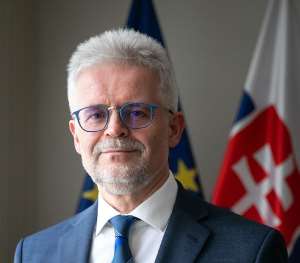
Amb. (ret.) Urban Rusnák, PhD, is the founder of Geopolitics.sk, a Bratislava-based strategic advisory firm specialising in energy and infrastructure, defence, Ukraine’s reconstruction, and political risk across Central and Eastern Europe. He previously served as Secretary General of the Energy Charter Secretariat and as Slovakia’s Ambassador to Ukraine.

 Two Aduman SHS teachers arrested, interdicted over alleged sexual assault agains...
 Roads Minister directs establishment of bitumen testing facilities in Accra, Ash...
 Mercy Ships surgeries are free; beware of fundraising scams – Health Ministry to...
 Publish El-Wak recruitment stampede probe report – Akosua Manu demands a year af...
 Attorney General opposes Wontumi's bid to recall prosecution witness in illegal ...
 New Heritage Cedis feature enhanced security, improved durability against counte...
 Franklin Cudjoe describes cocaine trafficking cases as national disaster; demand...
 Cabinet approves establishment of Ghana Space Agency
 God is not 'wicked' to let NPP come back to power again - Cape Coast Mayor
 Ghana Immigration Service introduces six-month rotational transfers for officers


