




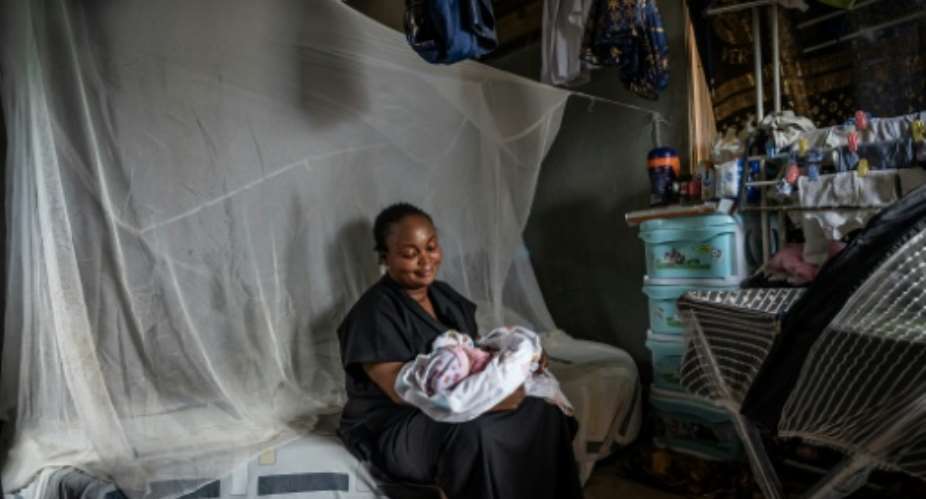
The needle broke the skin, followed by wailing and the reassuring coo of "sorry, sorry" from the medical staff -- and just like that, another baby was vaccinated against malaria, an intractable child killer in Nigeria.
Expectations were high when the world's first malaria vaccines arrived in Africa's most populous country in late 2024, promising to limit the devastation from the mosquito-borne disease that killed nearly 200,000 Nigerians and some 600,000 people worldwide that year.
Progress has been slow -- but on the local level, some villages have seen child deaths drop off completely, with almost a quarter-million children fully vaccinated and 1.8 million jabs administered.
"It makes me feel happy," said hairdresser Ezibanyenami Paul, her own smile contradicting her daughter's tears after she received her fourth and final jab in the town of Oruma, in southern Bayelsa state.
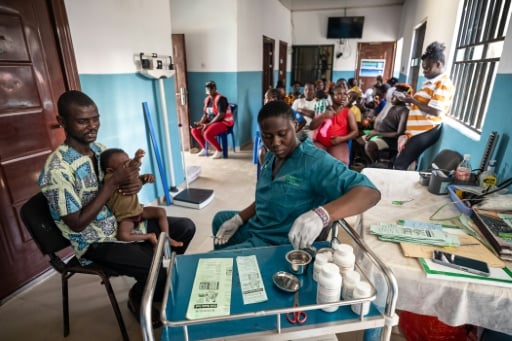 Nigeria has been administering malaria vaccines since late 2024, though the programme had only reached four out of 36 states two years later. By Light Oriye Tamunotonye (AFP)
Combatting malaria requires a complicated mix of state and private sector capacity to procure medicines, organise public health campaigns and keep up infrastructure such as drains and sewage.
"The malaria vaccine is a breakthrough," said Hadiza Hussayn Jibril, of the NGO PATH, which is aiding Bayelsa state in its vaccine rollout. "But it doesn't provide 100 percent protection."
Still, Bayelsa has already seen an 18-percent drop in the rate of children under five who have malaria at any given time, according to PATH -- all the more impressive considering bed net and preventative drug distributions have been lagging in the state for years.
'It was hectic'
In Oruma, in a cluster of squat houses and shaded verandas on a neat grid carved out from the surrounding tangles of forest, clinic workers doled out a four-part immunisation regime spread over the first 15 months of an infant's life.
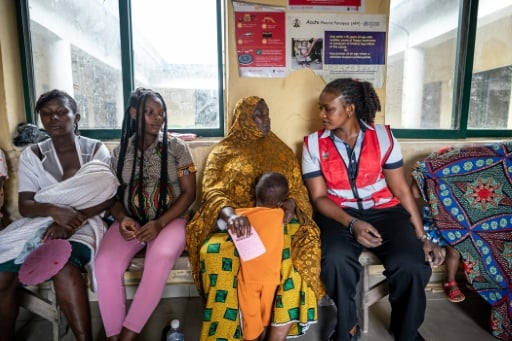 Health care workers in Ogbia district say that child malaria deaths have dropped off completely since Nigeria introduced vaccines in Bayelsa state. By Light Oriye Tamunotonye (AFP)
Children under five, with weaker immune systems, account for more than 75 percent of malaria deaths in Africa, according to the World Health Organization.
The vaccine's effectiveness fades over time, but the idea is to protect children while they're most vulnerable.
"It was hectic," Elizabeth Ogisi, director of primary health care for the wider Ogbia local government area, said of the time before the vaccine.
"A child died. What happened? He was convulsing," she said, recalling "rampant" cases of malaria progressing to the point of seizure.
Since the introduction of the vaccine, "we have not recorded anything like the death of a child", she told AFP.
Zuweira Nasiru, 39, said her two-year-old son Abdulrauf -- the first of her seven children to get the vaccine -- has only ever had mild cases of malaria.
Paul's infant has not had it once -- a big deal, the 24-year-old hairdresser told AFP, because of the cost of malaria drugs.
At 5,000 naira ($3.75), she said, medicine for the easily treatable disease is too expensive.
Slow rollout
Oruma represents a small slice of Nigeria's 240 million people and 68.5 million annual infections.
So far, jabs are only being deployed in four out of 36 states.
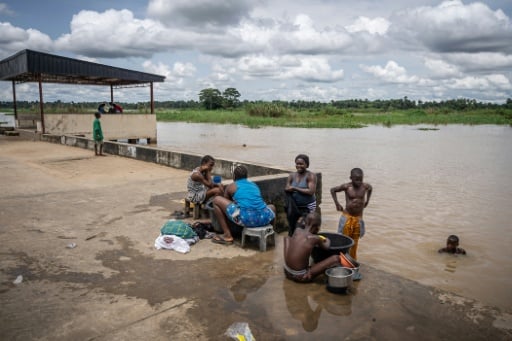 The winding rivers and creeks of the Niger Delta complicate vaccine delivery, as some villages are only reachable by boat. By Light Oriye Tamunotonye (AFP)
The slow start has helped health workers bring down "dropout rates" between doses and work out kinks in reaching remote villages.
There "are very difficult zones that we normally don't get to. No roads, you have to take a boat," said James Kurofou, director of immunisation for Sagbama local government area, speaking to AFP on the banks of one of the Niger Delta's many wide, mud-coloured rivers.
In some cases, health care workers decided to dole out jabs during home visits, in cases where parents -- often those who couldn't afford to travel -- missed appointments.
Bayelsa's verdant mangroves and winding creeks are repeatedly interrupted by armed men guarding oil pipelines -- a reminder of the glaring economic inequality in the country.
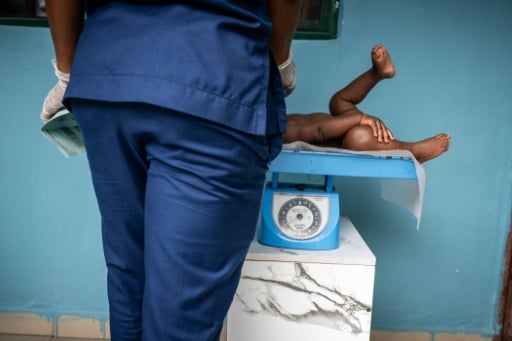 Health care workers try to schedule routine exams and jabs to coincide with the multiple doses of the malaria vaccine, which requires four shots over 15 months. By Light Oriye Tamunotonye (AFP)
"The oil wealth you see in a state like Bayelsa does not automatically translate into functioning primary health care," said Muhammed Afolabi, co-director at the London School of Hygiene and Tropical Medicine's Vaccine Centre, noting decades of government corruption and underinvestment in health infrastructure in Nigeria.
The Bayelsa health ministry did not respond to a request for comment.
At a ceremony in the state capital Yenagoa, organised by PATH and local authorities to thank health care workers from Sagbama and Ogbia, the mood was raucous as people took turns singing and dancing in a meeting hall.
But the gifts the workers were given were a reminder of the task that remains: rubber boots, a raincoat and an umbrella to help them keep trekking through the tropical elements.


 Attorney General opposes Wontumi's bid to recall prosecution witness in illegal ...
 New Heritage Cedis feature enhanced security, improved durability against counte...
 Franklin Cudjoe describes cocaine trafficking cases as national disaster; demand...
 Speaker Bagbin forwards AKSA Energy bribery deal review report to Special Prosec...
 Cabinet approves establishment of Ghana Space Agency
 God is not 'wicked' to let NPP come back to power again - Cape Coast Mayor
 China accuses US of 'fabricating' Nvidia spy claims to push tech 'blockade'
 Nvidia board weighs ouster of CEO Jensen Huang amid spy scandal
 Ghana Immigration Service introduces six-month rotational transfers for officers


