




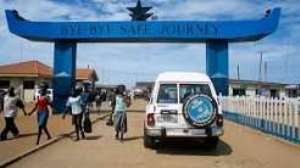
There is a fundamental question that every responsible government must be prepared to answer: Who enters our country, why do they come, what activities do they engage in, where do they settle, and how effectively do we monitor their presence? These are not questions motivated by xenophobia, ethnic prejudice or hostility towards our neighbours. They are questions of sovereignty, national security, economic protection and the responsibility of a government to safeguard its citizens. Ghana is a member of the Economic Community of West African States (ECOWAS). We subscribe to the principles of regional integration, cooperation and the free movement of persons, goods and services. We recognize that our neighbours have legitimate rights to travel to Ghana, establish businesses in accordance with our laws, seek employment where permitted and participate in economic activities. Indeed, Ghana's history, geographical position and economic development make it an attractive destination for people from neighbouring countries, particularly Nigeria, Togo, Burkina Faso, Côte d'Ivoire and other West African states. But does regional integration mean that Ghana should surrender effective control over its borders? Does free movement mean that anybody can enter through an unauthorized route, settle in any community, establish a business, engage in commercial activities and remain in the country without effective monitoring? Certainly not! There is a difference between welcoming our neighbours and abandoning our responsibility to regulate immigration. There is also a difference between facilitating legitimate economic activities and allowing individuals or business interests to operate outside the laws of the country. Unfortunately, growing public concerns about immigration enforcement, foreign commercial activities and unauthorized cross-border movements deserve more serious attention than they appear to be receiving.
What Exactly Do Our Immigration Laws Provide?
Ghana is not without immigration laws. The Immigration Act, 2000 (Act 573), together with the Immigration Regulations, 2001 (L.I. 1691), provides the legal framework for regulating the entry, residence and employment of foreign nationals. The Ghana Immigration Service (GIS) is responsible for monitoring the entry and departure of travelers and regulating the residence and employment of foreign nationals. The existence of these laws, however, does not automatically guarantee effective enforcement. The critical question is whether the institutions responsible for enforcing them have the personnel, equipment, intelligence, logistical support and political backing necessary to discharge their responsibilities.
We must also recognize the ECOWAS Protocol on Free Movement of Persons, Residence and Establishment, adopted in 1979. The protocol provides for the gradual removal of obstacles to movement within the sub region. However, its provisions must be understood correctly. The first phase provides visa-free entry for eligible ECOWAS citizens through official entry points for visits of up to 90 days, subject to the prescribed documentation. The second and third phases address residence and establishment. These rights do not eliminate national laws governing public order, employment, business registration and other legitimate regulatory requirements.
Research by Kwaku Arhin-Sam, Amanda Bisong, Leonie Jegen, Harouna Mounkaila and Franzisca Zanker, published in 2022, identifies a significant contradiction in West African migration management. ECOWAS has established a framework for free movement, but implementation remains uneven. Weak regional institutions, divergent national interests and inadequate infrastructure continue to undermine the system. Their findings should interest Ghanaian policymakers. We cannot celebrate regional integration while neglecting the institutional arrangements required to make it work. Ghana must therefore find the right balance between its regional obligations and its national responsibilities.
Foreign Nationals and the Question of Commercial Activities
One issue that deserves urgent investigation is the involvement of foreign nationals in commercial activities across Ghana. In our towns and cities, one encounters foreign nationals engaged in various forms of trading, retailing, wholesale distribution and other businesses. Some operate substantial commercial establishments, while others are involved in relatively small-scale trading. The question is not whether foreigners should be allowed to invest in Ghana. Foreign investment is welcome and can contribute to employment, technology transfer, economic growth and national development. The question is whether all these businesses are operating within the law.
Are the enterprises properly incorporated? Where foreign participation is required, have they registered with the appropriate investment authority? Are they complying with the relevant tax laws? Are they employing Ghanaians as required by applicable legislation? Are they obtaining the necessary permits and licenses? And, perhaps more importantly, are activities reserved for Ghanaian citizens being undertaken by foreign nationals, either directly or through Ghanaian fronts?
This last question is particularly important. The Ghana Investment Promotion Authority Act, 2026 (Act 1173), which repealed the former GIPC Act, 2013 (Act 865), provides a new framework for foreign investment. Section 31 establishes a minimum foreign capital requirement of $500,000 for a non-citizen engaging in a trading enterprise, alongside a requirement that at least 75% of employees be skilled Ghanaians. Section 32 reserves specified activities for Ghanaian citizens and wholly Ghanaian-owned enterprises. These include petty trading, hawking, selling goods in market stalls, operating beauty salons and barbering shops, certain small taxi and car-hire enterprises, and other activities specified in the Act. These are not insignificant provisions. They demonstrate that Ghana recognizes the need to protect certain economic activities for its citizens. But legislation without enforcement is little more than an expression of good intentions.
The Ghana Investment Promotion Authority, the Office of the Registrar of Companies, the Ghana Revenue Authority, the local assemblies and other regulatory bodies must explain how they monitor compliance. We need to know how many foreign-owned businesses are registered, how many are operating lawfully, how many have been found to violate the law and what action has been taken against offenders.
The government should publish periodic compliance reports. The public should not have to rely on speculation, rumours or observations at individual markets to understand whether our investment and commercial regulations are being enforced. We must also investigate the possibility of local citizens fronting for foreign business interests to circumvent the law. Where such arrangements exist, the beneficial ownership provisions and enforcement powers must be used to establish the actual owners and controllers. This is not an attack on foreign investors. It is a demand for fairness. A Ghanaian entrepreneur who must comply with registration requirements, taxation, licensing and other regulations should not be disadvantaged by a competitor who evades those same obligations.
The Fulani Herdsmen and the Challenge of Cross-Border Movement
Perhaps one of the most sensitive aspects of this discussion concerns the movement of Fulani pastoralists and their cattle into Ghana. We must approach this subject with responsibility. The Fulani are not a homogeneous criminal group. Many are pastoralists whose livelihoods depend on cattle rearing and seasonal movement. There are also Fulani citizens of Ghana who have every right to live peacefully and pursue legitimate economic activities. Our concern is not their ethnicity. Our concern is the movement of people and livestock across national borders without compliance with applicable regulations, the destruction of farms, conflicts with local communities, the movement of cattle through unauthorized routes and the potential security implications of uncontrolled migration.
Ghana has had to contend with recurring conflicts between farmers and herders. These conflicts can result in the destruction of crops, loss of livelihoods, injuries, deaths and the displacement of communities. But there is an additional dimension that deserves attention: border management.
Where do these pastoralists enter Ghana? Are they using designated crossing points? Do they possess the required identity documents and ECOWAS International Transhumance Certificates? Are their cattle registered and subjected to veterinary inspections? Do they have the necessary health certificates? Are their movements monitored, and are their periods and locations of stay regulated? These are legitimate questions.
Indeed, Ghana's policy guidelines on cross-border transhumance recognize the importance of requiring identity documents and international transhumance certificates, registering herds at entry points, verifying animal health, designating approved entry and exit points and monitoring the movement of livestock. The guidelines also contemplate restrictions on night crossings and the removal of herds in appropriate cases involving public order, security or public health.
The problem, therefore, is not that Ghana has no framework for managing pastoral migration. The problem is whether the framework is being implemented effectively. If people and livestock can enter through unauthorized routes, travel considerable distances and establish themselves in communities without effective checks, then we have a serious enforcement problem. We cannot continue to treat every conflict between farmers and herders as an isolated local dispute without examining the larger national framework governing migration, land use, livestock movement and border surveillance.
What Do West African Researchers Tell Us?
The debate should not be driven exclusively by political statements, public anxiety or isolated incidents. There is substantial research from Ghana and other West African countries that can help us understand the problem.
In a 2022 study published in African Studies Review, University of Ghana migration scholar Mary Boatemaa Setrana examined the role of civil society organizations in managing farmer-herder conflict in Agogo. Her research found that local farmer and Fulani associations could contribute to conflict management because they understood the communities, their cultural circumstances and the competing interests involved. However, mistrust, inadequate resources and the tendency of groups to divide themselves into indigenous and non-indigenous categories undermined sustainable peacebuilding. This is an important lesson. Security enforcement must be accompanied by local participation, dialogue and accountability.
In another study, published in Migration Studies in 2022, Setrana, Justice Richard Kwabena Owusu Kyei and Daniel Nyarko examined the experiences of sedentary Fulani, nomadic Fulani and indigenous farmers in Agogo. They demonstrated that the conflict was more complicated than a simple division between Ghanaians and foreigners. Different groups had competing claims over land, pasture, livelihoods and authority. Even members of the same broad ethnic community occupied different positions. This research cautions against generalization. It also reinforces the need for proper identification, registration and regulation rather than collective blame.
Similarly, Thomas Yeboah, Leander Kandilige, Joseph Kofi Teye and their collaborators examined the experiences of ECOWAS migrants in Ghana. Their 2021 research, based on interviews with migrants and immigration officials, found significant differences in migrants' experiences of border crossing, residence permits, work permits and the right of establishment. The implication is that Ghana needs a more transparent and predictable migration administration. Rules must be understood by migrants and enforced consistently by public institutions. We should therefore ask not merely how many foreigners are in Ghana, but whether the state knows their legal status, employment, business activities and places of residence.
When Immigration Becomes a Security Question
Immigration management is not simply an economic or administrative exercise. It has direct implications for national security. West Africa is experiencing serious security challenges, including terrorism, violent extremism, organized crime, human trafficking, arms trafficking, drug trafficking and kidnapping. The expansion of extremist violence from the Sahel towards coastal West African countries is a matter of legitimate concern to Ghana.
Burkina Faso, Mali and Niger have experienced prolonged insecurity involving extremist organizations and armed groups. Ghana shares borders and extensive social and commercial connections with countries affected by these developments. It would therefore be irresponsible for Ghana to assume that it is immune.
However, we must distinguish between a legitimate security assessment and an unsupported allegation. There is no basis for declaring that Fulani pastoralists, Nigerians or any other national group are terrorists or spies simply because of their nationality or occupation. The concern is that poorly monitored border movements can create opportunities for criminal networks to exploit weaknesses in national security systems.
What if an individual entering Ghana through an unauthorized route is involved in trafficking, intelligence gathering, arms movement or extremist activity? How would our security agencies identify such a person? What systems exist for checking identities, tracking suspicious movements and exchanging intelligence with neighbouring countries? These questions deserve answers.
The Ghana Immigration Service itself identifies national security, border patrols, intelligence development and cooperation with domestic and international security agencies as part of its mandate. Its operations structure includes intelligence and counter-terrorism functions. The challenge is ensuring that these responsibilities translate into effective action on the ground. We need modern surveillance technology, functioning communication systems, adequate personnel, biometric identification where appropriate, intelligence sharing and coordinated border patrols. We must also strengthen cooperation between the Immigration Service, the Ghana Police Service, the National Intelligence Bureau, the military, Customs Division and other relevant agencies. Security cannot be the responsibility of one institution acting in isolation.
What Can Ghana Learn from Other African Countries?
Ghana does not have to invent every solution from scratch. Other African countries have experimented with community-based security and cross-border cooperation.
Kenya's Nyumba Kumi initiative, which promotes neighbourhood-level security and cooperation between residents and law enforcement agencies, offers one useful example. Its central idea is that people who live in communities are often better positioned to notice unusual developments and report suspicious activities. Ghana could adapt this approach through district-level community security committees involving traditional authorities, assembly members, religious leaders, farmers, transport operators and security agencies. Such committees must not become vigilante organizations. Their purpose should be information sharing, early warning, public education and peaceful dispute resolution.
There are also valuable examples closer to home. Research compiled by the International Institute for Environment and Development (IIED) identifies cross-border agreements between Katsina State in Nigeria and Maradi Region in Niger, as well as arrangements involving Niger and Benin, as examples of cooperation in managing pastoral mobility. These arrangements have involved producer organizations, local authorities, civil society organizations and government institutions. They provide mechanisms for dialogue, negotiation and cooperation over livestock movement, grazing routes and conflict prevention.
The ECOWAS-supported PEPISAO programme also facilitated consultations and cooperation agreements involving several West African border communities. These included arrangements between Maradi and Katsina, and between Dosso in Niger and Kebbi State in Nigeria. The lesson is particularly relevant to Ghana. Rather than treating cross-border pastoral movement exclusively as a security problem, neighbouring countries can establish jointly monitored corridors, agreed entry and exit points, livestock identification systems and local conflict-resolution mechanisms. Ghana should explore similar arrangements with Burkina Faso, Togo and Côte d'Ivoire. A border is not necessarily a wall separating communities. It can also be a point of cooperation, provided the countries concerned agree on rules and enforce them.
South Africa: A Warning Ghana Must Not Ignore
Perhaps the most disturbing development in the African immigration debate is the recent wave of xenophobic attacks in South Africa. In April-May 2026, anti-immigration demonstrations organized by the March and March movement were accompanied by attacks on African and Asian foreign nationals in several South African cities. Human Rights Watch reported assaults, intimidation and attacks against foreign nationals, including people whose businesses and livelihoods were targeted.
The situation deteriorated further in October. On October 22, a foreign national was beaten to death by a crowd of about 50 people in Durban. South African police confirmed the incident and launched investigations. Five men were subsequently detained for questioning in connection with attacks on foreign nationals. The African Commission on Human and Peoples' Rights condemned the violence and emphasized the South African state's obligation to protect everyone within its territory.
As recently as November 10, 2026, reports from Durban indicated renewed attacks, looting and forced closure of businesses belonging to foreign nationals, prompting the deployment of South African military personnel to patrol affected areas. These developments should concern every African government. South Africa's experience demonstrates the danger of allowing immigration frustrations to become a justification for mob violence.
There are genuine policy questions surrounding undocumented migration, employment, public services, business regulation and border control. Citizens have the right to demand that their governments address these matters. But no individual or group has the right to assault, rob, intimidate or kill another person because of nationality.
It is important to understand the underlying problem. South Africa faces high unemployment, inequality, poverty and intense competition for economic opportunities. Migrants have sometimes become convenient scapegoats for wider socioeconomic failures. Human Rights Watch has warned against this tendency to blame migrants for problems requiring government action. Ghana must learn from this experience.
We must not allow legitimate concerns about immigration to be hijacked by ethnic prejudice, political opportunism or mob action. A foreign national who has complied with Ghanaian law deserves protection. An individual who violates the law should be investigated and dealt with through lawful procedures. The distinction is fundamental. We cannot demand that South Africa protect Ghanaians living there while tolerating violence or discrimination against other Africans living in Ghana. African solidarity must be reciprocal.
What Should the Government Do?
The government must move beyond occasional announcements and demonstrate that Ghana has a coordinated immigration and border-management policy.
- The Ghana Immigration Service should undertake a comprehensive assessment of border security, particularly along vulnerable sections of the northern and eastern frontiers. Unauthorized crossing points should be identified, monitored and secured through appropriate technology and personnel.
- The GIPC Authority, Registrar of Companies, Ghana Revenue Authority and local assemblies should undertake a coordinated compliance exercise involving foreign-owned enterprises. The findings should be published without targeting any nationality or business community unfairly.
- The government should establish a reliable national system for recording and verifying the legal status of foreign residents, workers and business operators, consistent with applicable data-protection and human-rights requirements.
- Ghana should strengthen intelligence cooperation with Burkina Faso, Togo, Côte d'Ivoire and other ECOWAS partners. Criminal networks do not respect national boundaries; our security cooperation must therefore extend beyond them.
- Pastoral movement must be properly regulated. All applicable transhumance documentation, livestock identification, veterinary inspections, approved routes and grazing arrangements should be enforced. Where conflicts arise, traditional authorities, farmers' associations and pastoralist representatives should be involved in resolving them.
- District assemblies in border communities should establish community-based early-warning and security reporting systems. Residents should be encouraged to report suspicious activities without being encouraged to harass or discriminate against foreigners.
- Finally, Parliament should exercise its oversight responsibilities. The relevant committees should invite the Immigration Service, the security agencies, GIPC Authority and other regulatory institutions to explain their preparedness, enforcement activities and operational challenges.
We should also demand periodic public reporting on immigration enforcement, foreign business compliance and border security.
National Security and African Solidarity Must Coexist
Ghana's position in West Africa carries responsibilities. We cannot preach regional integration while disregarding the legitimate interests of our citizens. Neither can we claim to support African unity while treating our neighbours with suspicion and hostility. The answer is not to close our borders. It is to manage them intelligently. The answer is not to expel every foreign national. It is to distinguish between those who comply with the law and those who violate it. The answer is not to regard every Fulani herder as a security threat. It is to ensure that pastoral migration is documented, regulated and conducted without destroying the livelihoods and security of farming communities. The answer is not to encourage vigilantism. It is to strengthen the institutions responsible for enforcing our laws.
Ultimately, national security begins with knowing what is happening within our borders. A government that cannot adequately establish who enters, who resides, what businesses are operating and how people move across its territory will struggle to identify and address genuine threats. Our borders must remain open to legitimate regional cooperation, commerce and human interaction. But they must never become corridors through which criminality, exploitation and insecurity can flourish unchecked.
Ghana has an opportunity to demonstrate that immigration management, economic protection, national security and African solidarity are not competing objectives. They can coexist. What is required is political commitment, institutional discipline, regional cooperation and the consistent enforcement of the law. We must not wait for a major security incident or the kind of xenophobic violence witnessed in South Africa before taking these responsibilities seriously. A sovereign nation must know who enters its territory, protect those who lawfully reside within it, and enforce its laws without fear or favour. That is not xenophobia. That is responsible governance.
References
African Commission on Human and Peoples' Rights. (2026, October). Statement on the killing of a foreign national in Durban and the protection of foreign nationals.
Arhin-Sam, K., Bisong, A., Jegen, L., Mounkaila, H., & Zanker, F. (2022). The (in)formality of mobility in the ECOWAS region: The paradoxes of free movement.
Ghana. (2026). Ghana Investment Promotion Authority Act, 2026 (Act 1173).
Human Rights Watch. (2026, May 20). South Africa: New waves of xenophobic attacks.
Setrana, M. B., Owusu Kyei, J. R. K., & Nyarko, D. (2022). Beyond the binary debates in migration: Experiences of Fulani nomads, sedentary Fulani, and autochthone farmers in Agogo, Ghana. Migration Studies, 10(2), 152–171.
Setrana, M. B. (2022). Promoting peace and managing farmer-herder conflict: The role of civil society organizations in Agogo, Ghana. African Studies Review, 65(2), 430–454.
United Nations Office for West Africa and the Sahel. (2024). Prevention and resolution of conflicts between farmers and herders in West and Central Africa: A collection of best practices.
Yeboah, T., Kandilige, L., Bisong, A., Garba, F., & Teye, J. K. (2021). The ECOWAS Free Movement Protocol and diversity of experiences of different categories of migrants: A qualitative study.
FUSEINI ABDULAI BRAIMAH
+233208282575 / +233550558008
[email protected]


 Trump ally Jim Jordan elected House Republican leader after midterm defeat
 Eisenkot pushes October 7 inquiry as Netanyahu targets Arab parties in tense new...
 US charges three 'Iranian operatives' over RAF Fairford terror plot
 Bagbin announces 2pm start for parliamentary sittings from Tuesday to Friday
 Speaker Bagbin says 2027 budget presentation may begin at 6pm on Thursday
 Osahen Afenyo-Markin reinstated to Ghana’s delegation to ECOWAS Parliament
 Only ‘cheap men’ will shield Obuasi SHS headmaster – Speaker Bagbin
 Parliament rescinds passage of Anti-LGBTQ+ Bill for further consideration
 Zelensky calls Ukraine-Russia talks 'constructive', Rubio wants Europe 'at the t...
 Minerals Commission warns Chinese nationals against illegal mining, threatens 25...


