




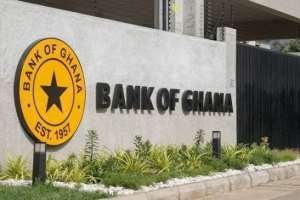
Every day in Ghana, a woman selling provisions in Kasoa, a young man running an online clothing store in Kumasi, and a restaurant owner in Osu accept payments by mobile money, card, or payment link. The customer pays, the screen says “successful,” and the trader believes the matter is closed.
But between that payment and the merchant’s bank account sits a quiet middleman: the Payment Service Provider (PSP). Until now, many Ghanaians never asked a simple question: Where does my money sit while it waits to reach me?
The Bank of Ghana has now answered that question, and I believe the answer deserves applause.
What the Bank of Ghana Has Said
On November 6, 2026, the central bank issued Notice No. BG/GOV/SEC/43 to all Payment Service Providers and Settlement Banks on the management of merchant collection funds under Section 101 of the Payment Systems and Services Act, 2019 (Act 987).
The notice was signed by the Secretary of the Bank, Aimee Vyda Quashie, and has been widely reported this week.
In plain language, the directive says the following:
Money collected on behalf of merchants must be credited into a designated settlement account and must not be mixed with the PSP’s own operational funds.
PSPs must pay merchants into their designated bank accounts strictly according to the settlement period agreed in their Service Level Agreement (SLA).
The Bank of Ghana reminded PSPs that they are licensed to facilitate payments, not to take deposits. They may not hold, use, pledge, or exercise ownership rights over merchant funds. The money remains the property of the merchant until settlement is completed.
A PSP may not withdraw, transfer, pledge, place a lien on, or set off debts against money in the settlement account. The only permitted transactions are payments to merchants and legitimate fees earned by the PSP.
Settlement banks must manage these accounts solely for settlement purposes. They must not allow PSPs to use the funds for operations, financing, investments, or any activity unrelated to merchant settlement.
Both PSPs and settlement banks must maintain records, controls, and audit trails that demonstrate the funds are safeguarded, segregated, and settled on time. The Bank of Ghana may also require settlement banks to provide statements on these accounts.
Failure to comply is a breach of the regulatory framework and may result in regulatory, supervisory, and enforcement action. All affected institutions have been instructed to act immediately and review their agreements and internal controls.
Why This Is Good News for the Small Trader
Let us be honest about how business works.
A trader’s cash flow is their oxygen.
If a PSP holds merchant funds for three days and uses that money to pay its own expenses, finance expansion, or cover shortfalls elsewhere, the merchant is effectively extending a free loan without ever agreeing to it.
For a large company, delayed settlement may be an inconvenience.
For a small trader who needs to restock tomorrow morning, it can be the difference between remaining open and shutting the business for a day.
By explicitly stating that merchant funds remain the property of the merchant until settlement, the Bank of Ghana has elevated what may have been an industry expectation into a clear regulatory principle.
The directive also protects something even larger than any individual merchant: public trust in digital payments.
Ghana has spent years encouraging citizens to move away from cash and embrace mobile money, QR codes, payment links, and e-commerce transactions.
That trust is fragile.
One major scandal can undo years of progress.
The Warning We Should Not Ignore
We do not need to look far to understand why safeguards matter.
In July 2026, the Bank of Ghana revoked the Dedicated Electronic Money Issuer licence of Zeepay Ghana Ltd, one of the country’s most prominent fintech companies.
The central bank stated that the company had issued electronic money without sufficient cash backing, resulting in a negative variance, and failed to comply with directives requiring it to inject funds to cover electronic money balances owed to customers, agents, and merchants.
Affected wallet holders, agents, and merchants were directed to seek assistance from the Bank of Ghana.
To be fair, the new notice does not state that it was issued because of that case, and I do not suggest that it was.
The Zeepay matter concerned electronic-money backing, while the November directive addresses merchant collection funds.
However, both situations point to the same lesson: when customer and merchant funds are not properly ring-fenced, ordinary people bear the risk.
Prevention is always cheaper than rescue.
Where the Directive Needs More Clarity
A good policy can still be undermined by weak implementation.
1. The Penalties Remain Unclear
The notice refers to “appropriate regulatory, supervisory and enforcement actions,” but, based on reported summaries of the directive, no specific fines or timelines have been publicly detailed.
Rules without clearly understood consequences can be ignored by the negligent and questioned by the compliant.
2. Enforcement Depends on Settlement Banks
Settlement banks have now become important gatekeepers.
The Bank of Ghana has the authority to request statements from them, but that authority will only matter if it is exercised consistently and proactively rather than after problems have already emerged.
3. Small Merchants Have Limited Bargaining Power
Settlement timelines are determined by agreements between PSPs and merchants.
While contractual flexibility has advantages, many small businesses do not have the legal expertise or negotiating leverage to influence those terms.
Most simply click “accept.”
The Bank of Ghana should consider issuing guidance on what constitutes a fair and reasonable settlement period so that “agreed” does not become a euphemism for “take it or leave it.”
4. Costs Could Rise
Some PSPs may have relied on float income generated from temporarily holding merchant funds.
If that revenue source disappears, some providers may respond by increasing service charges.
If that happens, merchants should insist on transparency.
A clearly stated fee is better than a hidden risk.
What Should Happen Next?
PSPs should immediately review their SLAs, account structures, and internal controls rather than waiting for regulatory intervention.
Settlement banks should treat the settlement-only requirement as a firm obligation, not a recommendation, and be prepared to provide records when requested.
The Bank of Ghana should publish detailed guidance on penalties and timelines and consider creating a simple reporting channel for merchants experiencing delayed settlements.
Merchants should review their agreements, ask where their collected funds are held, confirm settlement timelines in writing, and document any delays.
Ordinary Ghanaians should remember that regulations are only effective when citizens expect compliance and demand accountability.
A Final Word
Digital payments are not just technology.
They are a promise.
The promise is that when you earn money, it reaches you in full and on time.
The Bank of Ghana has reminded the industry that this promise is not merely good practice; it is a regulatory obligation.
Now comes the harder part: ensuring that the promise is kept.
When merchants can trust that their money belongs to them from the moment a customer pays, businesses gain the certainty they need to plan, invest, and grow.
And when our money is truly our money, our businesses can finally grow on solid ground.


 Soya bean price drops from GH¢800 to GH¢350 after export ban – Dr. Otokunor
 Mahama's New Economy policy is a scam – Kojo Oppong Nkrumah
 Stop boiling polluted galamsey water for drinking, it's not safe – EPA cautions ...
 Assembly, Zoomlion trade blame over waste collection delays amid Ada sanitation ...
 Obuasi SHS sexual abuse probe 85% complete, evidence points to possible prosecut...
 Ghana's economic activity expands by 6.8% in August 2026, services lead growth
 Parliament rescinds decision on third reading of anti-gay bill
 Ghana eyes US$10.5 trillion non-interest market as three banks apply for licence...
 Nearly 80% of Ghanaians living with diabetes unaware of their condition – Associ...
 Mahama breaks grounds for two major projects at Takoradi Port


