




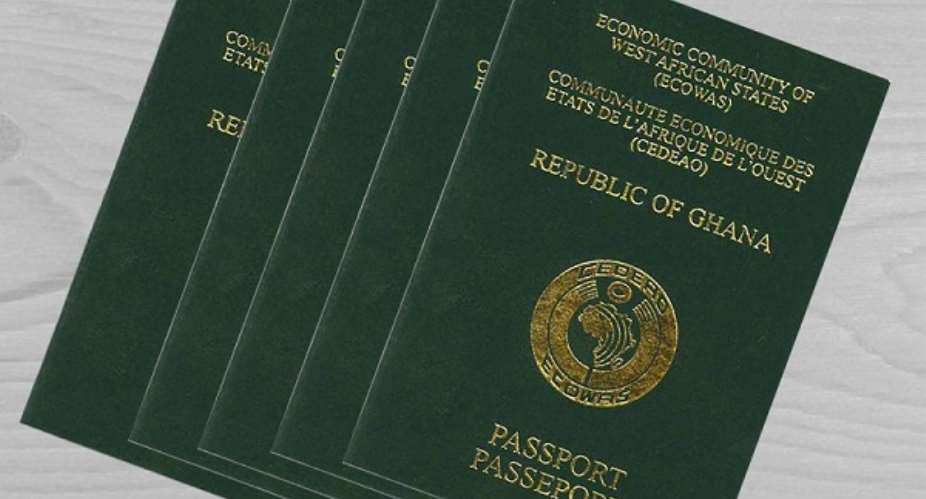
A Ghanaian passport costs money, but it also represents opportunity. Students need it for scholarships, traders for suppliers, patients for treatment, and families for reunions. So when passport fees trend, as they have again in recent weeks, the story reaches well beyond government accounts. It reaches every household that dreams of crossing a border.
How We Got Here
In December 2023, the Ministry of Foreign Affairs, then led by Shirley Ayorkor Botchwey, told Parliament that the state was losing money on every passport. Her figures were that an applicant paid about GH¢100 while a booklet cost about GH¢400 to produce, meaning the government covered roughly GH¢300 per passport.
She described the situation as unsustainable and argued that Ghanaians should begin paying more realistic prices. The ministry also maintained that Ghana’s passport fees were among the lowest in West Africa, citing figures such as approximately US$54 for Nigeria and US$80 for Burkina Faso. The proposed increase was also linked to the planned rollout of chip-embedded passports.
The new fees took effect on April 1, 2024. According to Graphic Online, the standard 32-page passport booklet increased to GH¢500, while the 48-page booklet rose to GH¢644. Expedited applications were priced at GH¢700 and GH¢800 respectively. For many applicants, the increase amounted to more than 400 percent.
In November 2025, the government of President John Mahama partially reversed the increase. Foreign Affairs Minister Samuel Okudzeto Ablakwa announced a 30 percent reduction, lowering the cost of the ordinary 32-page booklet from GH¢500 to GH¢350 effective November 13, 2025.
Parliament was required to amend the Fees and Charges Act before the new rates could take effect. The ministry also announced that courier delivery would be included in the fee, regular processing would take 15 working days, expedited applications would be processed within three working days, and a new one-day service would be available for GH¢2,000.
The ministry further reported that more than 215,000 Ghanaians had received the new chip-embedded passports since April 2025.
What Is Trending Now
Two developments are driving the current conversation.
First, on October 26, 2026, the Passport Office published a new fee structure on its official Facebook page. According to a Ghanamma report, citizens flooded the comments section with questions about the differences between the available booklet options and the required documentation. Some also asked whether a Ghana Card could replace a birth certificate during the application process.
I was unable to independently verify the exact fee figures contained in that social media post through official government sources or major news outlets. Applicants should therefore consult the Ministry of Foreign Affairs website and the official passport application portal before making any payments.
Second, on October 14, 2026, Mr Ablakwa told reporters during a visit to the Ashanti Regional Passport Application Centre that Parliament would soon consider a fee for the Mobile Passport Application Centre.
The service allows officials to travel to applicants’ homes or offices to capture biometric information. According to the minister, the proposed charge would reflect the convenience of the service while helping to fund the renovation and maintenance of passport centres nationwide.
Alongside these developments, the ministry reported this month that an investigation had resulted in the cancellation of ten illegally issued service passports and the suspension of two officials.
According to Sahara Reporters, one petitioner alleged paying $29,000 to a syndicate linked to the process. These allegations remain under investigation, but they raise serious concerns about the integrity of the passport system.
My Opinion
I do not believe this debate should be reduced to a simple argument about whether fees are too high or too low.
The first issue is cost recovery. Governments are justified in seeking to recover the cost of producing official documents, and the 2023 argument that Ghana’s passport fees were unusually low had merit. However, fee increases are only defensible when accompanied by measurable service improvements. Citizens remember queues, delays, and middlemen far longer than they remember budget explanations.
Second, the 2025 fee reduction deserves recognition. Lowering the fee from GH¢500 to GH¢350, while including delivery and online tracking services, made the process more accessible. The ministry’s figures suggest that chip-embedded passports and faster processing have delivered genuine improvements. It is also fair to acknowledge that the earlier fee increase helped finance infrastructure that the current administration has continued to build upon.
Third, transparency remains essential. When citizens are asking basic questions beneath a fee announcement, such as what the booklet options mean, which documents are required, and where payments should be made, it signals a communication problem. Every fee adjustment should be published clearly, including a fee table, effective dates, and the legal basis for the changes, across all official channels simultaneously.
Fourth, the proposed convenience fee deserves careful scrutiny. A mobile passport service can be valuable for elderly individuals, persons with health challenges, and busy professionals. Charging an additional fee for such convenience is reasonable, provided the service remains optional, clearly priced, and formally approved by Parliament, as the minister indicated.
The standard passport application process, however, must remain affordable, accessible, and efficient. Otherwise, premium services risk creating a two-tier system that undermines the basic service.
The fifth and most important issue is corruption.
The most expensive passport is often the one acquired through unofficial channels. The suspension of officials, cancellation of improperly issued passports, and investigations into alleged syndicates are positive initial steps. However, meaningful accountability requires prosecutions where wrongdoing is proven and the implementation of systems that make corruption difficult rather than merely punish it after the fact.
What I Would Ask the Government
Publish all passport fees in one easily accessible location and in plain language.
Provide clear and regular reports on processing times and service delivery performance.
Keep the standard passport affordable for ordinary citizens.
Disclose how revenue generated from passport fees is used.
And maintain transparency regarding investigations into the service passport scandal.
A passport should be a right of citizenship delivered efficiently by the state, not a favour granted through personal connections.
Whatever the final fee structure may be, the real test is simple: can an ordinary Ghanaian, whether in Accra, Kumasi, Tamale, or Wa, obtain a passport honestly, quickly, and at a price they can understand?


 Soya bean price drops from GH¢800 to GH¢350 after export ban – Dr. Otokunor
 Mahama's New Economy policy is a scam – Kojo Oppong Nkrumah
 Stop boiling polluted galamsey water for drinking, it's not safe – EPA cautions ...
 Assembly, Zoomlion trade blame over waste collection delays amid Ada sanitation ...
 Obuasi SHS sexual abuse probe 85% complete, evidence points to possible prosecut...
 Ghana's economic activity expands by 6.8% in August 2026, services lead growth
 Parliament rescinds decision on third reading of anti-gay bill
 Ghana eyes US$10.5 trillion non-interest market as three banks apply for licence...
 Nearly 80% of Ghanaians living with diabetes unaware of their condition – Associ...
 Mahama breaks grounds for two major projects at Takoradi Port


