




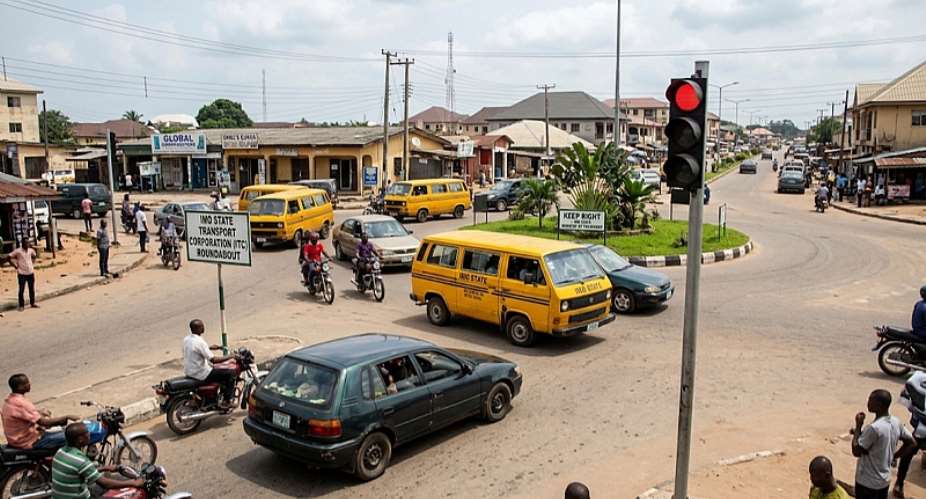
When Nigerian government officials run through red lights and drive against one way traffic, sometimes blasting their siren to clear legitimate drivers driving up the right way opposite them, that is demoncracy, not democracy. When a lecturer has sexual intercourse with his student in order to pass her in his papers, it is demoncracy, not democracy. The list is long but the short of it is: when will sanity return to Nigeria?
That is the ultimate question that should stare the federal government and, indeed, every political party aspiring to govern the country in 2027 squarely in the face. It is a question that goes beyond the familiar complaints about insecurity, corruption, unemployment, poverty and the general deterioration of public infrastructure. It touches on something more fundamental: the collective attitude of Nigerians to the rules that hold a civilised society together. Democracy, after all, is not simply about periodic elections, the right to vote or the occupation of public offices by elected representatives. It is about the discipline to respect laws, the willingness to accept responsibility and the recognition that individual freedom must never be exercised at the expense of the collective good. Until these values become part of the national character of Nigerians, they will continue to practise what can only be defined as demoncracy rather than democracy.
It may sound absurd to suggest that sanity on Nigerian roads holds the key to restoring sanity in the country. But the connection is more profound than many people realise. The road is perhaps the most visible theatre of the collective behaviour of communities. It is where their impatience, indiscipline, disregard for authority and contempt for the rights of others are openly displayed. A motorist who drives against traffic like many government officials do quite often, runs through a red light, overtakes dangerously, disregards pedestrian crossings or drives at excessive speed is demonstrating an attitude that does not stop when he leaves the steering wheel. It is the same attitude that manifests itself in the office, the marketplace, the classroom, the home and, regrettably, in the corridors of political power. When the government that makes the laws cannot obey its own laws or when it feels too big to respect the laws it made, Nigerians are practising demoncracy, not democracy.
Consider what happens when a Nigerian driver approaches a traffic light. Instead of slowing down and preparing to stop when the light turns amber, he accelerates, determined to beat the red light. A commercial driver suddenly makes a U-turn where it is prohibited, while a motorcyclist or tricyclist rides against traffic with complete disregard for approaching vehicles. Pedestrians, too, sometimes cross busy highways without using designated crossings, even where such facilities exist. Everyone appears to be in a desperate hurry, as though the ordinary rules governing the movement of people and vehicles are meant for somebody else.
This is not merely a traffic problem. It is a crisis of social responsibility. When people learn to respect traffic regulations, they also learn to respect boundaries, other people's rights and the authority of legitimate institutions. A driver who stops at a red light understands that his convenience cannot take precedence over the safety of others. A pedestrian who uses a footbridge recognises that personal safety requires cooperation with established rules. A motorist who observes speed limits understands that arriving five minutes earlier is not worth another person's life.
Such discipline has consequences far beyond road safety. It reduces accidents, prevents avoidable deaths, protects family breadwinners, reduces the financial burden on hospitals and emergency services, and allows businesses to move goods and people more efficiently. Parents can send their children to school without the constant fear of road accidents. Workers can travel to their workplaces with greater confidence. Traders can transport their goods without losing precious hours to preventable traffic disorder. Emergency vehicles can reach hospitals and accident scenes without being trapped by motorists who have no regard for road regulations. In this sense, sanity on the roads becomes a foundation for security, economic productivity and social stability as it is in advanced democracies.
But government cannot demand discipline from citizens while it has failed to provide the infrastructure and institutional arrangements that make compliance possible. It is unreasonable to expect motorists to obey road signs that are missing, faded or obscured. How can drivers observe lane markings that have disappeared beneath years of neglect? How can pedestrians be expected to cross safely where there are no properly constructed walkways, crossings or footbridges? How can traffic enforcement be effective when junctions are poorly designed and traffic lights are either non-functional or entirely absent, and there are no cameras to capture traffic offenders?
The modernisation of Nigerian roads must therefore become a principal commitment of any political party that is seeking the popular mandate in 2027. Road construction must go beyond the political spectacle of commissioning projects and displaying photographs of newly laid asphalt. It must encompass proper engineering, durable construction materials, adequate drainage, functional street lighting, clearly marked lanes, visible road signs, pedestrian facilities, traffic-calming measures and regular maintenance. Roads must be designed to serve motorists, pedestrians, cyclists and persons living with disabilities, not simply to accommodate vehicles. Urban planning must also anticipate population growth and the increasing volume of commercial traffic.
Technology must become an integral part of this transformation. Cameras should be installed at strategic intersections, highways and accident-prone locations to capture motorists who violate traffic regulations. Speed-monitoring devices, automated number-plate recognition and electronic traffic management systems should be deployed transparently and consistently. Defaulters should be promptly prosecuted, preferably in specialised traffic courts established by the appropriate authorities. Penalties must be substantial enough to discourage violations and enforcement must be impartial, regardless of whether the offender is a government official, a wealthy businessman, a commercial driver or an ordinary citizen. The objective must mainly be the protection of human life and the restoration of public discipline through revenue generation from those who have no regard or respect for traffic laws.
There is, however, another critical dimension to the restoration of sanity in Nigeria: the welfare and professional integrity of the Police. No one would reasonably expect the Nigerian Police Force to discharge its constitutional responsibilities effectively when its personnel are grossly under-remunerated, poorly equipped and subjected to working conditions that undermine their public image and dignity. The political class must accept a substantial share of responsibility for this sorry state of affairs. Successive governments have failed to give policing the financial and institutional priority it deserves and still expect officers to protect lives and property under increasingly difficult circumstances. Worse still, the police have, in many places, become associated in the public imagination with roadside extortion. Commercial drivers encounter multiple checkpoints, where some officers demand unofficial payments under one pretext or another. The practice has become so familiar that motorists sometimes regard it as an unavoidable operating cost. This is a dangerous normalisation of corruption. When those entrusted with enforcing the law become notorious for violating it, the moral authority of the state is seriously compromised. Citizens begin to regard bribery as a legitimate means of getting things done, and the distinction between lawful authority and organised extortion becomes dangerously blurred.
A serious government must reverse this situation. The remuneration of police personnel should be reviewed substantially, with a proposed minimum monthly salary of N250, 000 for a police recruit as a starting point for discussion, alongside commensurate improvements for senior officers. More realistic salary scales must be accompanied by improved accommodation, health insurance, modern equipment, professional training, welfare support and a transparent promotion system. Police officers must be adequately equipped to investigate crimes, respond to emergencies and protect communities rather than being deployed principally to collect money from commercial motorists at roadblocks.
But higher salaries must also come with higher expectations. An officer who receives decent remuneration and adequate institutional support must be held to rigorous standards of professional conduct. Complaints of extortion, brutality, unlawful detention and abuse of authority must be investigated independently and punished where established. Officers who uphold the law should be rewarded, while those who tarnish the integrity of the uniform should face disciplinary action and prosecution. Respect for the police cannot be legislated into existence, it must be earned through integrity, competence and service.
Perhaps the most glaring contradiction in our national life is the enormous financial attraction of political office. Nigeria has created a political environment in which public office is frequently perceived less as an opportunity to serve and more as a gateway to personal enrichment. The salaries, allowances, benefits and privileges enjoyed by political office holders have helped cultivate an unhealthy sense of entitlement among some of those who govern. For many aspirants, the attraction of political power appears to have less to do with the opportunity to transform society than with the prospect of enjoying the enormous financial rewards attached to public office. This is fundamentally wrong. Public office should be a responsibility, not a jackpot. A country that is struggling to pay teachers, nurses, university lecturers and other essential public servants cannot reasonably justify a system in which its political leaders enjoy extravagant remuneration and privileges while ordinary citizens contend with deteriorating living conditions.
The Revenue Mobilisation Allocation and Fiscal Commission and the National Assembly must therefore undertake a transparent review of political remuneration, allowances and associated benefits. The objective should be to establish reasonable, defensible compensation that reflects the country's economic realities and the principle of public service.
No is saying that reducing the financial attractions of political office will, by itself, eliminate corruption or discourage every unworthy aspirant. Indeed, public servants must be paid adequately to attract and retain competent people. But extravagant rewards and unexplained privileges should have no place in a country where public resources are desperately needed for education, healthcare, infrastructure and security. Political office should attract people motivated by the opportunity to make a difference, not merely those seeking access to the national treasury. Equally important, transparency in procurement, asset declarations, campaign financing and the management of public funds must become non-negotiable. The government that emerges from the 2027 elections must understand that Nigerians are not asking for another collection of grand promises. They want a country in which laws mean something, public institutions command respect and those entrusted with authority are accountable to the people. They want roads that are safe and properly maintained, police officers who protect rather than intimidate them, and political leaders who understand that public resources belong to the people.
Democracy cannot flourish in an atmosphere where everybody considers himself above the law. It cannot thrive where motorists disregard traffic regulations, police officers exploit their uniforms and politicians regard public office as a private inheritance. The habits of democracy must be cultivated in everyday life, from the traffic intersection to the police station, from the local government office to the National Assembly.
The 2027 election offers Nigeria an opportunity to redefine its priorities. Whoever wins must recognise that national transformation begins with a restoration of ordinary sanity. It begins when the citizen understands that his rights come with responsibilities, when the policeman understands that his uniform represents public trust, and when the politician understands that electoral victory is a mandate to serve rather than an invitation to feast on public funds.
Nigeria does not lack intelligent people, natural resources or ambitious development plans. What it desperately needs is a culture of responsibility, institutional discipline and respect for the common good. That is the foundation upon which every meaningful reform must rest. The message to those seeking our votes in 2027 should therefore be unmistakable: Nigerians want to practise democracy, not demoncracy. They want a country where the law is respected, leadership is accountable and public service is genuinely about service. Until sanity becomes the organising principle of the lives of the people of Nigeria, the promise of democracy will remain an illusion. The time has come to put Nigeria on the right road.

 No prima facie case in petition against Justice Pwamang – Presidency
 Mother invokes generational curse on daughter during heated verbal exchange
 SA evacuation: OSP must not allow media pressure to dictate investigations – Bra...
 NPP closes portal for expression of intent in parliamentary primaries today
 Ghana targets 70% 5G coverage by March 2027 – Sam George
 Women’s Development Bank submits licence application to Bank of Ghana – Vice Pre...
 Ghana Must Reset — Not Just In Words, But In Deeds!
 OSP must publish findings on alleged sale of diplomatic passports – Larry Dogbe
 2027 Budget: 'Adwuma no wɔ he?’ – Sammi Awuku demands answers on Mahama's youth ...
 SA evacuation: OSP must punish those who took hotel money while evacuees slept i...


