




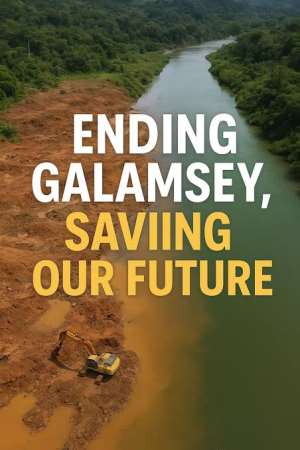
Ghana’s illegal mining crisis has become one of the gravest threats to the country’s environment, public health, water security and economic future. What began as a struggle to control unlicensed gold mining has developed into a national emergency that demands urgent and sustained action.
Illegal small-scale mining, popularly known as galamsey, continues to destroy forests, farmlands and rivers, while exposing communities to dangerous substances associated with mining activities, including mercury and other toxic contaminants.
According to figures attributed to the citizen-led Galamsey Tracker, approximately 18,714 hectares of land were cleared across Ghana’s southern gold belt during the 12 months ending November 4, 2026. This represents an area equivalent to more than 26,000 football pitches. The reported data further suggests that 84% of the affected land had no recorded legal mining licence.
Among the hardest-hit districts are Wassa Amenfi East, Aowin, Atiwa West and Atwima Mponua, where extensive land degradation threatens agriculture, biodiversity and the livelihoods of rural communities.
Perhaps the most frightening consequence is the growing threat to Ghana’s drinking water. Rivers that once supplied relatively clean water to households, farmers and industries are increasingly burdened with mud, sediment and mining-related pollutants.
The River Pra, which supports water supply to Sekondi-Takoradi, is particularly vulnerable. Mining activities within its catchment have increased the difficulty and cost of treating water. Similar pressures have affected other water treatment systems, including those serving communities in the Central and Greater Accra regions.
When rivers become too polluted for treatment plants to operate efficiently, the consequences extend beyond environmental damage. Families face interruptions in water supply, industries experience operational difficulties, and government must spend more on treatment chemicals, equipment maintenance and alternative water sources.
The health implications are equally disturbing. Mercury exposure can damage the nervous system and kidneys, while lead and other contaminants can cause serious long-term health problems. However, the extent to which illegal mining has contributed to particular diseases in Ghana requires stronger medical surveillance and scientific investigation.
For families already struggling with rising living costs, chronic illnesses can create devastating financial burdens. Kidney patients requiring regular dialysis, for example, may face substantial expenses depending on their treatment arrangements and available health insurance support.
Galamsey also threatens Ghana’s agricultural future. Productive farmlands are being destroyed, fertile soils removed, and water sources contaminated. In some mining communities, children risk abandoning education for hazardous work, while disputes over mining concessions and access to land undermine public safety and social stability.
The tragedy is that Ghana possesses the laws, institutions and technical expertise needed to confront this problem. What remains in question is whether the country can demonstrate the political commitment, institutional independence and consistency required to enforce them.
The solution must go beyond periodic arrests, destruction of mining equipment and public declarations. Ghana needs stronger monitoring of mining concessions, transparent licensing systems, effective prosecution of offenders and financiers, and sustained protection of critical river basins and forest reserves.
Responsible, legally regulated small-scale mining should be supported, while destructive and unlawful operations must face firm sanctions. Equally important are alternative livelihoods, youth employment opportunities, environmental restoration and meaningful community participation.
Traditional authorities, political leaders, security agencies, mining regulators and local communities must all accept responsibility. No individual, regardless of wealth, influence or political connections, should be allowed to profit from the destruction of Ghana’s natural resources.
Ghana cannot build a prosperous future on poisoned rivers, devastated forests and abandoned farmlands. Gold may generate wealth today, but clean water, healthy citizens and productive land are the foundations of national survival.
The fight against galamsey is therefore not simply an environmental campaign. It is a struggle to protect public health, food security, economic stability and the inheritance of future generations.
If Ghana fails to act decisively today, tomorrow’s generations may inherit the gold we extracted but lose the natural resources that sustain life.


 Mother invokes generational curse on daughter during heated verbal exchange
 SA evacuation: OSP must not allow media pressure to dictate investigations – Bra...
 NPP closes portal for expression of intent in parliamentary primaries today
 Ghana targets 70% 5G coverage by March 2027 – Sam George
 Women’s Development Bank submits licence application to Bank of Ghana – Vice Pre...
 Ghana Must Reset — Not Just In Words, But In Deeds!
 OSP must publish findings on alleged sale of diplomatic passports – Larry Dogbe
 2027 Budget: 'Adwuma no wɔ he?’ – Sammi Awuku demands answers on Mahama's youth ...
 SA evacuation: OSP must punish those who took hotel money while evacuees slept i...
 Ghana, Slovakia consider visa waiver deal for diplomatic, service passport holde...


