




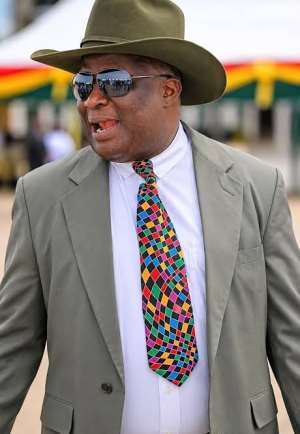
Remembering an outspoken political personality whose unconventional style, entrepreneurial background and fearless commentary made him one of Ghana's most recognisable public figures.
Ghana's political landscape has been shaped by many personalities, but few have attracted public attention quite like Kofi Wayo. Known for his outspoken views, unconventional political approach and distinctive public image, Wayo established himself as a businessman and political commentator who was never afraid to challenge established political thinking.
News of his reported passing brings renewed attention to a man whose public life combined business, politics, controversy and an unmistakable determination to speak his mind.
For many Ghanaians, Kofi Wayo represented a different kind of politician. He was neither a conventional party loyalist nor a public figure who carefully avoided controversy. His blunt language, strong opinions and sometimes provocative statements made him a familiar presence in political discussions and media interviews.
Whether people agreed with him or not, he had a remarkable ability to attract attention and stimulate debate on national issues.
Wayo's public profile was closely associated with his experience as a businessman, including his years in the United States. His international exposure influenced his views on economic development, governance and the need for Ghana to embrace practical solutions to its national challenges.
He frequently argued that Ghana possessed enormous human and natural resources but had failed to translate these advantages into sufficient economic opportunities for ordinary citizens.
His political activities included leadership of the United Renaissance Party (URP), through which he sought to promote an alternative political direction. Although the party never emerged as a major electoral force, Wayo's involvement demonstrated his desire to participate directly in shaping Ghana's political future.
Unlike many politicians who relied heavily on carefully prepared speeches, Wayo preferred direct and spontaneous communication. His interviews were often lively, unpredictable and controversial. He criticised political leaders, questioned government policies and expressed frustration with corruption, unemployment, economic hardship and what he considered ineffective leadership.
His style earned him both admirers and critics. Supporters appreciated his willingness to confront uncomfortable national issues, while opponents sometimes questioned his methods, language and political proposals.
Nevertheless, his presence contributed to the diversity of Ghana's political discourse.
One of the most memorable aspects of Kofi Wayo's public personality was his belief that political leadership should produce practical improvements in people's lives. He regularly emphasised entrepreneurship, job creation, economic opportunity and the importance of reducing Ghana's dependence on external assistance.
His business background also distinguished him from career politicians whose professional experiences were largely confined to government and party politics.
Beyond his political activities, Wayo became a familiar figure in Ghana's media landscape. His distinctive personality, outspoken commentary and willingness to challenge powerful individuals ensured that his contributions rarely passed unnoticed.
His life also reflected the opportunities and difficulties faced by independent political voices operating outside Ghana's two dominant political parties, the National Democratic Congress and the New Patriotic Party.
Although he did not achieve major electoral success, his political journey illustrated the determination of individuals who believed that Ghana's democracy should accommodate alternative ideas and perspectives.
The significance of Kofi Wayo's public life should therefore not be measured solely by electoral victories or political appointments. His contribution also lies in the debates he generated, the questions he raised and the unconventional approach he brought to national conversations.
His reported passing offers an opportunity to reflect on the importance of political diversity, freedom of expression and the role of outspoken individuals in a democratic society.
Ghana's democracy has benefited from personalities who challenge conventional wisdom, question authority and encourage citizens to think critically about national development.
Kofi Wayo was undoubtedly one of those personalities.
He may not have been everyone's preferred politician, but his colourful character, entrepreneurial outlook and outspoken political engagement made him a distinctive figure in Ghana's public life.
As Ghana reflects on his legacy, Kofi Wayo will be remembered as a businessman, political activist and fearless commentator who refused to remain silent on matters affecting his country.
His story is a reminder that public influence is not always determined by the political offices one occupies, but also by the courage to express ideas, challenge established thinking and participate in national debate.
May his soul rest in peace.


 Mother invokes generational curse on daughter during heated verbal exchange
 SA evacuation: OSP must not allow media pressure to dictate investigations – Bra...
 NPP closes portal for expression of intent in parliamentary primaries today
 Ghana targets 70% 5G coverage by March 2027 – Sam George
 Women’s Development Bank submits licence application to Bank of Ghana – Vice Pre...
 Ghana Must Reset — Not Just In Words, But In Deeds!
 OSP must publish findings on alleged sale of diplomatic passports – Larry Dogbe
 2027 Budget: 'Adwuma no wɔ he?’ – Sammi Awuku demands answers on Mahama's youth ...
 SA evacuation: OSP must punish those who took hotel money while evacuees slept i...
 Ghana, Slovakia consider visa waiver deal for diplomatic, service passport holde...


