




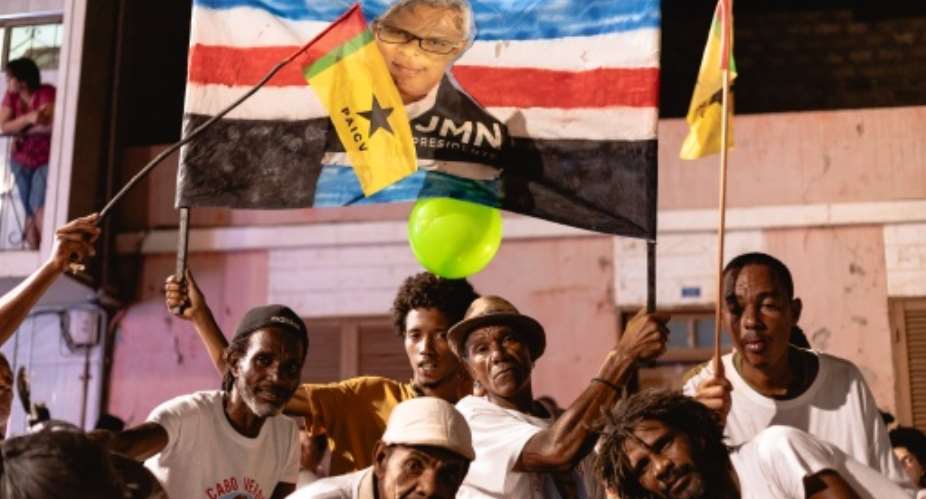
Cape Verde holds a presidential election on Sunday with incumbent Jose Maria Neves favoured to win a second term as head of state of the west African archipelago renowned for its democratic stability.
The island nation made world headlines this year when its national football team reached the knockout stages in its first ever World Cup, and when a cruise ship containing people with hantavirus docked off its shores.
Located in the middle of the Atlantic approximately 600 kilometres (375 miles) off the coast of Senegal, this Portuguese-speaking country comprised of 10 volcanic islands is attracting more tourists every year.
Stability, hospitality
Unlike several of its west African neighbours where presidential elections have been tense in recent years, Cape Verde is known for its political stability and good governance.
It is considered a model of democracy in Africa, with strong economic growth.
The country is known for its "morabeza" ("hospitality" in local creole), openness, racial mixing and carnivals. It also has its own style of music.
The archipelago has a semi-presidential system in which the executive is dominated by the prime minister.
The president does not govern but acts more as an arbiter, working to guarantee unity and uphold the constitution.
The head of state appoints the prime minister based on the results of legislative elections and represents the country abroad.
Frontrunners
Among the six candidates in the running on Sunday, two are frontrunners: incumbent Neves, 66, and Joana Rosa Amado, 61, a lawyer and former minister of justice who is the country's first woman presidential candidate.
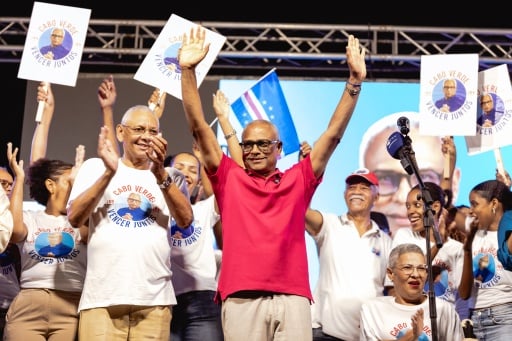 Cape Verde's President Jose Maria Neves, running for a second term, was first elected president in 2021. By QUEILA FERNANDES (AFP)
Each is supported by one of the country's two main parties.
Neves, a strong favourite, was first elected president in 2021. From 2001 to 2016 he also served as prime minister and the president of the African Party for the Independence of Cape Verde (PAICV). He has also served as a mayor and a deputy.
Neves has the support of the PAICV, which won legislative elections in May.
When he presented his candidacy, he promised to put his experience "towards the service of Cape Verde's future challenges, to anticipate transformations and to strengthen political consensus in these difficult times."
Amado is supported by the Movement for Democracy (MpD), the main opposition party.
Her slogan is "Listen to Cape Verde," which she says "does not mean promising everything, but rather, knowing the real concerns and expectations of the population."
"The election of a woman to the presidency would show many young women and young girls that no government job is barred from them," she told the press.
Among the other candidates are 45-year-old surgeon Gilson Alves, an authoritarian figure who is promising to fight corruption, allow gun ownership and reinstate the death penalty.
Challenges
In July 2026, Cape Verde was officially classified as an upper-middle income country by the World Bank thanks to economic growth in the tourism sector and a 16.8 percent increase in gross national income per capita between 2023 and 2024.
However, the country faces many challenges, including persistent social inequality, geographic isolation and a lack of affordable options for travelling between islands.
If elected, the main candidates have promised to implement measures to improve air and sea travel between the islands and also to construct new accommodation for tourists.
Among the major concerns of the population are increased cost of living, fuel prices and youth unemployment.
Since the end of the Covid-19 pandemic many young Cape Verdeans, including graduates and those with professional training, have immigrated and continue to move abroad, causing a labour shortage.
How to create employment opportunities across the archipelago was a key theme in the election campaign.


 121 aspirants file nominations for NDC national executive elections; three posit...
 Our 'New Economy' policy will discourage Ghana from exporting raw materials - At...
 Both sides of Parliament support GH¢10m Media Development Fund – Bunkpurugu MP
 SA Evacuation: If Ablakwa wanted Ibrahim Mahama’s GH¢16m, he wouldn’t make it pu...
 Govt to migrate Bolgatanga–Bawku, Tema–Aflao road projects onto Big Push — Agbod...
 Nine Zimbabweans arrested for allegedly trying to leave South Africa to fight in...
 Courts resume sittings today
 Ato Forson explains why gov’t won’t borrow to finance New Economy Programme
 Tanzanian police seize 454kg of methamphetamine worth $27m in major drug bust fr...
 NIA suspends Ghana Card date of birth updates pending review of guidelines


