




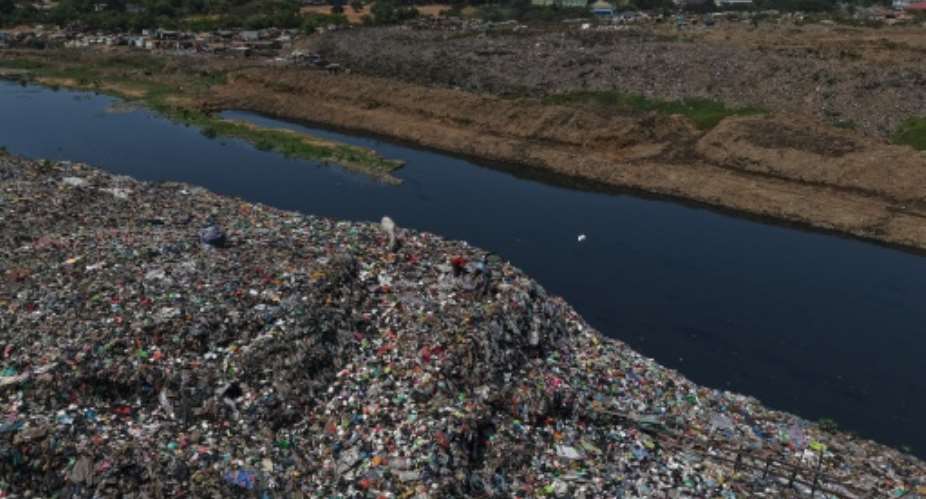
An acrid haze hung over a sprawling dump in Ghana's capital, Accra, as excavators gouged into mounds of smouldering rubbish.
Thin plumes of black smoke curled from burning plastic and rubber, mingling with the rank odour of stagnant lagoon water.
At Agbogbloshie, a district on the Korle Lagoon delta, thousands of tonnes of refuse have accumulated over decades, overwhelming the fragile wetlands overlooking a slum of around 80,000 residents, many of them migrants and traders.
For scrap dealer James Hassan, a 31-year-old Liberian immigrant, it is both his home and livelihood.
Without gloves or a mask, he sifts daily through piles of unwanted electronics and metal for scraps to sell.
The skin on his palms is thickened and scarred from cuts and rashes but he has become accustomed to the pain and discomfort.
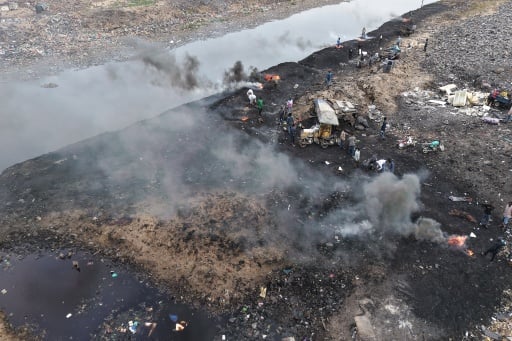 Smoke curls from the burning of waste at the site, which sits beside the Korle Lagoon. By Nipah Dennis (AFP)
"I have headaches and coughs after long days under the sun, but I have never sought medical care. I feel they are normal," he told AFP.
Environmental health experts say that workers are exposed to toxic metals and chemicals through skin cuts, inhaling waste smoke and dust.
While no study as yet links specific diseases to Agbogbloshie's pollution, "the cumulative contamination raises concern even if precise causal chains remain unquantified," epidemiologist Reginald Quansah, of the University of Ghana, said.
Global pipeline of waste
Waste management is a prominent theme at the COP31 climate talks, which began in Turkey on Monday.
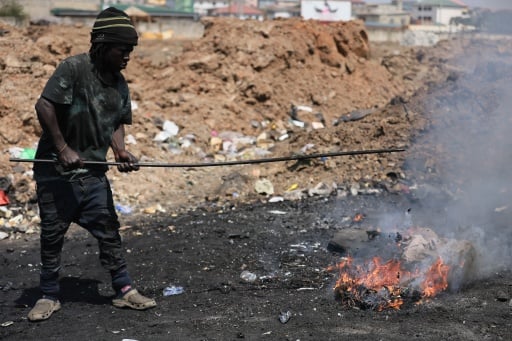 Environmental health experts say that workers are exposed to toxic metals and chemicals through skin cuts, inhaling waste smoke and dust. By Nipah Dennis (AFP)
Agbogbloshie's refuse comes largely from beyond Ghana's borders.
Accra's huge second-hand clothing market has imports from Europe, North America and Asia -- but often with a troubling byproduct.
"A lot of clothes that are shipped into Ghana come as waste," Greenpeace Africa's head of investigations Samuel Quashie-Idun told AFP.
Greenpeace estimates that 15 million used garments arrive in Ghana each week.
Even after traders extract what they can sell, roughly half ends up as "dead waste" dumped on beaches and fields or burned, it said.
One study Greenpeace cited put Ghana's used clothing imports at over 110,000 tonnes in 2022.
For the country's 35 million people, "these volumes far exceed local demand and... burdens waste systems," Quashie-Idun said.
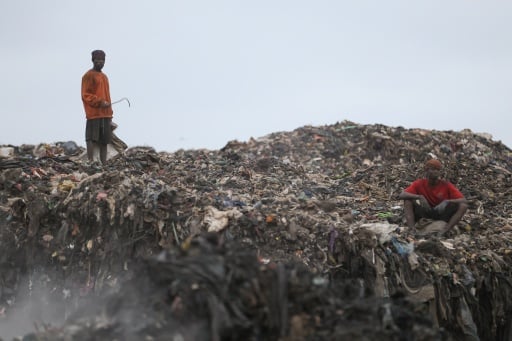 A large part of the second-hand clothing shipped to Ghana ends up as waste dumped on beaches or burned. By Nipah Dennis (AFP)
Greenpeace found that 89 percent of sampled "dead" garments contained petrochemical fibres such as polyester, which shed microplastics as they decay, and release carcinogens hundreds of times above safe levels in smoke when the textiles are burnt.
"This is not just an environmental crisis... it's also a human health crisis," said Hellen Kahaso Dena, Greenpeace's plastics project expert.
'Fashion waste dumping ground'
"The global north is effectively using Ghana as a dumping ground for fashion waste," she told AFP.
The metals and electronics tell a similar story.
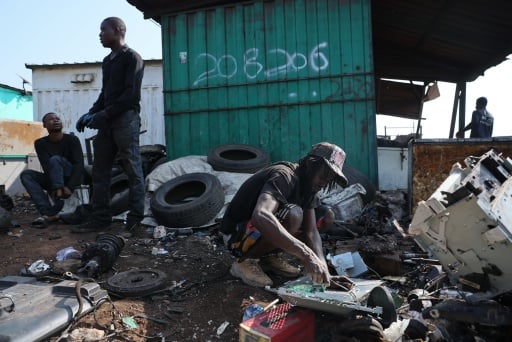 Scrap dealers sift through piles of unwanted electronics and metal. By Nipah Dennis (AFP)
Runoff from Accra pours into Korle Lagoon beside Agbogbloshie, making it one of the city's most polluted waterways.
Here, old fridges, TVs and appliances are crudely recycled.
Scrap dealer Barima Okuanaju pulls apart refrigerators and cars by hand, recovering copper wiring, aluminium panels and iron parts to sell.
He makes about 50-100 cedi ($4-$9) a day.
While he mines every inch of wire and circuit boards, polluting fumes rise around him.
Burning computer cables and batteries release lead, mercury and other toxins; open fires emit soot and dioxins that communities breathe in.
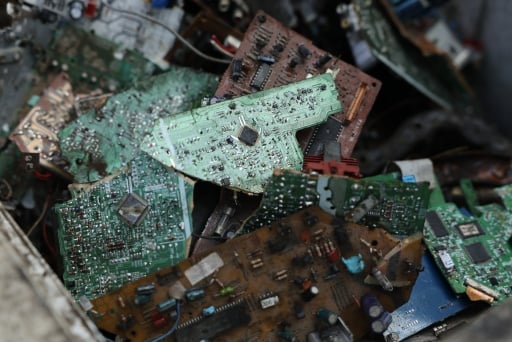 Scrap dealers pull apart old fridges and appliances while polluting fumes rise around them. By Nipah Dennis (AFP)
At a market in Agbogbloshie, stalls ring the dump, where women and children sell food, tools and water, amid the smoke.
Fourteen-year-old Aminatu Fatawu sells bottled water to the dump workers.
The smoke makes her cough and lately she has noticed blood in her saliva.
"The boys here are always burning... it always makes me cough. When I spit, there's blood sometimes," she said.
Her mother allows her to work to help cover her school fees, she said.
Those working at Agbogbloshie face lung and neurological health conditions, Quansah, the epidemiologist, said.
Scientists warn that contamination from the dump seeps into the lagoon and soil, ending up in the food chain and potentially affecting local diets for years to come.
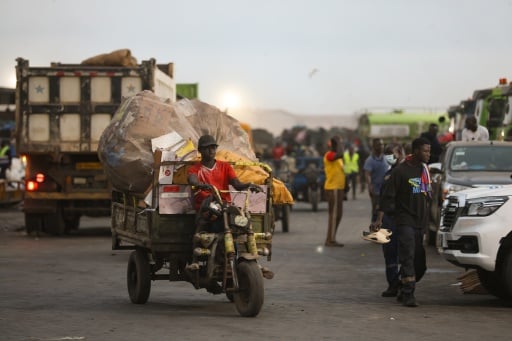 The government has launched a three-month cleanup to remove some of the waste. By Nipah Dennis (AFP)
In September, President John Mahama launched a three-month cleanup to remove about one million tonnes of waste from Agbogbloshie.
Heavy military and public works equipment has begun hauling garbage to a landfill about 50 kilometres (31 miles) outside Accra, where it will be compacted and covered under strict environmental safeguards.
Informal workers won't be forgotten, Local Government Minister Mahama Ayariga said.
He plans to bring garbage pickers and tricycle hauliers into the formal recycling process and hopes "to create up to 20,000 permanent jobs in waste management and the circular economy".
Nevertheless, the scavengers feel uncertain about the future.
Hassan said he had heard similar pledges before and just wants "safer" work.


 'If by close of today Erastus Asare Donkor fails to come and apology we will cur...
 121 aspirants file nominations for NDC national executive elections; three posit...
 Our 'New Economy' policy will discourage Ghana from exporting raw materials - At...
 Both sides of Parliament support GH¢10m Media Development Fund – Bunkpurugu MP
 SA Evacuation: If Ablakwa wanted Ibrahim Mahama’s GH¢16m, he wouldn’t make it pu...
 Govt to migrate Bolgatanga–Bawku, Tema–Aflao road projects onto Big Push — Agbod...
 Courts resume sittings today
 Ato Forson explains why gov’t won’t borrow to finance New Economy Programme
 Tanzanian police seize 454kg of methamphetamine worth $27m in major drug bust fr...
 NIA suspends Ghana Card date of birth updates pending review of guidelines


