




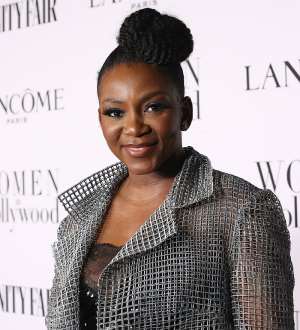
Some words age like milk. Others age like good jollof: the longer they sit, the more they carry.
A decade after Genevieve Nnaji sat on a Toronto stage and said something very simple about Nigerian accents, her words have come back with interest.
A Small Sentence With a Big Shadow
It was September 2016.
The Toronto International Film Festival had picked Lagos for its City to City programme and screened eight Nigerian films.
On September 11, Nnaji and director Kunle Afolayan took the stage for an In Conversation With... session about the international rise of Nollywood.
Variety described her at the time as widely considered the face of African cinema.
Amid the big talk of distribution, piracy and global ambition, she dropped a line that sounded like a joke and turned out to be a thesis.
Hollywood keeps mentioning Lagos, Nigeria, and names like Ayo and Chichi, she said, but the accents are off.
In her words, "I always cringe when I hear the accent actors use."
Reports of the panel say she pointed to Captain America: Civil War, which put Lagos on screen without a Nigerian voice to match.
She went further.
Studios, she said, sometimes bring in an African who is not Nigerian to play a Nigerian, and it simply does not sound right.
She even used Haiti as an example: you cannot expect a Haitian actor to sound like a Nigerian, so "just get a Nigerian."
And she was generous about the budget: a production does not have to shoot in Nigeria, and a set can be built anywhere, as long as some authenticity goes into the work.
That is the part I find sweetest.
She was not asking Hollywood to move to Lagos.
She was asking it to listen to Lagos.
Why a 2016 Remark Is Trending in 2026
The clip has found a second life online.
A resurfaced video of the panel has been reported to clock more than 1.4 million views on X, and the comment sections turned into a decade-long audit.
Some viewers pointed out that Hollywood now at least uses Nigerian names.
Others said the accents are still a work in progress.
Both groups are right, and that is exactly what makes this such a good conversation.
The timing is also sweet.
The festival that gave Nollywood a seat at its table turned ten this September, so the anniversary hands us a natural moment to ask what the table has actually served since.
The Plot Twist: She Did the Work Herself
Here is the part I love.
Nnaji did not stop at criticism.
Two years after Toronto, she returned to TIFF with her directorial debut, Lionheart, which Netflix acquired as its first Nigerian original.
When the film later became Nigeria's first Oscar submission, she called it a pivotal moment for Nigerian cinema, though it was ultimately disqualified.
That is the real lesson in her 2016 remark.
The complaint was never only about accents.
It was about who controls the story.
Instead of waiting for outsiders to get Nigerians right, she built a film where Nigerians did the talking, the directing and the producing.
2026: The Comeback Chapter
This year has delivered even more poetry.
In May, reports said she would return to the screen after an eight-year hiatus in BBC Studios' drama series Wahala.
That same month, she was named among the honourees at the Women in Cinema Gala hosted by the Red Sea Film Foundation during Cannes.
Think about the arc.
A decade ago, she asked international productions to stop faking the sound of Nigeria.
Today, she is stepping into a major international production herself, with her own voice, her own accent and her own authority.
You cannot script a better answer than that.
What This Means for the Rest of Us
For Hollywood and Global Streamers
Authenticity is no longer a favour to Africa.
It is a quality standard.
Audiences in Lagos, Accra, London, Toronto and Berlin can hear a fake accent in three seconds, and they will say so loudly.
For Nollywood and Ghallywood Alike
The lesson from Toronto is that recognition arrives when we show up with our own stories, our own voices and our own business sense.
Nigerians and Ghanaians can argue about jollof for days, but on this point we agree: nobody should have to watch their accent being butchered on a billion-dollar budget.
For the Diaspora
Many of you grew up hearing home mispronounced on screen.
Seeing a Nigerian star turn that frustration into a career, a film and a comeback is a reminder that representation is built, not begged for.
The Verdict
Genevieve Nnaji did not just make a remark in 2016.
She planted a flag.
Ten years on, the flag is still standing, the debate is still lively, and the proof is in her own work.
The industry has improved in places, stalled in others, and the audience is watching closely.
So here is my challenge to casting directors everywhere:
Do not make Africa's most famous cringe go viral again in 2036.
Just call a Nigerian.


 The New Economy is a scam, a rebrand of failed 24-hour economy – Oppong Nkrumah
 Ghana announces discovery of new oil and gas deposits
 No prima facie case in petition against Justice Pwamang – Presidency
 Mother invokes generational curse on daughter during heated verbal exchange
 SA evacuation: OSP must not allow media pressure to dictate investigations – Bra...
 NPP closes portal for expression of intent in parliamentary primaries today
 Ghana targets 70% 5G coverage by March 2027 – Sam George
 Women’s Development Bank submits licence application to Bank of Ghana – Vice Pre...
 Ghana Must Reset — Not Just In Words, But In Deeds!
 SA evacuation: OSP must punish those who took hotel money while evacuees slept i...


