




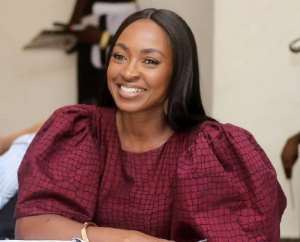
For Kate Henshaw, speaking out against what she considers injustice is apparently not an occasional celebrity pastime. It is a commitment she has cultivated over the years, even when doing so attracts criticism, controversy or personal discomfort.
The Nollywood actress has once again demonstrated this disposition, turning her attention to Nigeria's persistent electricity crisis and the growing burden it places on citizens who must spend additional money to generate the power they should ordinarily receive from the national grid.
But beyond her latest activism, Henshaw's intervention offers another glimpse into the personality of an actress who has consistently refused to separate her celebrity status from her sense of civic responsibility.
In a video shared on her Facebook page, the actress adopted her familiar, attention-grabbing approach, repeatedly striking a gong and shouting, "Come, come, come," before launching into a passionate interrogation of Nigeria's electricity situation.
Her message was unmistakable: electricity is a basic necessity, not a luxury that should be left to the financial capacity of individual households.
What appeared to particularly trouble her was the gradual normalization of self-generated electricity in Nigeria, where citizens are expected to purchase generators, inverters and solar installations, maintain them and still pay for electricity supplied through the national grid.
"We have been using lantern, candle. Now, we have moved to gen, inverter, solar. What is left? And we are paying tax," she queried.
Her frustration was not limited to the inconvenience of power outages. She questioned the apparent transfer of responsibility for providing electricity from government and the relevant institutions to ordinary Nigerians, many of whom cannot afford alternative power sources.
For Henshaw, the argument that those who can afford generators or solar systems should simply make alternative arrangements overlooks millions of Nigerians who cannot afford such options.
She particularly challenged the tendency of relatively comfortable citizens to become indifferent to the electricity difficulties confronting less privileged households, insisting that the wellbeing of society cannot be measured by the comfort enjoyed by a privileged few.
The actress also questioned the electricity band classification system, which categorizes consumers according to the number of hours of electricity supply they are expected to receive.
"Band A, B, C, D. Band, where do you see band? Where in any other country do you see electricity come banded? They are saying, oh, this one has 20 plus hour. This one has eight hour. Why? Just give people electricity. If they don't pay, they don't have electricity. Simple," she said.
She further questioned whether transferring greater responsibility for electricity generation to state governments would necessarily resolve the structural problems confronting the sector.
Her comparison with Côte d'Ivoire, where she recalled experiencing relatively stable electricity during a visit, also underscored her bewilderment at Nigeria's inability to provide dependable power despite its enormous resources and decades of promises.
She raised concerns about possible vested interests in the continued electricity crisis, wondering whether those benefiting from alternative power arrangements had sufficient incentive to pursue a lasting solution.
However, what distinguishes Henshaw's latest intervention from the usual social media complaints about poor public services is the history behind her decision to speak.
Her activism did not begin with the electricity crisis, nor is it restricted to criticizing government policies. Over the years, she has lent her voice to issues bordering on domestic violence, child abuse, rape, women's health, good governance and citizens' responsibilities.
This background provides a useful context for understanding why the electricity question has become another subject of her public interventions.
For Henshaw, the power crisis is not simply about whether households can switch on their televisions, refrigerate food or charge their phones. It is about the larger question of whether Nigerians are receiving the basic services that government and public institutions are expected to provide.
Her latest intervention also comes amid continuing public frustration over electricity supply, with households and businesses increasingly depending on privately funded alternatives to sustain their daily activities.
She questioned the rationale behind citizens having to shoulder the financial consequences of unreliable electricity while continuing to meet their tax obligations and other statutory charges.
Interestingly, Henshaw also made it clear that her intervention was not motivated by political affiliation or the desire to court public approval.
"I'm a Nigerian. Why won't I care? Only you want to have everything. Then around you, there are places that are not okay, and you think you just be moving fine," she said. That statement perhaps captures the philosophy behind her activism: individual comfort should not become an excuse for indifference to collective hardship.
She also expressed concern that Nigerians might continue to endure the electricity crisis for many more years, questioning whether a lasting solution would arrive within her lifetime.
Her concluding demand for accountability was directed at those responsible for addressing the country's power challenges. Ultimately, Henshaw's latest intervention has reopened an important national conversation about electricity, public accountability and the growing cost of survival in Nigeria.
And as she continues to use her celebrity platform to draw attention to issues affecting ordinary citizens, one thing appears clear: for this actress, the gong of activism is not meant to be struck only when it is convenient. It is meant to keep ringing whenever the circumstances demand that Nigerians pay attention.


 Mother invokes generational curse on daughter during heated verbal exchange
 SA evacuation: OSP must not allow media pressure to dictate investigations – Bra...
 NPP closes portal for expression of intent in parliamentary primaries today
 Ghana targets 70% 5G coverage by March 2027 – Sam George
 Women’s Development Bank submits licence application to Bank of Ghana – Vice Pre...
 Ghana Must Reset — Not Just In Words, But In Deeds!
 OSP must publish findings on alleged sale of diplomatic passports – Larry Dogbe
 2027 Budget: 'Adwuma no wɔ he?’ – Sammi Awuku demands answers on Mahama's youth ...
 SA evacuation: OSP must punish those who took hotel money while evacuees slept i...
 Ghana, Slovakia consider visa waiver deal for diplomatic, service passport holde...


