




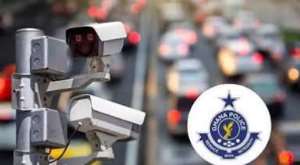
The introduction of TRAFFITECH-GH, Ghana's automated traffic law enforcement system, has generated considerable public discussion, particularly regarding speed limit signposts, road markings, warning signs and motorists' understanding of the new technology.
In an effort to establish public perceptions and concerns, Modern Ghana News embarked on a public engagement exercise, interacting with motorists and other road users in driving communities, lorry parks, markets, churches, mosques and schools. Through public interactions and one-on-one interviews, the exercise sought to understand the challenges and expectations of Ghanaians concerning the implementation of the new system.
Among the concerns raised were inadequate speed limit indicators, missing or poorly positioned warning signs, unclear road markings and the uncertainty motorists may experience when approaching certain roads and locations.
These concerns are legitimate and deserve attention. However, they also present an opportunity to educate the public on an important question: Does the absence of a speed limit signpost give a licensed driver the liberty to drive at any speed or disregard traffic regulations?
1. WHAT DOES THE LAW SAY ABOUT SPEED LIMITS?
Under Regulation 211 of the Road Traffic Regulations, 2026 (L.I. 2519), the general maximum speed limits are:
- 30 km/h on roads within schools, playgrounds, health facilities, churches, mosques, markets, shopping centres, processions and areas where human activity is predominant.
- 50 km/h within urban or built-up areas.
- 90 km/h on roads outside urban or built-up areas, other than motorways.
- 100 km/h on motorways.
However, Regulation 212 also provides different maximum limits for particular categories of vehicles. Furthermore, Regulation 213 requires drivers to reduce their speed where prevailing environmental conditions, road conditions, pedestrians or other potential hazards make a lower speed necessary.
This means that motorists must understand that speed limits are not simply determined by whether they can see a signpost. They have a responsibility to familiarise themselves with applicable traffic regulations and exercise sound judgement while driving.
2. A SPEED LIMIT IS A MAXIMUM, NOT A TARGET
A maximum speed limit does not mean that a driver must travel at that speed under every circumstance.
Rainfall, poor visibility, damaged roads, heavy traffic, pedestrians and approaching intersections may require a driver to slow down considerably. Responsible driving therefore demands continuous observation and the ability to anticipate danger.
A signpost is an important safety guide, but it cannot replace the knowledge, judgement and responsibility expected of a licensed driver.
3. WHAT ABOUT SCHOOLS, MARKETS, CHURCHES AND MOSQUES?
Drivers must be particularly cautious around places where human activity is predominant. Children may cross roads around schools, traders and customers may move around markets, while worshippers may enter and leave churches and mosques in large numbers.
The law expressly recognises these environments in its general 30 km/h speed limit provision. Consequently, motorists should not wait for a camera, police officer or additional warning before exercising caution in such locations.
The responsibility to protect vulnerable road users must remain a priority.
4. GOVERNMENT MUST ALSO ACCEPT ITS RESPONSIBILITY
While motorists must obey the law, government and the relevant road authorities must provide adequate road infrastructure. Speed limit indicators, warning signs, visible road markings and pedestrian crossings are essential components of effective traffic management.
Regulation 213 also makes provision for speed cameras, safety signage and other measures to facilitate compliance. Government must therefore ensure that the implementation of TRAFFITECH-GH is supported by appropriate road safety infrastructure.
More importantly, the authorities must continue educating drivers, transport operators and the general public about the new technology, the offences it detects, the procedures for receiving violation notices and the available processes for challenging disputed offences.
5. THE PUBLIC MUST BE PATIENT AND COOPERATE
It is important to acknowledge that the introduction of any new system or technology comes with challenges. TRAFFITECH-GH is no exception. Its implementation may require adjustments, further public education and improvements in certain areas.
For this reason, the public, particularly commercial drivers, private motorists and transport operators, should exercise patience and cooperate with government as the system becomes established.
However, public patience must be matched by government commitment. The authorities must not relent in educating motorists, addressing genuine implementation concerns and ensuring that the system operates transparently and fairly.
The objective should not simply be to detect violations and impose penalties. It should be to cultivate responsible driving habits, reduce road traffic crashes and protect human lives.
6. ROAD SAFETY IS A COLLECTIVE RESPONSIBILITY
Ultimately, the debate surrounding TRAFFITECH-GH should not become an excuse for reckless driving or an opportunity to dismiss legitimate public concerns.
If road signs are inadequate, the authorities must improve them. If motorists do not understand the new technology, government must intensify education. If drivers violate traffic regulations, they must also accept responsibility for their actions.
One party's shortcomings cannot justify the negligence of another.
As a public health concern, road safety requires prevention, education, enforcement and collective responsibility. A road traffic crash can result in death, disability, loss of livelihood and devastating consequences for families. We must therefore approach this initiative with the seriousness it deserves.
By Curtice Dumevor Kofi Agbozo
Public Health Expert and Social Commentator

 Attorney General opposes Wontumi's bid to recall prosecution witness in illegal ...
 New Heritage Cedis feature enhanced security, improved durability against counte...
 Franklin Cudjoe describes cocaine trafficking cases as national disaster; demand...
 Speaker Bagbin forwards AKSA Energy bribery deal review report to Special Prosec...
 Cabinet approves establishment of Ghana Space Agency
 God is not 'wicked' to let NPP come back to power again - Cape Coast Mayor
 China accuses US of 'fabricating' Nvidia spy claims to push tech 'blockade'
 Nvidia board weighs ouster of CEO Jensen Huang amid spy scandal
 Ghana Immigration Service introduces six-month rotational transfers for officers


