




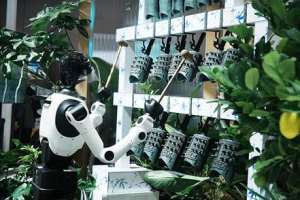
From a cochlear implant designed to help users navigate noisy environments to a home-renovation solution that promises to transform a kitchen in just three days, this year's China International Import Expo (CIIE) is showcasing innovations across a wide spectrum.
Some of the biggest attractions are the new products and technologies launched on the occassion. More than 480 products and technologies are making their global, Asian or China debuts at this year's expo, setting a new record.
So what makes China an important market for international product launches, and how does CIIE in Shanghai fit into companies' plans?
A vast market and a testing ground for innovation
China's appeal to international companies begins with the scale of its market. In 2025, the country imported about $2.58 trillion worth of goods, maintaining its position as the world's second-largest import market for the 17th consecutive year, according to the General Administration of Customs of China.
Market size is only part of the story. China's consumers have diverse needs and preferences, while rising expectations for product quality, convenience and smart features are pushing companies to improve. Competition from fast-growing domestic brands adds further pressure to innovate.
For global brands, this means China is more than a market in which to sell products, but also a place to understand changing consumer expectations, gather feedback and explore new ideas.
Will Kerr, vice president of categories at Dyson, said China's tech-savvy consumers and fast-developing domestic brands have encouraged the company to accelerate innovation and pay close attention to consumer feedback.
The CIIE provides a platform for companies to take this process. L'Oréal's AirLight Pro hair dryer is one example. The product made its China debut at 2024 CIIE.
Developed in partnership with Chinese technology startup Zuvi, it combines infrared light with high-speed airflow to dry hair while helping protect its appearance and texture.
At the time, it still hadn't been released as a consumer product. After gathering feedback from professional hairstylists and consumers at the expo, it entered the Chinese market shortly afterwards, with features designed to better address the needs of consumers with fine hair or hair damaged by chemical treatments.
From exhibits to products
Introducing a product at an exhibition is only the first step. For companies, the bigger challenge is turning initial interest into market access, sales and a lasting presence.
Shanghai has introduced measures to make it easier for eligible imported consumer goods making their debut in China to enter the market.
Streamlined customs inspection procedures reduce clearance time from at least seven days to as little as a same-day release. This is particularly important for perishable goods, such as fresh fruit, which need to reach the exhibition in good condition and have a limited window for sale.
South African cherries, making their debut at this year's CIIE, offer a timely example. Their arrival comes amid broader efforts to expand trade between China and Africa. Since May 1 this year, China has extended zero-tariff treatment to qualifying imports from 53 African countries with which it maintains diplomatic relations.
Getting products into the expo is only part of the journey. To help companies maintain their presence after the six-day event, Shanghai has developed a year-round exhibition and sales network.
One of its key platforms is the Hongqiao Import Commodities Exhibition and Trade Center, also known as Hongqiao Pinhui. Located near the CIIE venue, the center allows international brands to continue displaying and selling their products after the expo. It aims to connect them with buyers through retail, trade and online sales channels.
Germany-based Bosch is among the companies making use of this year-round platform. Its smart residential heat-pump system is making its global debut at this year's CIIE. After the expo, Bosch plans to bring the system to the Hongqiao trade center, where it can continue to reach potential buyers and move closer to commercial sales in the Chinese market.
For some products, entering the Chinese market involves more than customs clearance and sales channels. Companies must also navigate regulatory requirements, which vary by product category.
CIIE can help them connect with local institutions and better understand the procedures involved in bringing their products to market.
The experience of British consumer healthcare company Haleon offers a closer look at how this works in practice.
Its Parodontax gum-care toothpaste made its China debut at CIIE in 2024. Under a streamlined filing process for imported toothpaste products with specific functional claims, Haleon worked with Chinese dental institutions on local clinical validation. The product completed the required filing and entered the Chinese market in less than a year.
From exhibitor to investor
For some companies, the opportunities created by the CIIE extend beyond product launches and sales. The expo can also bring international technology providers together with Chinese industrial partners, creating opportunities for cooperation that may lead to further investment.
Swedish technology group Hexagon illustrates this role of the expo well.
The company first participated in the CIIE in 2019. During that year's event, it signed a strategic cooperation framework agreement with China Aerospace Science and Industry Corporation (CASIC) to explore intelligent manufacturing solutions for the aerospace industry.
The agreement built on an existing relationship. Earlier that year, Hexagon's laser-tracker measuring equipment had been used in assembly inspections for major space missions. The CIIE provided an opportunity for the two sides to formalize their cooperation and explore further areas of collaboration.
Hexagon has since expanded its operations in China, establishing its China R&D headquarters and research centers in cities including Qingdao, Shanghai, Beijing, Shenzhen and Wuhan.
For companies in technology-intensive industries, connecting with industrial partners and exploring opportunities for collaboration can be just as important as reaching potential customers.
Building lasting connections
For international companies, the appeal of the CIIE lies in what can happen beyond a product's debut. The expo offers an opportunity to introduce new products to a broad audience, hear directly from potential users and buyers, and connect with business partners who can help bring those products to the market.
For some, these connections may lead to sales and wider distribution; for others, they can open the way to industrial cooperation and investment.
This combination of market exposure, consumer feedback and business opportunities helps explain why companies continue to choose CIIE and China as a place to introduce their latest products and explore their next stage of growth.
Author: Chen Ziqi, a reporter from CGTN

 'Funny' NPP recruited 'goro boy' Alhassan Sumani as Ministry staff to perpetuate...
 Fraudsters impersonate TraffiTech-GH to steal motorists’ banking details – CSA c...
 Ablakwa cannot be blamed for alleged passport irregularities – Dzimega
 NPP bigwigs quietly visiting EOCO, CID daily over ORAL cases – Kabila
 Ablakwa has no supernatural powers to stop public servants from committing crime...
 Police to arrest motorists with tinted glass, unlicensed driving and other offen...
 TrafficTech operators accused of dubious tactics to capture motorists for speedi...
 How two Level 300 University students drown in a week
 Passport scandal: Retract or I’ll sue you – Pendilock warns Kabila
 I won and I have been reinstated – Pendilock speaks on Foreign Affairs Ministry ...


