




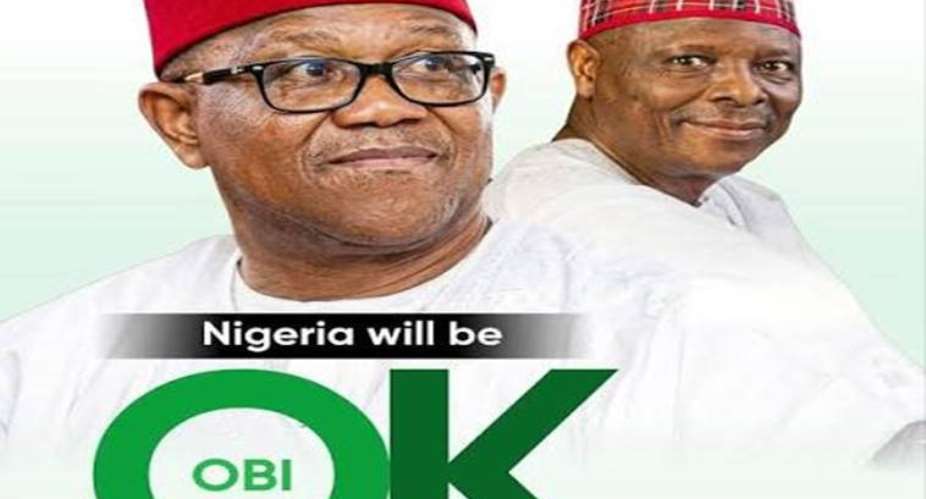
There is a fundamental difference between a leader who is prepared to die with his people and a leader who, out of his concern, is determined to ensure that his people do not continue to die unnecessarily. It is a difference that goes beyond semantics. It speaks directly to the philosophy of leadership, the responsibility of government and the kind of political consciousness that Nigerians desperately need at this critical moment in their political history.
When Peter Obi declared in a recent video clip that if Nigerians were dying in their numbers, he too was prepared to die for the country, one can understand the emotion behind his words. He definitely intended to demonstrate solidarity with the poorer classes of Nigerians, to show that he did not consider himself superior to the millions of people who have continued to bear the brunt of insecurity, poverty, hunger, unemployment and the daily indignities of a failing state. Perhaps his intention was for Nigerians to appreciate a leader who was prepared to share their suffering rather than hide behind the privileges of political office.
That intention could have been noble. But leadership requires more than willingness to suffer side-by-side with the greater number of the country’s population. In this instance, it requires the determination, the courage, the competence and the application that would be necessary to prevent the suffering and the incessant deaths, in the first place. Nigerians would not need a political leader announcing his readiness to die with them. They would need a leader who will make it his primary responsibility to ensure that nobody has to die unnecessarily. The message should be simple, unambiguous and powerful: No one is dying any more. Enough is enough!
Nigeria has lost too many people. Over the past two decades, thousands of citizens have died from circumstances that a reasonably well-organised, responsible and accountable government should have been able to prevent or substantially reduce. Some have died in hospitals because they could not afford the cost of treatment or because medical facilities lacked essential equipment and personnel. Others have been killed by kidnappers, insurgents, armed robbers, cultists and other criminal elements who have progressively undermined the security of communities. Many have perished in road accidents involving dangerous highways, poorly maintained vehicles, reckless driving and inadequate emergency response systems.
There are also those who have died because of industrial negligence, environmental pollution, building collapses, preventable workplace accidents and the consequences of extreme poverty. Behind every statistic is a human being whose death has left a family devastated, children without parents, parents mourning their children and communities deprived of productive members. These deaths should never become ordinary occurrences in the Nigerian national experience. A country must never become so accustomed to tragedy that its citizens begin to regard avoidable deaths as an inevitable part of everyday life.
This is where the campaign philosophy of Peter Obi and Rabiu Musa Kwankwaso, under the banner of the NDC, must begin to distinguish itself from the familiar political language of Nigeria. The country does not need politicians competing over who can make the most dramatic declarations about personal sacrifice. It needs politicians who can demonstrate that they understand why Nigerians are dying in their numbers, and what practical measures can be taken to stop the trend.
If truth be told, there is a potential danger in political rhetoric that glorifies death, even when the intention is to demonstrate courage or solidarity. Nigeria has already experienced too much of the politics of do-or-die. For years, political contests have been conducted with an alarming disregard for human life. Elections have sometimes been reduced to battles in which political opponents are treated as enemies to be eliminated rather than fellow citizens competing in governance ideas. The physical expression of 'do-or-die' mentality has become an unfortunate description of the desperation with which some politicians pursue political power.
The OK and the NDC as its political movement must not, even inadvertently, reinforce that mentality. Its language, conduct and political philosophy must establish a clear departure from the politics of desperation, intimidation and destruction. It must communicate that political power is neither a prize to be captured at all costs nor an instrument for personal enrichment. It is a public trust whose principal purpose is to protect human life, offer expanded opportunities and enhance the collective welfare of Nigerian citizens.
The appropriate message from Peter Obi and Kwankwaso should therefore be that Nigerians have died enough. Their deaths must not continue to be treated as collateral damage in the management of a nation that possesses enormous human and material resources. The time has come to investigate the roots of these tragedies, confront the institutional failures responsible for them and establish a system in which the preservation of human life becomes the first obligation of government.
Consider the state of healthcare in Nigeria for example. Why should a country that has produced some of the finest medical professionals in the world continue to lose citizens to illnesses that are treatable elsewhere? Why should a mother die during childbirth because a hospital lacks basic facilities? Why should a child lose his life because a family cannot afford the cost of medication? Why should Nigerians who have contributed to the economy throughout their working lives be compelled to travel abroad for medical treatment or depend on public appeals to finance life-saving operations?
The problem with Nigeria as a country is not simply a shortage of hospitals. It is a failure of strategic planning and financial intelligence, robust investment, meticulous management, transparent accountability and the choice of political priorities. A serious government must strengthen primary healthcare, equip public hospitals, improve the welfare and retention of medical personnel, expand health insurance coverage and make essential medicines accessible. It must also address maternal and infant mortality with the urgency they deserve.
The same determination must be applied to national security. Nigerians should not have to negotiate with kidnappers for the release of relatives. Farmers should not abandon their farms because armed groups have turned agricultural communities into danger zones. Children should not be afraid to attend school because their parents fear abduction. Citizens should not have to live with the constant anxiety that travelling between two Nigerian cities could become a journey into captivity or death.
Security is not achieved by political speeches, military parades or the occasional announcement of arrests. It requires intelligence-led operations, properly equipped security institutions, effective policing, reliable information networks and a robust collaboration between federal, state and local authorities. It also requires confronting the economic and social conditions that enable criminal organisations to recruit, operate and expand within and outside Nigerian borders.
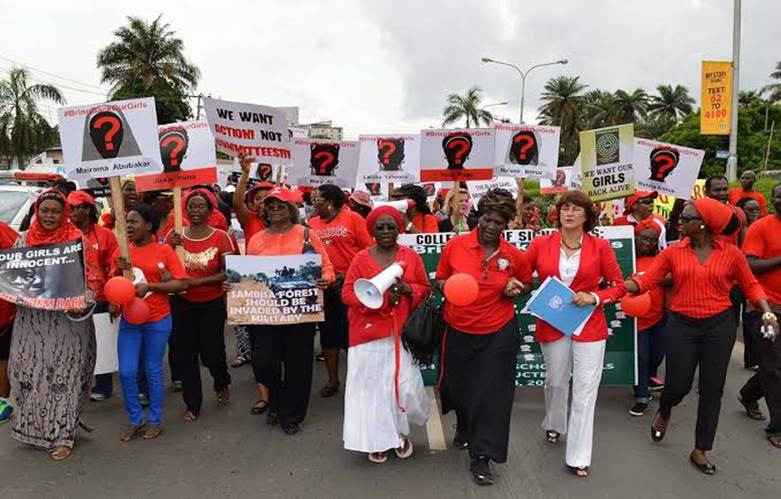
The OK political leadership must demonstrate to the world that it understands security as a responsibility to protect people and their livelihoods, not simply a subject of political argument. The objective of a possible Peter Obi administration must be to make every Nigerian community safer, regardless of ethnicity, religion, political affiliation or geographical location. And in doing so, road safety deserves a very close scrutiny. The deaths that occur on Nigerian highways are often discussed as though they were simply unfortunate accidents. Yet many are connected to identifiable and preventable failures. Poor road conditions, inadequate enforcement of traffic laws, non-roadworthy vehicles, dangerous driving, overloaded commercial vehicles and the absence of effective emergency response services all contribute to the road carnage Nigerians experience almost daily.
A government that values human life must regard road infrastructure as a public safety investment rather than a construction project. It must maintain existing roads, enforce safety standards, improve driver education and establish efficient emergency medical services capable of responding promptly to accidents. The question should not simply be how many kilometres of roads have been constructed, but how many lives have been saved through better infrastructure and safer transportation.
But there is an even deeper political issue that Obi and Kwankwaso must address. Nigeria is suffering not only from failures of governance but also from a failure of national political identity.
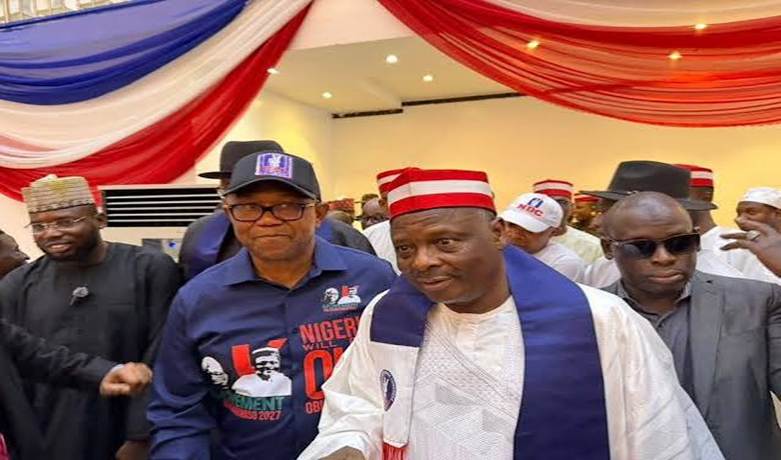
For too long, Nigeria’s political environment has encouraged citizens to think in terms of ethnic, religious and regional interests. Political loyalty is frequently determined by where a candidate comes from rather than what that candidate can offer the country. National questions are often reduced to arguments about which ethnic group should occupy which political office, which region deserves what share of power and which religious community should enjoy greater political influence.
This is not the foundation upon which a modern, united and prosperous country can be built. Nigeria must move from away tribal politics and work towards genuine national political dispensation. This does not mean suppressing ethnic identities, cultural differences or legitimate regional interests. It means recognizing that those differences must never become more important than the shared responsibility to build a country in which every citizen can live safely, work productively and aspire to a better future.
A child in Kano who dies because of inadequate medical care suffers the same national tragedy as a child who dies for the same reason in Anambra, Rivers, Lagos or Benue. A farmer kidnapped in Katsina is as deserving of protection as a trader abducted in Imo. A young graduate who cannot find employment in Enugu has the same legitimate claim to economic opportunity as another graduate in Kaduna. The Nigerian identity must become more meaningful than the political boundaries of ethnicity and religion. It must be built around common rights, common responsibilities and a shared commitment to human dignity.
This is where the NDC, as an aspiring party, must establish its intellectual and moral distinction. It should not present itself merely as another political arrangement seeking to replace one group of officeholders with another. It should present a fresh understanding of what government exists to accomplish. The NDC campaign must make Nigerians understand that the objective is not simply to occupy Aso Rock. It is to change the insecure conditions under which Nigerians have continued to live for so long. It is to make government answerable to the people and to ensure that public resources are deployed towards measurable improvements in human welfare.
Peter Obi and Kwankwaso must also resist the temptation to make their political personalities the centre of the movement. Nigeria has had enough of political cults built around individual politicians and religious leaders. A successful national movement must be bigger than its leading personalities. Its principles must survive disagreements, its institutions must be stronger than individual ambitions and its policies must be capable of being examined, challenged and improved.
There must be room for honest disagreement within the movement. There must be room for people who do not come from the same political background, ethnic community or ideological tradition. Indeed, the ability to accommodate different perspectives without descending into hostility would itself demonstrate the kind of national leadership Nigeria actually needs. Their campaign language must therefore be carefully chosen. Nigerians should hear more about life expectancy, employment, affordable healthcare, food security, educational opportunities, public safety, industrial development, electricity, reliable transportation and the protection of individual freedoms. They should hear how government intends to reduce maternal mortality, improve emergency medical services, restore confidence in public hospitals, dismantle criminal networks and create an environment in which businesses can flourish and young people can find meaningful employment.
They should also hear about accountability. How will public money be protected? How will corruption be investigated? How will public officials be held responsible for failures? What happens when a government agency repeatedly fails to perform its statutory duties? What mechanisms will enable citizens to measure the performance of those elected to serve them? These are the questions that should dominate the national conversation.
The people of Nigeria are not necessarily looking for a President who will declare that he is prepared to die with them. They are looking for a President who will lose sleep over the possibility of another Nigerian dying unnecessarily. They want a leader who will regard every preventable death as a failure of public responsibility and every avoidable tragedy as a reason to demand institutional improvement. That is the something that is profoundly different about a leader who says, 'I am prepared to die with you,' and one who says, 'I will do everything within the power of government to ensure that you do not die unnecessarily.' The first communicates solidarity in suffering. The second communicates responsibility for changing the circumstances that produce suffering and death. Nigeria needs the second.
This does not mean that a leader should be unwilling to make personal sacrifices. Far from it. Public service demands sacrifice, discipline and an understanding that the privileges of office must never become more important than the welfare of the people. But personal sacrifice is not the ultimate objective of leadership. It is a means of serving a larger public purpose. The ultimate measure of leadership is what happens to the lives of ordinary citizens while the leader is in office. Are more children surviving? Are fewer people dying from preventable diseases? Are communities safer? Are young people finding opportunities? Are citizens becoming more confident in public institutions? Are families able to live without the constant fear of hunger, violence and the type of economic uncertainty that forces them to send out their teenage children to go hawk on the streets of cities and on highways when they should be in school? These are the questions that should determine whether a government has succeeded or failed.
Peter Obi has an opportunity to articulate this philosophy with clarity. Kwankwaso has an opportunity to reinforce it with a national outlook that transcends regional political calculations. Together, they must demonstrate that the politics of the future will not be defined by who is prepared to suffer most dramatically, but by who possesses the competence and determination to reduce the suffering of millions of Nigerians.
The message must also reach the political establishment. No Nigerian should be made to feel that death is an acceptable price for political ambition. No election should be worth shedding the blood of a single citizen. No political disagreement should justify violence. No public office should be pursued with the desperation that makes opponents appear expendable. The country needs a new political vocabulary, one that places life above ambition, service above self-interest, competence above propaganda and national unity above ethnic manipulation.
Enough Nigerians have died over the past two decades. Enough families have been destroyed. Enough communities have been displaced. Enough children have grown up without parents. Enough parents have buried their children. Enough citizens have watched their dreams disappear because the institutions designed to protect them have failed them. The next chapter of Nigerian politics must be about preventing the next tragedy, not merely expressing sympathy after it has happened.
Peter Obi and Rabiu Musa Kwankwaso should make this the moral foundation of their national campaign. They should tell Nigerians that the purpose of seeking political power is not to join them in their suffering, but to end the avoidable suffering that has become an unfortunate feature of their existence. Let the message be unmistakable: “We have mourned enough. We have buried enough. We have endured enough. We have lost enough. Nigeria must become a country where citizens expect to live, not where they constantly prepare themselves for possible deaths.”


 No prima facie case in petition against Justice Pwamang – Presidency
 Mother invokes generational curse on daughter during heated verbal exchange
 SA evacuation: OSP must not allow media pressure to dictate investigations – Bra...
 NPP closes portal for expression of intent in parliamentary primaries today
 Ghana targets 70% 5G coverage by March 2027 – Sam George
 Women’s Development Bank submits licence application to Bank of Ghana – Vice Pre...
 Ghana Must Reset — Not Just In Words, But In Deeds!
 OSP must publish findings on alleged sale of diplomatic passports – Larry Dogbe
 2027 Budget: 'Adwuma no wɔ he?’ – Sammi Awuku demands answers on Mahama's youth ...
 SA evacuation: OSP must punish those who took hotel money while evacuees slept i...


