




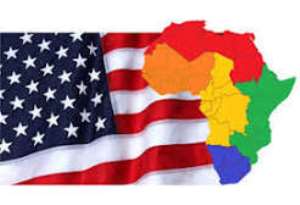
There is a much bigger story here than the Democratic Party's victory in the American midterm elections. The implications extend beyond Washington. They touch the future of American democracy, the war in Ukraine, America's relations with Russia and the Arab world, the future of oil-producing countries, and, importantly, America's relationship with Africa.
Should Africa continue to approach Washington as a passive recipient of American foreign policy, or should African countries begin preparing a coordinated diplomatic roadmap for a new relationship with the United States? That is an important question. Africa must not wait until a new American administration takes office before deciding what it wants from the relationship.There are, however, some constitutional and political distinctions worth making before we develop the argument.
Can Trump Still Pursue a Third Presidential Term?
The short answer is that the American Constitution places a very formidable obstacle in his way. The 22nd Amendment to the United States Constitution states that: No person shall be elected to the office of the President more than twice.
Donald Trump was elected in 2016 and again in 2024. Therefore, under the existing Constitution, he cannot be elected president for a third time in 2028. The same is talked about in Ghana today. Can John Mahama pursue a third presidential term? Again, the answer is No! The matter is with the Supreme Court, and we should have by now dealt with it. The delay is causing a lot of panic, anxiety and mistrust.
In the US, there have been discussions about possible ways around the restriction, including arguments involving the vice presidency and presidential succession. However, these are legally contentious, and there is no established constitutional route that would straightforwardly allow Trump to serve a third elected presidential term. Changing the constitutional restriction would require an amendment under Article V. That requires a two-thirds majority in both chambers of Congress and ratification by three-quarters of the states, or an alternative constitutional convention process followed by ratification. In practical terms, this is an extraordinarily high hurdle. The midterm elections do not themselves decide the third-term question. The constitutional restriction already exists.
What has Trump Lost through the Democratic Victory?
This is perhaps the most immediate consequence of the elections. The Democrats have won control of both the House of Representatives and the Senate. This is significant because Republicans previously controlled both chambers, giving Trump's administration a much easier legislative environment. The new Democratic Congress is expected to take office in January 2027.
Here is what changes:
First: Congressional investigations --- Democrats will have greater authority to summon officials, demand documents, conduct hearings and investigate the administration. Potential areas of investigation include: Trump's family business interests and possible conflicts of interest, cryptocurrency and real-estate dealings involving Trump and his associates, government contracts and mineral agreements, the handling of the Epstein investigation, immigration enforcement and ICE operations, the Department of Government Efficiency, and financial dealings involving people close to the administration. The Associated Press reports that Democratic leaders are preparing extensive investigations into allegations of self-enrichment and possible misconduct. The White House and Republicans dispute allegations of wrongdoing. An investigation, of course, is not proof of guilt.
Second: Impeachment becomes a possibility --- The House has the constitutional authority to impeach a president by a simple majority. The Senate conducts the trial, and conviction requires a two-thirds majority of senators present. Democratic control of both chambers makes impeachment proceedings more feasible, but it does not guarantee Trump's removal. Even if the House impeaches him, Republicans could still prevent conviction if they retain sufficient Senate support. There is also a political question: would Democrats benefit from impeachment, or would they be better served by concentrating on accountability, the economy and the cost of living? That debate is already important within the party.
Third: Trump's appointments face greater scrutiny --- The Senate confirms Cabinet members, ambassadors and federal judges. With Democrats controlling the Senate, Trump will face a much more difficult confirmation process. Democrats can delay or reject nominees and demand greater scrutiny of their qualifications and record
Fourth: His legislative programme faces obstruction --- Trump can no longer count on a Republican-controlled Congress to pass his legislative proposals. He retains the presidential veto, executive authority and considerable control over foreign policy. Democrats cannot simply take those powers away because they have won an election. However, they can investigate, legislate, restrict or condition appropriations where constitutionally permissible, and use congressional oversight to expose questionable decisions. That is a substantial change in the balance of power.
Could American Billionaires and Influential Business Interests be Exposed?
The American political system has always had a complicated relationship with money, corporate influence and political power. The forthcoming investigations could examine whether government decisions, contracts, regulatory concessions and commercial arrangements benefited individuals or businesses with close connections to the administration.
But we must distinguish three things:
* Political donations and lobbying, which are not automatically illegal.
* Conflicts of interest, which may raise serious ethical and legal questions.
* Corruption, fraud or unlawful enrichment, which must be established through evidence and due process.
Some billionaires may face questioning, scrutiny or reputational damage. Others may emerge without wrongdoing being established. The more interesting question is whether the American system can demonstrate that wealth and political connections do not place anyone above accountability. That would be a significant lesson for African governments as well.
The Russia–Ukraine War: What Happens Now?
Trump's approach to the war has been different from that of the Biden administration. He has emphasized negotiations, pressed Ukraine to consider difficult compromises and pursued direct engagement with Moscow. Critics argue that this approach has given Russia diplomatic advantages and placed excessive pressure on Ukraine. Supporters argue that direct negotiations are necessary to end a war that has already cost enormous numbers of lives. These are competing interpretations, and the distinction matters.
A Democratic-controlled Congress can scrutinize military assistance, sanctions policy, negotiations and the administration's dealings with Russia. It can also influence funding and legislation. However, Trump remains president and retains considerable authority over American foreign relations.
The central question is whether Washington can pursue a peace settlement that respects Ukraine's sovereignty and territorial integrity rather than simply seeking an agreement that ends the fighting at any cost. Africa should pay attention. The war has affected food prices, fertilizer supplies, energy markets and the cost of living across the continent. A stable and just settlement would have consequences far beyond Europe.
The Qatar Aircraft: A Gift that Deserves a Thorough Investigation
Qatar's gift of a Boeing 747-8 aircraft to the United States for use as a presidential aircraft generated controversy from the beginning.
The questions are substantial:
- Why would a foreign government give such an expensive aircraft to the American government?
- What conditions, formal or informal, accompanied the gift?
- Who ultimately benefits from the arrangement?
- What will happen to the aircraft when Trump leaves office?
- Who pays for the security modifications and maintenance?
- Could the arrangement create a conflict of interest or raise constitutional concerns?
The aircraft is expected to undergo extensive security modifications. There have also been questions about whether it might eventually be transferred to Trump's presidential library foundation. As of August 2026, the White House had not made a final decision about its future.
The constitutional Foreign Emoluments Clause restricts federal officeholders from accepting gifts or benefits from foreign states without congressional consent. This is precisely the sort of matter that congressional oversight should examine. The investigation should establish the facts rather than begin with a predetermined conclusion.
What Does America Gain from this Election?
The most important potential gain is a restoration of institutional checks and balances. The American Constitution was designed around the principle that power should not be concentrated in one individual or institution. The president has enormous authority, but Congress, the courts and the states provide constitutional restraints. A Congress controlled by the opposition can help restore scrutiny of executive decisions.
America could gain in several ways:
- Greater institutional accountability --- Public officials will face more questioning. Government contracts, expenditure and presidential decisions will receive greater scrutiny.
- A stronger legislative debate --- Instead of presidential decisions being accepted or rejected largely along party lines, there will be greater pressure for negotiation.
- Renewed attention to constitutional government --- The election creates an opportunity to reconsider executive power, congressional oversight, judicial independence and the protection of democratic institutions.
- A possible change in foreign policy --- Democrats have indicated interest in restoring relationships with traditional American allies, reviewing assistance to Ukraine and reassessing aspects of the administration's foreign policy. However, Trump remains president, and the president retains considerable foreign-policy authority.
But there is a danger. If the Democrats use their majority exclusively to pursue political revenge, they could squander the opportunity. Investigations must be evidence-based, and the party must demonstrate that it can govern responsibly, not merely oppose Trump.
What Does Africa Gain or Lose?
This is where I believe African leaders should begin thinking beyond the immediate American political contest. Africa has had a complicated relationship with successive American administrations. There have been periods of development assistance, trade cooperation, military partnerships and diplomatic engagement. There have also been periods of neglect, political pressure and interventions driven primarily by American strategic interests.
Trump's second administration has placed considerable emphasis on American national interests and transactional relationships. One example is the decision announced on November 2, 2026, to terminate South Africa and Rwanda's participation in AGOA from January 1, 2027. AGOA provides eligible African countries with preferential access to the American market.
This is a reminder that African economies can be affected by decisions made in Washington, even when African governments have little influence over the decision-making process. A Democratic-controlled Congress may create opportunities to reconsider aspects of America's engagement with Africa, especially where trade, development assistance, human rights and democratic governance are concerned. But let us not assume that a Democratic Congress automatically means a generous America.
Both major American parties have pursued policies that advance American interests. Democrats are not necessarily less protective of American commercial, military and geopolitical interests than Republicans. Africa must therefore approach both parties with a clear continental agenda.
What Should Africa Demand?
I would propose seven priorities.
- A new trade relationship --- Africa should push for a stable, predictable and mutually beneficial trade arrangement with the United States. AGOA should not become a political instrument that can be withdrawn from individual countries without transparent procedures and meaningful engagement. African countries should also seek American investment in manufacturing, agriculture, pharmaceuticals, technology and infrastructure. We should not be satisfied with exporting raw materials and importing finished products.
- Investment rather than dependency --- Africa needs investment that creates jobs, develops skills, transfers technology and builds local industries. The relationship should move beyond aid dependency.
- Respect for African sovereignty --- America should respect the right of African countries to determine their political and economic relationships. African governments should be able to cooperate with the United States, China, Russia, Europe, India and other partners without being forced into geopolitical camps.
- Security cooperation --- The Sahel is facing serious security challenges. Ghana, Burkina Faso, Mali, Niger, Chad and neighbouring countries cannot afford to treat terrorism and instability as isolated national problems. Africa needs cooperation based on intelligence sharing, training, border security and strengthening local institutions. Military cooperation must respect national sovereignty and human rights.
- Debt and economic reform --- Africa should engage Washington on debt restructuring, access to international finance, investment guarantees and the reform of international financial institutions.
- Technology and education --- American universities, research institutions and technology companies should be encouraged to establish stronger partnerships with African institutions. Africa needs scientific research, agricultural innovation, artificial intelligence expertise and technical training.
- A fairer international system --- Africa should demand meaningful representation in global decision-making institutions, including the United Nations Security Council and international financial institutions. Our relationship with Washington should be based on partnership, not patronage.
Should Africa Begin Cultivating Relationships with the Democrats?
Yes, Africa should engage Democratic leaders and institutions. But it should not abandon its existing relationships with Republicans. This distinction is important. Africa must not behave like a political organization that changes its foreign policy whenever another party wins an election in Washington.
The African Union should establish institutional relationships with:
- Democratic congressional leaders.
- Republican congressional leaders.
- The Congressional Black Caucus.
- The Senate Foreign Relations Committee.
- The House Foreign Affairs Committee.
- American universities and research institutions.
- American business and investment organizations.
- African-American civil society and professional organizations.
The objective should be to build relationships that survive changes of government.
Africa should also consider convening an Africa–United States diplomatic and economic summit, with the African Union taking the lead. The summit should produce a document outlining Africa's expectations and America's commitments. That would be far more productive than individual African presidents travelling to Washington to negotiate separate arrangements.
Venezuela: Can the Country be allowed to Control its Own Oil?
Venezuela possesses some of the world's largest proven oil reserves. Yet its people have endured political instability, economic hardship, sanctions and a prolonged struggle over political legitimacy.
There has been a dramatic development in 2026. The United States captured Nicolás Maduro in January 2026. Vice-President Delcy Rodríguez subsequently became interim president. Washington later restored diplomatic relations and pursued an arrangement giving American interests significant influence over Venezuelan oil production. In August, the Trump administration announced an oil agreement involving 17 Venezuelan oilfields, with extensive American investment and governance rights. The announcement describes a 100-year concession arrangement and substantial American control over the associated enterprise.
This raises fundamental questions.
- Who owns Venezuela's natural resources?
- Can the Venezuelan people determine how their oil is extracted, marketed and sold?
- Should American companies have access to Venezuelan oil? Certainly, they can participate in legitimate commercial arrangements. But participation is different from control.
The international community should insist on transparency, Venezuelan sovereignty and accountability for the revenues generated. Venezuela should be able to sell its oil to legitimate buyers, subject to applicable international law and sanctions. The people of Venezuela must not become spectators while others determine the future of their natural resources.
Libya: Has America Learnt Anything from the Past?
Libya remains a reminder of the consequences of foreign intervention without a sufficiently sustainable political settlement. The 2011 NATO intervention, in which the United States played a leading role, contributed to the fall of Muammar Gaddafi's government. But what followed? Political fragmentation, competing authorities, armed groups and prolonged insecurity.
Libya has enormous oil wealth, yet political instability has repeatedly disrupted its ability to manage that wealth effectively. The question for Washington is whether it can support a genuinely Libyan-led political settlement rather than treating Libya primarily as a source of oil, a migration-control partner or a strategic military location.
America should support:
- National reconciliation.
- Unified and accountable institutions.
- Transparent oil revenue management.
- Credible elections.
- The withdrawal of foreign interference and unlawful armed formations.
Libya needs institutions that can govern, not another round of externally imposed political arrangements.
Chad and the Future of the Sahel
Chad is particularly important because of its geographical position. It sits at the crossroads of several security crises involving Libya, Sudan, Niger, Nigeria and the wider Sahel. For years, Chad has been an important security partner of Western countries, including France and the United States. But African countries are increasingly questioning the nature of their security partnerships.
The question is not whether America should cooperate with Chad. It is what kind of cooperation is appropriate. Should American involvement be primarily military? Or should it include investment in education, agriculture, employment, border communities and institutions?
Africa should insist that security cooperation must strengthen African capacity rather than create permanent dependency. Ghana, as a country bordering Burkina Faso and relatively close to the wider Sahel crisis, has a direct interest in this debate.
What about Guantánamo Bay?
This is another unfinished chapter in American history. The Guantánamo Bay detention facility has become synonymous with prolonged detention, controversy over due process and allegations of human rights violations. The facility was established following the September 11, 2001 attacks.
Successive American presidents have discussed closing it, but it remains open. Trump's administration has also used the wider Guantánamo facility in its immigration detention policy, attracting criticism from human rights organizations.
The question is straightforward: Can America continue to present itself as a champion of democracy, human rights and the rule of law while maintaining a detention system that has attracted such sustained international criticism?
A new congressional majority should examine the legal status of detainees, conditions of detention, due process and the future of the facility. If America wishes to demonstrate renewed commitment to constitutional principles, Guantánamo deserves serious attention.
Will the Democrats Win the White House in 2028?
American political history demonstrates that midterm elections and presidential elections are different contests. The Democrats now have an opportunity to demonstrate that they can provide responsible leadership.
But they must avoid several mistakes:
- They must not assume that everyone who voted against Republican candidates has become a committed Democrat.
- They must present a credible economic programme addressing inflation, housing, employment, healthcare and the cost of living.
- They must demonstrate that they can manage foreign policy, including Ukraine, the Middle East, China and relations with Africa.
- They must identify credible presidential candidates and avoid allowing internal divisions to undermine their prospects.
- They must demonstrate that accountability is not simply a weapon against political opponents.
The 2026 results provide the Democrats with a powerful opportunity to rebuild public confidence. Whether they translate that opportunity into a presidential victory in 2028 will depend on their performance, candidates, public support and the political circumstances at that time. No one should confuse the midterm victory with a guaranteed presidential victory.
The Bigger Lesson for Africa
There is something particularly instructive about the American midterms. A president may enjoy enormous popularity within his political party, command considerable executive authority and have powerful business interests supporting his agenda. Yet voters can still decide to give the opposition control of Congress. That is the essence of constitutional democracy. It reminds us that political power is borrowed from the people.
African politicians should reflect on this. In Ghana, for instance, we often behave as though winning a presidential election gives a political party ownership of the country for four years. Parliamentarians sometimes behave as though they are the masters of their constituents rather than their representatives. We need stronger parliamentary oversight, independent institutions, effective investigative journalism and citizens who demand accountability.
America's midterm elections should remind African leaders that electoral victory is not a license to govern without restraint. And the opposition, wherever it finds itself, must remember that winning an election is not an end in itself. It is an opportunity to demonstrate that it can do better.
Africa must not Sleep While Washington Rearranges Its Political Furniture
The American midterm elections have sent an important message to the world. No president, however powerful, should assume that political authority is permanent or that the institutions of state exist to serve the interests of one individual. Donald Trump still has two years in office. The Democrats have two years to demonstrate that they can provide an alternative approach to governance. America has an opportunity to strengthen its democratic institutions, restore public confidence and reconsider some of its international relationships.
But Africa must not simply sit back and watch. We must ask ourselves what we want from America. Do we want a relationship built around occasional diplomatic visits, military agreements and aid packages? Or do we want a genuine economic and strategic partnership that creates employment, transfers technology, develops industries and respects our sovereignty?
We must also ask America some difficult questions about Venezuela, Libya, Chad, Ukraine and Guantánamo Bay. The world needs a foreign policy that places human dignity, international law and the legitimate interests of nations above narrow geopolitical calculations.
Africa should not be waiting for a Democratic president in 2029 before preparing its position. The African Union must begin the process now. It must engage both sides of the American political establishment and develop a common continental position.
Let us not forget that America has its interests. China has its interests. Russia has its interests. Europe has its interests. Why should Africa be the only continent that approaches international relations without a sufficiently coordinated long-term strategy?
The American people have spoken through their midterm elections. They have changed the balance of power in Washington. The question now is whether African leaders are prepared to speak with one voice about the future of their continent. Africa must stop waiting for other people to determine its destiny.
My Final Thoughts: Africa must Prepare Now
Africa must not wait for the 2028 American presidential elections before deciding what it wants from Washington. The African Union should convene a high-level meeting involving heads of state, foreign ministers, trade ministers, economic experts and representatives of African business. The meeting should produce an Africa–United States Roadmap for 2027–2035.
I would suggest five broad pillars:
- Economic partnership: Trade, industrialization, agricultural development and investment.
- Security partnership: Counterterrorism, intelligence sharing and regional stability.
- Democratic partnership: Constitutional governance, institutional accountability and human rights.
- Energy partnership: Fair access to oil, gas, renewable energy investment and local value addition.
- Diplomatic partnership: Respect for sovereignty, multilateralism and African representation in international institutions.
The roadmap should be presented to both Democratic and Republican leaders. Africa must also make clear that its relationship with America cannot be determined solely by who occupies the White House.
FUSEINI ABDULAI BRAIMAH
+233208282575 / +233550558008
[email protected]


 'Funny' NPP recruited 'goro boy' Alhassan Sumani as Ministry staff to perpetuate...
 Fraudsters impersonate TraffiTech-GH to steal motorists’ banking details – CSA c...
 Ablakwa cannot be blamed for alleged passport irregularities – Dzimega
 NPP bigwigs quietly visiting EOCO, CID daily over ORAL cases – Kabila
 Ablakwa has no supernatural powers to stop public servants from committing crime...
 Police to arrest motorists with tinted glass, unlicensed driving and other offen...
 TrafficTech operators accused of dubious tactics to capture motorists for speedi...
 How two Level 300 University students drown in a week
 Passport scandal: Retract or I’ll sue you – Pendilock warns Kabila
 I won and I have been reinstated – Pendilock speaks on Foreign Affairs Ministry ...


