




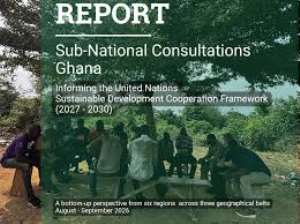
There is a valley in north-western Guinea where, until a mine arrived, a woman could walk down and find water. She cannot anymore. That small fact, recorded by Human Rights Watch, carries the argument of this brief.
The energy transition is necessary, and it is being built on ground where people already live. If the law cannot reach the point where the two meet, the transition will fail the people who pay for it first, and in time it will fail everyone else too.
I make three claims. The harm is documented. It is a violation of rights, not a by-product. And the remedy is within reach if governments, companies and investors accept binding rules with dates attached.
I set the evidence first and the demands last, so that a reader who disagrees with my conclusions can still use my facts.
1. A Valley Without Water
In October 2018, Human Rights Watch published a 146-page report on Guinea’s bauxite boom, based on more than 300 interviews in 30 villages of the Boké region.
One of the people it recorded was Maïmouna, of Lansanayah, a hilltop village about 15 kilometres from Boké. Her community used to find water down the valley. After the arrival of La Société Minière de Boké (SMB), Guinea’s largest bauxite exporter, she said:
“There’s no water in the valley anymore.”
Villagers came to rely on tankers sent by the mine’s consortium. A community leader said some of the water arrives dirty, so people ration the clean supply until the next delivery.
Her case was not isolated.
The report found that companies took ancestral farmland without compensation matched to its long-term value. Most rural Guineans hold land by custom, without registered title, which lets companies treat it as state property. The 2011 mining code required compensation rules that the government had not issued. An April 2017 ministry inspection found that SMB had not taken effective measures against sediment pollution of waterways. Of more than 7,600 people SMB employed in September 2018, only 274 were women.
I give the other side too.
SMB told Human Rights Watch that respect for human rights is a pillar of its values and answered the findings in detail. Compagnie des Bauxites de Guinée said it had improved its environmental and social management after a 2016 loan linked to the World Bank and now offers replacement land to displaced people. Guinea’s government said it approves only projects that meet environmental and social standards and had begun a sector audit.
In November 2025, Inclusive Development International recorded communities along the Cogon River who fear the mines and point to areas already mined as proof that life there becomes impossible.
Guinea holds the world’s largest bauxite reserves and the largest population of the endangered western chimpanzee (Pan troglodytes verus), yet it sits near the bottom of the UN Human Development Index.
I have not audited Boké myself. My claim is narrower: the harm was documented, the companies and the state were heard, and the communities are still asking the question that gave the report its title:
“What Do We Get Out of It?”
2. What the Evidence Shows
Allegations are not findings of guilt. They are the best systematic record we have, and they are rising.
The Human Cost
| Indicator | Finding | Source |
|---|---|---|
| Allegations at transition-mineral mines, 2025 | 329, up 111% from 156 in 2024. On a like-for-like basis, for mines tracked in both years, the rise was 73% (156 to 270). | BHRRC Transition Minerals Tracker 2026 |
| Africa, 2025 | 100 allegations, up 122% from 45. The DRC accounted for 56 of the 100. | BHRRC Tracker 2026; Mongabay |
| Since 2010 | 1,226 allegations across 299 mining operations. | BHRRC Tracker 2026 |
| Concentration | Ten companies and 33 mines accounted for half of all 2025 allegations. Glencore, Rio Tinto and First Quantum Minerals led. | BHRRC Tracker 2026 |
| Remedy | 44 of 329 allegations (one in seven) led to a lawsuit or regulatory action. | BHRRC Tracker 2026 |
| Indigenous Peoples | 17% of allegations, against about 6% of the world’s population. | BHRRC Tracker 2026 |
| Defenders and Transparency | 42 attacks on defenders, up by more than half on 2024. Only 87 of 155 implicated mines (56%) had a public human rights policy. | BHRRC Tracker 2026 |
The Law
| Instrument | Finding | Source |
|---|---|---|
| UNGA Resolution 76/300 | 28 July 2022: 161 for, none against, eight abstentions. Recognises the right to a clean, healthy and sustainable environment. | UN Press GA/12437 |
| ICJ Advisory Opinion | 23 July 2025. Operative clause adopted unanimously, with separate opinions appended by several judges. A healthy environment is a precondition for other human rights. | ASIL Insights |
| UNGA Resolution A/80/L.65 | 20 May 2026: 141 for, eight against, 28 abstentions. Welcomes the ICJ opinion, calls on states to comply and requests a Secretary-General report in 2027. | ASIL; EJIL:Talk |
| EU Directive 2026/470 | Due diligence limited to firms above 5,000 employees and €1.5 billion turnover. Transposition by 26 July 2028, application from 26 July 2029. EU-wide civil liability removed. Penalty cap 3% of turnover. | Covington; Accountancy Europe |
The Market
| Indicator | Finding | Source |
|---|---|---|
| Refining concentration | Top three refiners held 86% of refined output of six key minerals in 2024, up from 82% in 2020. Excluding rare earths, the leading refiner averaged 72% in 2025. | IEA Outlook 2026 |
| Investment and exposure | Critical mineral investment fell 9% in 2025 compared with 2024. China’s April 2025 rare earth export controls forced some automakers to cut output. The IEA puts up to USD 6.5 trillion of downstream production at risk. | IEA Outlook 2026 |
Ghana
| Indicator | Finding | Source |
|---|---|---|
| Water bodies polluted | About 60%, according to CSIR-Water Research Institute (August 2026), some possibly hard to restore. | MyJoyOnline |
| Turbidity, Sekyere Hemang intake (August 2024) | 14,000 NTU, against a design limit near 2,000. | NAPRM-GC; GCAG |
| Forest reserves | 44 of 288 degraded by illegal mining, with nine “red zones” officials could not safely enter (early 2025). | MyJoyOnline |
| Kyebi Water Works | Shut since August 2025, as of May 2026. | The Fourth Estate |
Three things stand out.
First, the harm is growing with demand.
Second, it is concentrated, so targeted accountability can work.
Third, the gap between harm and remedy is wide. Only one allegation in seven reaches a lawsuit or a regulator.
Copper alone accounts for about 60 per cent of the 2025 allegations, which tells us where the pressure will fall hardest as grids and data centres expand.
Home Ground
I write from Accra, so I will be specific.
Ghana’s own scientists say about 60 per cent of the country’s water bodies are polluted. The Ghana Water Company has recorded turbidity far beyond what its plants were built to treat and has shut works as a result. Its managing director has said that although nothing is mined in Accra, pollution from upstream has pushed up treatment costs.
In October 2026, A Rocha Ghana and partner organisations held a press conference in Accra on escalating abuses in mining communities and petitioned the police over threats and farmland destruction.
They were echoing the Commission on Human Rights and Administrative Justice, whose national study of mining communities, begun in 2007, found widespread pollution of water sources, loss of livelihoods and other violations.
I must be exact on one point. Most of Ghana’s illegal mining, galamsey, is for gold, which is not a transition mineral.
I include it because it shows the same failure of licensing and enforcement, and because the same rivers are at stake in the case that does involve a transition mineral.
The Atewa Range Forest Reserve is the source of the Ayensu, Densu and Birim rivers, and it lies over an estimated 165 million tonnes of bauxite. A 2018 bauxite-for-infrastructure barter worth USD 2 billion with China’s Sinohydro has been contested by civil society in public and in court.
Readers should consult current court records for its status.
The geography does not change: those rivers begin in that forest.
3. From Pollution to a Rights Violation
“Environmental impact” describes a cost someone can discount.
A rights violation describes a wrong someone owes a remedy for.
Each harm recorded in Guinea and Ghana can be translated into a right the state has already accepted.
| What Happens on the Ground | Right Engaged | Legal Anchor |
|---|---|---|
| Farmland taken without fair compensation or genuine consent | Property; adequate standard of living and food | African Charter, Art. 14; ICESCR, Art. 11; UN Declaration on the Rights of Peasants (2018) |
| Springs and rivers silted or polluted | Water; health; a clean environment | UNGA Res. 64/292 (2010); ICESCR, Art. 12; UNGA Res. 76/300; African Charter, Art. 24 |
| Dust and contaminated water in homes and on crops | Health; life | ICESCR, Art. 12; ICCPR, Art. 6 |
| Women left out of jobs and compensation | Equality and non-discrimination | CEDAW; General Recommendation 34 on rural women (2016) |
| Objectors threatened or attacked | Expression, assembly, protection of defenders | ICCPR, Arts. 19 and 21; UN Declaration on Human Rights Defenders (1998) |
| No effective complaint route and no repair | Effective remedy | ICCPR, Art. 2(3); UN Guiding Principles on Business and Human Rights (2011), Pillar III |
| The same harms in Ghana | All of the above under Ghanaian law | Minerals and Mining Act, 2006 (Act 703); Environmental Protection Agency Act, 1994 (Act 490); Ghana’s National Action Plan on Business and Human Rights |
The law has moved quickly.
The ICJ’s 2025 opinion treated a healthy environment as a precondition for other human rights, and the operative clause was adopted unanimously, although several judges appended separate opinions.
In May 2026, the General Assembly welcomed the opinion by 141 votes to eight, with 28 abstentions, and asked the Secretary-General to report on compliance in 2027.
States did not ignore the Court.
In September 2024, a panel convened by the Secretary-General, co-chaired by South Africa’s Nozipho Mxakato-Diseko and the European Commission’s Ditte Juul Jørgensen, set out seven voluntary principles for these minerals. The first says that human rights must be at the core of all mineral value chains.
Two Groups Deserve Greater Attention
A 2022 study in Nature Sustainability of 5,097 energy-transition mining projects found that:
- 54% lie on or near Indigenous Peoples’ lands.
- 69% lie on or near Indigenous or peasant land.
- Bauxite showed the highest overlap of any mineral.
Free, prior and informed consent is therefore the test of whether a land grab is lawful, not a courtesy.
Women must also be consulted and compensated in their own right, not only through male heads of household, which is what CEDAW’s guidance on rural women requires.
I will not overstate the law. The ICJ opinion and the resolutions address states, and the Guiding Principles reach companies only through voluntary commitments and domestic law.
That gap between the right and the remedy is the reason for Demand 2.
4. The Green Paradox
The clean-energy transition runs on metals dug from the ground, and the ground has people on it.
Aluminium frames, grid cables and batteries all begin somewhere. When they begin in a village that has lost its stream, the transition has borrowed against the future of the people least able to lend.
This is a supply problem as well as a moral one.
In 2025, community resistance contributed to at least 27 mine suspensions, slowdowns or closures, and the Business & Human Rights Resource Centre concludes that ignoring human rights risk does not save money. The IEA reports that critical mineral investment fell 9 per cent in 2025 even as demand is expected to rise.
A sector short of capital cannot afford to lose its social licence as well.
The choice is not between climate and justice.
A transition that ignores justice will be slower, dearer and less trusted.
5. A Trap of Value, a Border Inside the Border, and a Crime
The Trap of Value
Mining is not where the power sits.
Processing is.
The IEA finds that the top three refiners hold 86 per cent of refined output across six key minerals. When China tightened rare earth export controls in April 2025, some carmakers elsewhere had to cut output.
Guinea has long shipped its ore to the world’s largest aluminium producer, which is China. A country that digs and does not refine keeps the damage and gives away the margin.
I name no villain among the great powers.
The Business & Human Rights Resource Centre notes that powers are signing strategic mineral agreements with African governments just as abuses rise, and that the 2025 United States-DRC partnership is being challenged before the Congolese Constitutional Court.
Whoever signs, the test is the same:
- Did the people who live there have a say?
- Can they enforce what was promised?
The Border Inside the Border
Ghana’s lands minister said in 2025 that gangs held nine forest reserves so firmly that officials could not safely enter.
A state that cannot enter part of its own territory has a border problem inside its borders.
Rivers are infrastructure too.
When a treatment plant cannot treat the river it was built for, the question is whether a state can guarantee its capital a glass of clean water.
That is a national security question, and it deserves the same attention as a contested frontier.
The Crime
Pollution is the word we use when we would rather not say crime.
Where a licence is bought rather than granted, where armed groups hold a forest, where ore or gold leaves a country on a false invoice and the money is washed through a foreign bank, the right vocabulary is that of organised crime.
I accuse no named company.
A lawful mine that harms a village is a rights violation with civil remedies, and courts decide guilt. My argument concerns the category and its tools.
The UN Convention against Transnational Organized Crime already has three protocols:
- Trafficking in persons.
- Migrant smuggling.
- Firearms.
A fourth protocol on environmental crime would let a gang stripping a headwater forest in Ghana be pursued across borders and its profits frozen.
That is an achievable extension, not a radical one.
6. The Deal, and the Test of Legacy
What I propose is an honest trade, a compact of reciprocity.
Importing governments and manufacturers get predictable access to minerals with a verifiable history.
In return, they accept binding standards, pay for the repair of harm their purchasing helped cause, and leave more processing, and therefore more value, in the countries that hold the ore.
Producing governments publish their contracts, issue the regulations their own laws require, and protect people who object.
Each side gets what it cannot obtain alone.
Leaders will be judged on what they did with what they already knew.
In 2022, 161 states voted for the right to a clean environment and none voted against.
In 2026, 141 voted to welcome the ICJ’s opinion.
In the same year, the European Union, which adopted its due diligence directive only in 2024, narrowed it to the largest companies, moved its application to 2029 and removed the shared civil liability regime.
I understand the competitiveness argument and do not dismiss it.
But a right its holder cannot enforce in court is a promise, and broken promises are what bad legacies are made of.
The standard cuts both ways at home.
Guinea had not issued the compensation rules its 2011 code required when Human Rights Watch reported.
Ghana revoked in 2025 the instrument that opened forest reserves to mining, the right decision, though it followed sustained public opposition.
Consistency, not heroism, is what is required.
7. Policy Demands
Each demand is specific, measurable, attainable, relevant and time-bound, with an owner and a test of success.
Demand 1: Full Supply Chain Transparency
Specific Action
A free, public, machine-readable register of every mine and refinery supplying G20 markets in bauxite, cobalt, copper, lithium, manganese, nickel, graphite and rare earths.
The register should include:
- Beneficial owners
- Concession maps
- Contracts
- Audits
- Grievances
- Water-quality data
Owners: G20 governments, producing states and stock exchanges.
Measure of Success
- 100% of mines in the BHRRC Tracker listed.
- Share of mines with a public human rights policy rises from 56% (2025) to 100%.
Deadline: 31 December 2028
Demand 2: Binding Corporate and Financier Accountability
Specific Action
Every new licence and export permit should be conditional on:
- A recorded consent process
- An escrowed remediation bond
- Independent water monitoring
- Independent air-quality monitoring
- Liability extending to parent companies and financiers
Restore EU-wide civil liability at the Commission’s first review and support a binding UN treaty on business and human rights.
Measure of Success
- No licence issued without a bond.
- Affected communities can sue in home-state courts.
- The share of allegations reaching lawsuits or regulatory action rises from the current baseline of one in seven.
Deadline
- New licences from 1 January 2028
- EU liability restored before 26 July 2029
Demand 3: Frontline Resilience
Specific Action
Create a Frontline Resilience Facility funded by a 1% levy on the declared import value of transition minerals entering G20 markets.
The facility should be governed by a majority of:
- Community representatives
- Women’s organisations
- Civil society groups
Water comes first.
As an illustration, on a market worth roughly USD 325 billion, a 1% levy would generate approximately USD 3.25 billion.
Measure of Success
- Independent water monitoring in every mining-affected district.
- Safe water restored within 12 months of verified contamination.
Deadline
- Facility operational by 31 December 2028
- Monitoring completed by 31 December 2029
Demand 4: Environmental Crime as Organised Crime
Specific Action
Open negotiations on a fourth protocol to the UN Convention against Transnational Organized Crime focused on environmental crime.
In West Africa, establish a regional mining-crime task force with:
- Shared beneficial ownership data
- Asset-freezing powers
- Cross-border enforcement mechanisms
Measure of Success
- Negotiations formally opened.
- First cross-border asset freezes and prosecutions published.
Deadline
- Negotiations open by 31 December 2028
- Protocol adopted by 2032
Demand 5: Protection of Defenders
Specific Action
Require an independent investigation into every attack on a land or environmental defender linked to a mine.
Findings must be public.
Measure of Success
- 100% of attacks investigated.
- Results published within 12 months.
Baseline: 42 attacks recorded in 2025.
Deadline: From 1 January 2027
Demand 6: Scorecard and Review
Specific Action
Publish an annual public scorecard measuring progress against all demands.
Conduct formal reviews against the baseline established in Annex A.
Measure of Success
- Public scorecard published every year.
- Reviews completed in 2030, 2040, 2050 and 2070.
Deadline
- First scorecard published on 8 November 2027
The 2070 Test
By 2070, a student opening this brief should be able to find, in two clicks, who owns the mine that supplied the metal in her phone.
She should be able to see the water quality of the river downstream, measured by someone who does not work for the mine.
And if that river ran dirty, a family in that valley should be able to take the company to court and obtain a remedy within months, not years.
None of this needs a miracle.
It needs signatures, budgets and dates.
I have supplied the dates.
8. Why I Am Writing
I live in a city that mines nothing and still pays for mining in the cost and safety of its water.
I write a column read in Ghana and across the diaspora in the United Kingdom, the United States, Canada and Germany.
Those readers vote, invest and buy products that contain these metals, so they are part of the supply chain whether they know it or not.
I want demands that an engineer can specify and a court can check.
And I want the generation that inherits these rivers to find a record of what we knew and what we did about it.
I hold myself to the standard I ask of others.
I will submit this brief to the UN Special Rapporteur on the human right to a clean, healthy and sustainable environment by 31 March 2027.
I will also publish a Frontline Evidence Report every 8 November from 2027, scoring progress against Section 7.
I welcome evidence from communities, journalists and researchers if it comes with:
- Dates
- Locations
- Accredited laboratory results
I will publish only what survives checking.
I do not ask the reader to take my word for any of this.
I ask them to check it.
That is the purpose of the annexes, and it is why I believe this brief will be worth reading in 2070, even if every number in it has changed.
Annex B: Method and Limits
Allegations are not findings of guilt. The tracker records credible reports. Where companies responded, I have said so.
Growth rates matter. The 111% rise compares total allegations in 2025 and 2024. The tracker covered more mines in 2025 and, on a like-for-like basis for mines included in both years, the increase was 73%. Both figures are included so that neither is mistaken for the other.
Dates matter. The Guinea evidence comes from 2018 and 2025. Conditions at any mine may have changed, which is why Demand 1 calls for continuous public monitoring.
The legal argument has limits. The ICJ opinion and General Assembly resolutions address states. Their reach to companies runs through domestic law and voluntary standards, which Demand 2 is designed to strengthen.
The proposals are open to scrutiny. Section 7 contains proposals, including the 1% levy and all deadlines. They are intentionally specific so they can be tested, debated and adjusted at each review.
8 November 2026
Facts as at this date. See Annex A for sources and verification.

 Dangote to join Mahama for opening of 2026 Invest Ghana Summit
 Ofosu-Ampofo drops from NDC national chairmanship race, cites 'careful considera...
 How KNUST student died after diving from 17.6-foot platform into university swim...
 UG reopens talks with students over 2026/2027 residential fees
 Minority to file motion for parliamentary probe into alleged sale of diplomatic,...
 Minority alleges 300 Ghanaians travelled abroad on passports obtained through il...
 Trump says deportation crackdown was 'too tough' after midterm setback
 Cop31 opens in Turkey as climate funding and fossil fuels divide nations
 Europe to press US on Ukraine peace and Iran at Paris G7 talks
 Trump vows comeback as parties clash over Democrat prosecution threats


