




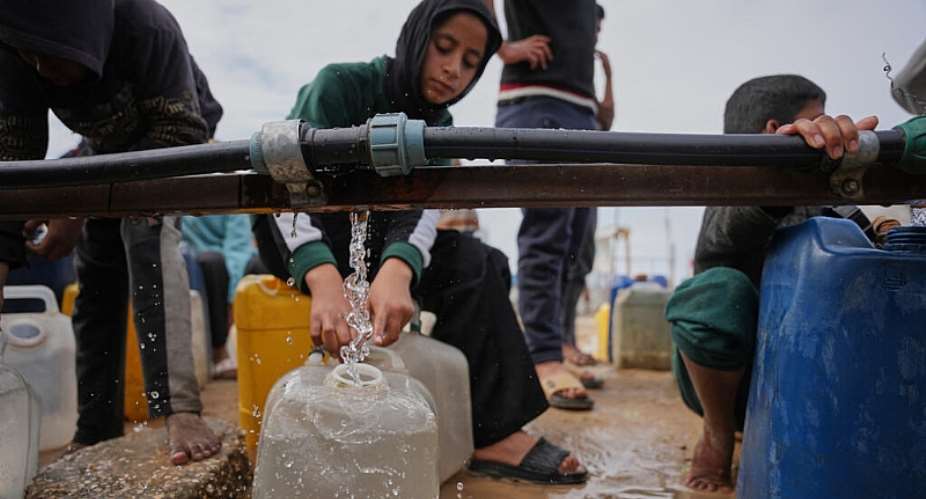
The findings, published on 5 November in the United Nations' children's agency's Water Under Fire report, highlight the growing threat to essential infrastructure in some of the world's most dangerous conflict zones.
Covering 23 countries and territories between January 2021 and June 2026, the report documents a sharp rise in attacks on water supplies, sanitation facilities and the people responsible for maintaining them.
According to Unicef, these attacks are becoming more frequent, taking increasingly varied forms and spreading across wider geographical areas.
The agency identified seven categories of attacks, ranging from strikes on water treatment plants, pipelines and wells to the contamination of water sources and restrictions on access to spare parts and chemicals needed to keep water systems functioning.
"Humanitarian workers do their best to keep water flowing despite increasing attacks," said Unicef executive director Catherine Russell.
But she warned that emergency repairs could not replace the protection of essential civilian infrastructure required under international humanitarian law.
Who owns the Nile? Water, power and politics in a warming world
Damage to supply and sanitation
The report highlights the scale of the damage in several conflict zones, where the destruction of water infrastructure has left entire communities struggling to access safe drinking water.
In Burkina Faso, more than 145 water points were destroyed in attacks between 2020 and 2025, cutting off supplies to approximately 830,000 people – more than half of them children.
In the Gaza Strip, more than 130 kilometres of sewage pipelines have been damaged since October 2023, according to Unicef.
The destruction has forced untreated wastewater into the Mediterranean Sea or temporary storage areas, compounding already severe sanitation problems.
In Sudan, where conflict has devastated essential infrastructure, just one of the 13 water treatment plants in Khartoum State was still operating in March 2024.
Unicef also warned that water supplies can be disrupted even when pipelines and pumping stations remain intact.
Attacks on electricity infrastructure can leave entire communities without the power needed to operate water treatment and distribution systems.
In Ukraine, damage to energy infrastructure had left nearly 7 million children without reliable access to electricity, heating and water by December 2022.
UN urges world to consider 'true value' of water amid rising scarcity
Health risks
Beyond the loss of drinking water, Unicef warned that damaged sanitation systems are exposing children to disease and malnutrition.
In refugee camps in eastern Chad, where thousands have fled the war in neighbouring Sudan, the World Health Organization linked an outbreak of hepatitis E to poor water and sanitation conditions.
Half of the 2,092 suspected cases recorded between January and April 2024 involved children aged six to 17.
Contaminated water also increases the risk of diarrhoeal diseases, which can aggravate malnutrition, while hospitals struggle to maintain essential services without reliable water supplies.
Unicef also documented children being killed or injured while queuing for water, including in Gaza. Women and girls face additional risks when travelling long distances to collect supplies.
The agency urged parties to conflicts to protect water infrastructure under international humanitarian law and guarantee humanitarian access to affected communities.
But funding shortages are hampering relief efforts. Unicef estimates that 137.9 million people need emergency water and sanitation assistance, yet only 26 percent of the funding required for 2026 has been received.
(with newswires)


 Paraguay president resigns amid banking scandal
 Akufo-Addo’s govt initiated Ghana’s BRICS partnership idea – Mahama
 If NDC had followed how we had wanted to do the Gold for Reserves, they wouldn't...
 No one should endure sexual harassment to secure jobs – Prof Opoku-Agyemang
 'US must tackle gun violence' – Mahama after death of Ghanaian teenager, Javits ...
 Bear with us on TraffiTech, it is here to save lives – Mahama to Ghanaians
 JUSAG Strike: Wage dispute must not suspend justice for entire nation – Ahiagbah...
 My focus on digitalisation is not an escape from economics; it is the new econom...
 Speaker Bagbin's handling of Abu Jinapor's allegation raises concerns – Egyapa M...
 Abu Jinapor showed highest form of disrespect to Bagbin – Hamza Suhuyini


