




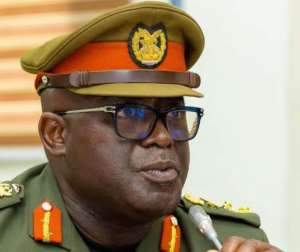
Ghana’s fast-changing skyline and growing vertical development could be concealing investments financed by proceeds from narcotics trafficking, as the Director-General of the Narcotics Control Commission (NACOC), Brigadier General Maxwell Obuaba Mantey, has disclosed that suspected drug traffickers own hotels and real estate properties.
Appearing before Parliament’s Public Accounts Committee (PAC), he said the suspects employed sophisticated methods to conceal their wealth, making it difficult for law enforcement agencies to confiscate assets suspected to have been acquired through drug trafficking.
“These guys are very smart. They are not like murderers, or they are not like common thieves. We’ve arrested people who are in our custody. They have hotels, they have estates, but the cases are still pending,” he told the committee.
Court Cases Stall Asset Recovery
Brigadier General Mantey said NACOC had encountered difficulties accessing confiscated assets because of prolonged legal proceedings, including appeals filed by affected parties.
He cited a case in which the Commission secured a court ruling concerning confiscated assets, only for an appeal to be filed shortly before the deadline expired, effectively halting the process.
He added that money held in accounts as confiscated cash remained inaccessible while the relevant legal processes were unresolved. “We have monies in accounts in the name of confiscated cash. You cannot touch it,” he said.
The NACOC boss expressed optimism that specialised courts would accelerate the prosecution of narcotics-related cases and enable the Commission to recover assets more efficiently.
He argued that delays in concluding prosecutions were undermining the Commission’s ability to generate revenue from confiscated properties and funds.
PAC Questions GH¢1.1m Revenue
The disclosure came as the committee examined NACOC’s financial performance for the 2024 financial year. PAC Chairperson, Abena Osei-Asare, questioned why the Commission generated only GH¢1.1 million under other income, despite its mandate to combat narcotics trafficking and recover assets linked to illicit activities.
The figures presented to the committee showed that NACOC recorded total revenue of approximately GH¢180.95 million, comprising GH¢179 million in government subvention, GH¢598,000 in internally generated funds (IGF) and GH¢1.1 million in other income.
Its expenditure stood at approximately GH¢180.9 million, leaving a marginal surplus.
Madam Osei-Asare expressed concern about the Commission’s limited internally generated revenue and the proportion of its income consumed by expenditure, particularly compensation.
She urged NACOC to improve its financial performance while strengthening its efforts to combat drug trafficking.
Minister Explains Funding Constraints
Interior Minister Mohammed-Mubarak Muntaka attributed the Commission’s financial challenges partly to operational constraints and delays in generating revenue from its activities.
He said NACOC’s workforce was expected to reach approximately 2,500 following the addition of about 1,200 recruits undergoing training.
He also disclosed that efforts to generate revenue through licences for industrial cannabis cultivation had yielded limited results because of stringent regulatory requirements. Only about five licences had been issued at the time, despite numerous applications.
Other revenue sources include fees for precursor chemical licences, renewals and applications, as well as certain security-related services at airports and seaports.
On the recovery of confiscated assets, officials explained that under the Narcotics Control Commission Act, 2020 (Act 1019), proceeds are distributed among designated beneficiaries, with NACOC entitled to 50 per cent, the Consolidated Fund receiving 30 per cent and costs accounting for the remaining 20 per cent, according to the explanation presented to the committee.
However, the Commission’s ability to benefit from such assets depends on the conclusion of the relevant legal proceedings.
Madam Osei-Asare urged NACOC to live up to its mandate and ensure that Ghana does not become a transit point for illicit drugs.
-thechronicle.com

 NACOC Boss reveals how 'smart' suspected drug traffickers are diverting proceeds...
 Minerals Commission defends termination of Northern Ashanti Mines lease over US$...
 Northern Ashanti Mines says moves to reassign disputed concession began before l...
 'Was I facing union problems everyday when I was in charge, compare and contrast...
 Ablakwa will be prosecuted in 2029 under Bawumia – Kwadwo Poku warns
 Ghana deports South Korean man wanted over $3.6bn cocaine haul
 Minority threatens vote of censure on Ablakwa if fails to resign over South Afri...
 Ghana targets 70% local fuel supply by 2028 — MD
 UEW students express shock as SRC spending reveals over GH¢574,000 blown on camp...
 Judicial independence does not shield judges from scrutiny, accountability — Jus...


