




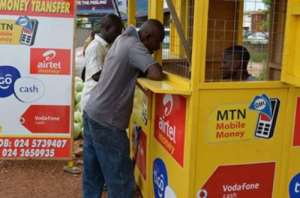
Imagine a trader in one of Ghana’s bustling markets receiving payment through mobile money within seconds. This basic exchange, which takes place thousands of times each day, is one of the biggest digital transformation events in Ghana. Mobile money has become a more convenient way for people to pay and helped to increase financial inclusion. But the next challenge is to turn this success into stronger businesses, better public services and greater economic opportunities. Ghana must move beyond digital payments towards a more productive, connected and inclusive digital economy.
Beyond Payments: Unlocking Economic Opportunities
Mobile money has created an opportunity to access financial services, but financial inclusion is not just about sending and receiving money. Access to savings, insurance and affordable credit is essential to the growth of small businesses. If privacy protections are maintained, mobile money transaction records may be a valuable tool for financial institutions to use when evaluating business performance and providing loans to entrepreneurs who have no formal accounting records or conventional collateral. Whether this is the case or not, however, responsible lending, clear pricing and robust data protection must be maintained. The Bank of Ghana's regulatory sandbox and the eCedi discussions show how initiatives can help test eligible financial innovations as Ghana's digital finance landscape continues to develop.
There are also big opportunities for digital commerce. In Kumasi, for instance, a seamstress might post designs on an internet site for consumers in Accra, Takoradi and Tamale. However, receiving payments does not suffice. For creating trust and growing sales, reliable delivery, digital addressing, stock management and effective customer service are key factors. These systems can enable traders, farmers and manufacturers to make new connections to other markets and be more active in regional trade under the African Continental Free Trade Area (AfCFTA).
Another opportunity for Ghana to achieve transformation is through artificial intelligence (AI). AI tools may be able to assist farmers in the diagnosis of diseases, weather predictions and market information. Digital assistants may be used to enhance learning for teachers or perform routine jobs for companies. In the healthcare sector, the controlled use of AI can support the skills of healthcare professionals but not supplant human judgement. Ghana, however, needs to invest in local talent and technologies that meet its needs to realize these benefits. Incorporation of more languages like Twi, Ewe and Ga would enable more people to access digital services. There is a need for collaboration between universities, entrepreneurs, tech firms and public institutions to bring existing technologies to fruition and come up with locally relevant solutions.
Building a Secure and Inclusive Digital Economy
These ambitions depend on reliable infrastructure, affordable internet, stable electricity and strong cybersecurity. Cloud computing is useful in lowering software and hardware expenses and in securing information, but its advantages are restricted in regions with poor connectivity or where organisations do not have the expertise to handle digital systems securely. Human resource development is also of vital significance. Employers expect employees to be skilled at using technology, and government agencies need to be able to oversee technology effectively. The first step in digital transformation is to define the actual problem, engage users in the process, test solutions and gauge outcomes. Having technology does not mean that productivity or service delivery will improve.
Trust is also a key component. People's savings are at risk and their trust in online services is shattered by phishing, SIM swapping, internet scams and bogus investment schemes. There is a need for cooperation between financial institutions, telecom companies, regulators and law enforcement to thwart fraud and improve fraud protection. While the Data Protection Act, 2012 (Act 843) is an important piece of legislation that affords protection to personal information in Ghana, adequate enforcement and public awareness are very important. The issue of digital inclusion should be a national priority as well. Participation in some communities is still constrained by the cost of smartphones, Internet access and electricity. These barriers can be addressed through the expansion of connectivity, improvements in affordability and community access points. Citizens should also be empowered with digital capabilities to safely use online services, protect personal information and identify fraud.
Ghana has already proven that technology can deliver results. The next step would be to link digital finance to business growth, expand access to digital markets, and introduce new technologies to agriculture, healthcare, education and public services. This needs a coordinated approach. Businesses need to invest in digital solutions and train their employees. Government needs to boost the infrastructure, encourage digital literacy and ensure appropriate consumer protection. It is important that universities and entrepreneurs produce innovations relevant to the local context, and development partners plan and build up local capacities for development in line with the national priorities. Ghana can continue to be a user of digital technologies or be a more prominent innovator of solutions for Ghanaians and the broader African market. The latter demands investment, cooperation, and the implementation of a vision, but also presents more opportunities for sustainable development and common prosperity. Mobile money has proved that Ghanaians respond to technology when it is clearly beneficial and trustworthy. The challenge now is to transform the foundation into more robust businesses, improved public services and inclusive economic development. Chance will not play a role in Ghana's digital future. It must be purposely created and the best time to do it is now.
By Isaac Appiah-Karikari | Digital Transformation Lead

 Israel election: Record turnout as Netanyahu and Eisenkot remain deadlocked
 'Ghana Airways will be back in the air before I leave office' — Ghana's Presiden...
 'You can’t make money in journalism' — Speaker Bagbin
 GES sets November 16 date for payment of 2025 promotion arrears
 Wontumi’s lawyers seek recall of prosecution witness in illegal mining case
 Minority urges independent audit of GHS49.7m South Africa evacuation
 Some prison inmates attempted to poison Wontumi – Palgrave
 NACOC Boss reveals how 'smart' suspected drug traffickers are diverting proceeds...
 Minerals Commission defends termination of Northern Ashanti Mines lease over US$...
 Ablakwa will be prosecuted in 2029 under Bawumia – Kwadwo Poku warns


