




Ghana is targeting to meet about 70 per cent of its national fuel demand through domestic refining by 2028 to reduce petroleum imports and strengthen energy security.
The target will be supported by plans to increase the Tema Oil Refinery's (TOR) processing capacity from its current nameplate capacity of 45,000 barrels per stream day to 100,000 barrels daily.
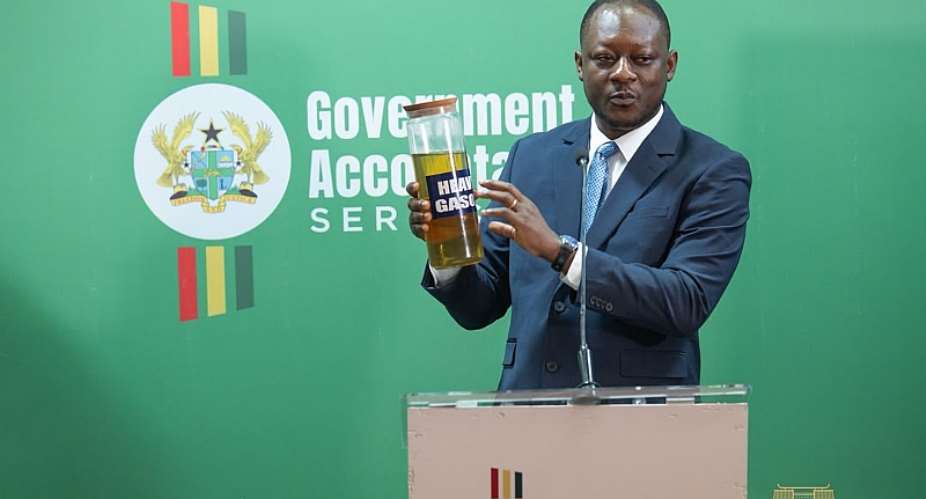
Mr Edmond Kombat, Managing Director of TOR, announced this at a Government Accountability Series on the refinery's operations and recovery programme.
He said the government also had a longer-term ambition to raise Ghana's total refining capacity to 200,000 barrels per stream day through the expansion of the existing refinery and the construction of a new facility.
“Our Restoration and Legacy Projects program for 2026 to 2029 looks further ahead. It proposes a brownfield expansion of the existing refinery from 45,000 to 85,000 barrels per stream day, and a new greenfield refinery with capacity of 115,000 barrels per stream day will bring the total to 200,000bpsd,” he said.
Mr Kombat said the expansion programme formed part of a broader strategy to increase domestic value addition, improve the availability of refined petroleum products and strengthen Ghana's position in the regional petroleum supply chain.
TOR is currently processing about 28,000 barrels of crude oil daily, below its stated nameplate capacity of 45,000 barrels per day.
Mr Kombat said engineers from Verga Engineering were working with TOR's technical team to complete work on the F-61 crude heater, which was expected to increase throughput to between 45,000 and 55,000 barrels daily.
The refinery also planned to install a new air cooler to raise processing capacity to 60,000 barrels daily and replace its existing 6,500-barrel-per-day catalytic reformer with a 10,000-barrel-per-day continuous catalytic reformer.
Work was also continuing on the Residue Fluid Catalytic Cracking (RFCC) unit and the Supervisory Control and Data Acquisition (SCADA) system to improve operations.
Mr Kombat said the government had directed the Minister of Energy to work with TOR's Board and management to develop a strategic roadmap for increasing processing capacity to 100,000 barrels daily, with a longer-term target of 200,000 barrels.
He said management was also advancing plans for a new refinery with a proposed capacity of 100,000 barrels per day, alongside petrochemical facilities and additional storage infrastructure.
The projects would be pursued with strategic partners and in compliance with environmental requirements, he said.
Mr Kombat said restoring TOR's operations was critical to energy security, as increased domestic refining could reduce the volume of finished petroleum products Ghana imported.
Refining Ghanaian crude locally would also retain more value in the economy by strengthening linkages among the upstream, midstream and downstream segments of the petroleum industry.
Mr Kombat cited TOR's receipt of Ghanaian Jubilee crude in July 2026 and a 950,000-barrel cargo of Sankofa crude in September 2026 as part of efforts to support domestic refining.
He said TOR resumed crude processing on December 19, 2025, following turnaround maintenance on its Crude Distillation Unit, which had been out of operation since April 2021.
Mr Kombat said the recovery programme was intended to restore the refinery's operational capacity, improve its financial position and establish a foundation for long-term commercial sustainability.
He acknowledged, however, that more work was needed to increase throughput and address the refinery's legacy financial obligations.
GNA

 NACOC Boss reveals how 'smart' suspected drug traffickers are diverting proceeds...
 Minerals Commission defends termination of Northern Ashanti Mines lease over US$...
 Northern Ashanti Mines says moves to reassign disputed concession began before l...
 'Was I facing union problems everyday when I was in charge, compare and contrast...
 Ablakwa will be prosecuted in 2029 under Bawumia – Kwadwo Poku warns
 Ghana deports South Korean man wanted over $3.6bn cocaine haul
 Minority threatens vote of censure on Ablakwa if fails to resign over South Afri...
 Ghana targets 70% local fuel supply by 2028 — MD
 UEW students express shock as SRC spending reveals over GH¢574,000 blown on camp...
 Judicial independence does not shield judges from scrutiny, accountability — Jus...


