




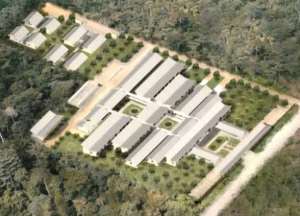
Ghana’s Health Minister, Kwabena Mintah Akandoh, has outlined a phased strategy for completing stalled hospitals, strengthening health insurance and expanding emergency services, with Cabinet approving government investment in 35 district hospitals under the Agenda 111 programme.
Speaking on Channel One TV’s The Point of View on October 19, 2026, Mr Akandoh said concentrating funding on selected projects would improve the prospects of completing functional hospitals. Selection would consider construction progress and fair distribution across the country’s 16 regions.
The minister said approximately GH¢4.5 billion had already been spent on Agenda 111, arguing that a more concentrated investment approach could have completed about 20 hospitals. This was his assessment of the programme’s expenditure, rather than an independently established completion-cost calculation.
Government is also discussing arrangements with the Christian Health Association of Ghana and the Ahmadiyya Muslim Mission to complete, equip and operate selected facilities. According to the minister, another group of between 30 and 35 hospitals is being considered for completion through partnerships. These discussions represent a proposed delivery arrangement rather than confirmation that agreements covering all the facilities have been concluded.
Alongside hospital construction, the government is seeking to strengthen healthcare financing. At a separate sector update on October 7, Mr Akandoh reported that National Health Insurance Scheme coverage had increased from 57 per cent to approximately 70 per cent in less than two years. He attributed part of the improvement to the uncapping of the National Health Insurance Levy.
The minister said funding for the scheme increased from approximately GH¢6.5 billion in 2024 to GH¢9.8 billion in 2025. These figures concern NHIS financing and should not be presented as the entire national health-sector budget. He also reported an average 50 per cent increase in payments to healthcare providers, intended to strengthen service delivery.
At community level, the Ghana Health Service says the Free Primary Healthcare programme has expanded to 135 districts, involving more than 4,500 participating facilities. The policy emphasises prevention, early detection and treatment close to patients’ homes, supported by equipment distribution and stronger community outreach.
Beneficiaries do not need NHIS membership to receive services covered by the programme. However, its free services have defined limits: referrals, hospital admissions and specialist treatment continue to require the NHIS or other appropriate financing arrangements, including the Ghana Medical Trust Fund, popularly known as MahamaCares.
Emergency healthcare is also expected to receive additional investment. The National Ambulance Service has confirmed the minister’s announcement that government plans to procure 100 ambulances in 2027. Thirty vehicles retrieved from Burma Camp are also expected to join the fleet after refurbishment, alongside increased support for maintenance. These remain planned additions rather than completed deliveries.
Together, the measures signal a broader effort to connect community healthcare, hospital services and emergency transport. Their practical value will depend on sustained funding, adequate staffing, reliable equipment and whether patients experience shorter journeys, fewer financial barriers and timely treatment.


 ECG announces 7-hour power outages in parts of Ashanti Region on Tuesday
 World Cup visa scandal deepens discontent among NDC grassroots – Prof Smart Sarp...
 'It is frivolous' – State declines to respond to motion challenging its oppositi...
 Bawumia recalls how late former Savelugu MP prayed for him from hospital bed in ...
 TOR records GH¢1.24bn profit before tax in 2025 — MD
 TOR plans expansion to 100,000 barrels of crude oil per day — MD
 'We still have feelings' — Wontumi proposes conjugal visit facilities for marrie...
 'Young men must work and eat' – Prophet Badu Kobi backs Sammy Gyamfi on galamsey
 'My greatest fear was going to prison, but now I’m here' — Wontumi reflects on l...
 Foreign Affairs Ministry seeks names of evacuees allegedly shortchanged in GH¢5,...


