




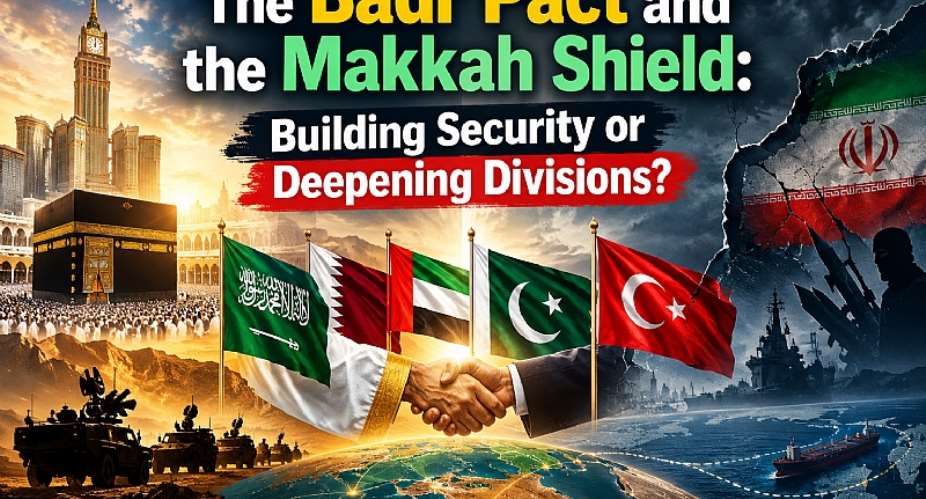
The evolving geopolitical situation in the Middle East has compelled regional capitals to search desperately for political and economic reconciliation. Amid escalating tensions, the Gulf Cooperation Council (GCC) states are pursuing active diplomacy, while Russia’s diplomatic engagement and Türkiye’s regional initiatives are creating new opportunities to protect Gulf interests. But what does this emerging network of agreements add to the regional security equation? Let us examine the situation.
How Effective Is the GCC’s Active Diplomacy?
On Friday, Qatar introduced the Badr Pact as a potential new avenue for defence cooperation. The arrangement carries both symbolic and strategic significance. Just as the Makkah agreement drew inspiration from one of Islam’s holiest cities, the Badr Pact invokes the historical and religious significance of Badr. Its name has been associated with the full moon, symbolising how participating countries can complement one another through their respective defence and economic strengths. Like the Makkah framework, the arrangement could potentially expand to include additional countries.
The perceived vulnerability of GCC states amid uncertainty over the American security umbrella has intensified their search for alternative defence arrangements. Although Pakistan’s Makkah framework offers another potential layer of security, regional threats involving the Houthis and their relationship with Hamas have further complicated the calculations. Consequently, Türkiye and Qatar appear to be exploring complementary approaches that could provide an additional layer of defence and strategic cooperation.
How Would Türkiye Add a New Dimension to Diplomatic Manoeuvring?
On the same day, Ankara submitted its defence agreement with Pakistan and Saudi Arabia to the Turkish parliament for ratification. Despite the ruling party’s parliamentary majority, the approval process may take time, with political parties potentially debating the agreement’s provisions. Even ratification would not automatically authorise Turkish troop deployments, which could require additional legislative procedures.
Pakistan follows a different approval mechanism, highlighting the contrasting domestic political dynamics shaping these partnerships. The military leadership, including Chief of Defence Forces Asim Munir, occupies a significant position in Pakistan’s security policymaking. These institutional differences will influence how effectively the emerging partnership translates diplomatic commitments into practical cooperation.
What Is the Key Difference Between the Badr Pact and the Makkah Agreement?
The distinction is essential. The Badr arrangement primarily focuses on defence-industrial cooperation, whereas the Makkah agreement provides for mutual defence assistance in the event of an armed attack. Although their objectives differ, the two frameworks could complement one another through joint production, technology transfers, long-term investment and stronger industrial partnerships.
Qatar’s investment in Türkiye’s growing defence industry and its hosting of Turkish troops demonstrate how economic cooperation can reinforce security relationships. Similarly, the Makkah framework could potentially encourage a Turkish-Pakistani defence presence in Saudi Arabia and support the Kingdom’s ambitions to develop domestic defence-production capabilities. Such cooperation could transform the Gulf into a more significant defence-industrial hub.
Pakistan and Türkiye, alongside Saudi Arabia and Egypt, also participate in the Regional Four grouping, which provides another platform for consultation and coordination.
Türkiye has further demonstrated its diplomatic reach by hosting Egypt, Pakistan, Saudi Arabia, Britain, France and Germany, alongside Italy, in Istanbul for discussions on regional tensions. The talks addressed Israel-Palestine, the Strait of Hormuz, Yemen, the Russia-Ukraine war and opportunities for closer cooperation. Ankara’s role as a bridge between Europe and the Middle East reflects its broader ambitions to influence regional diplomacy.
Who Benefits From Regional Disorder?
The growing interdependence between regional security and European stability is increasingly evident. Conflicts involving Iran, Yemen and Ukraine affect international shipping, energy security and economic connectivity far beyond their immediate theatres. Disruptions to maritime routes and energy markets demonstrate why regional and European actors must coordinate their responses.
Defence partnerships, military agreements and diplomatic forums represent interconnected elements of an emerging security architecture. Türkiye occupies an important position within these arrangements. President Recep Tayyip Erdoğan’s diplomatic manoeuvring also reflects Ankara’s efforts to navigate competing relationships with Washington and regional capitals.
However, these initiatives remain vulnerable to political divisions and changing strategic priorities. Regional conflicts may encourage partnerships that would have seemed unlikely a decade ago, but their long-term durability remains uncertain.
How Does Iran View These Diplomatic Arrangements?
This is the central question. If every new pact contributes to Iran’s diplomatic isolation, how can the resulting security architecture be considered impartial? An approach that excludes a major regional actor risks deepening mistrust rather than resolving the underlying conflicts.
Iran’s warnings concerning maritime security and the possibility of retaliatory action against undersea internet cables illustrate the expanding dimensions of regional confrontation. Whether Iran possesses the capability and intention to disrupt such infrastructure remains uncertain, but the possibility highlights the vulnerability of interconnected global systems.
Ultimately, diplomacy cannot succeed through agreements alone. If the Badr Pact and the Makkah framework strengthen deterrence without creating channels for engagement with Iran, they may reinforce the divisions they seek to manage. The more states respond to hostility by constructing exclusive security arrangements, the greater the danger of a regional security dilemma.
The real test is whether these pacts can move beyond paperwork and military coordination towards an inclusive framework for stability. Will deterrence diplomacy open the door to peace, or will the growing network of defence agreements create another cycle of insecurity? The answer will depend on whether regional leaders choose confrontation and isolation or recognise that lasting security requires both credible deterrence and meaningful dialogue.


 Ghana lost 1.1 million ounces of gold to smuggling in 2023 – GHEITI report
 Stranded Ghanaian fishermen narrate how they ate fresh fish, drunk sea water to ...
 How notorious armed robber died on the way whiles leading police to arrest accom...
 'We must continuously improve cargo handling, coordination among port operators'...
 GPHA honours industry players, former leaders and staff at 40th anniversary awar...
 Nii Lante Vanderpuye confident of winning NDC national chairmanship despite Gold...
 Agalga dismisses critics, assures Builsa North of progress on Sandema–Wiaga Road
 NDC Lawra constituency polls: We are not going to disappoint you – Chairman Bati...
 Ghana's President Mahama calls for new West African security accord, stronger AU...


