




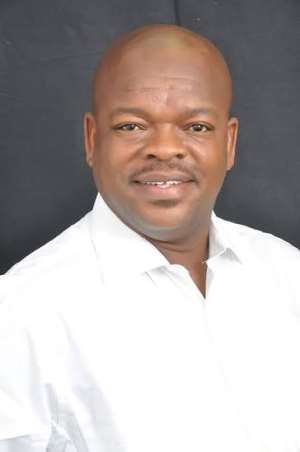
Some deaths arrive like thunder. Others arrive like a radio switching off mid-sentence.
On the morning of Thursday, October 22, 2026, Seth Kwame Dzokoto collapsed in the early hours while a panellist on the morning show at Owass FM in Tarkwa, and was pronounced dead on arrival at hospital. He was 51. He died the way he had lived for most of three decades: with a microphone near him and a community listening.
I will not retell his life in order. The newswires have done that. I want to write about what he left behind, and about the strange loneliness at the centre of being loved by everyone.
The face in every Ghanaian living room
Say "Judge Koboo" anywhere in Ghana and someone smiles before you finish. He became a household name in Efiewura, and that is a rarer achievement than it sounds. Plenty of actors are watched. Very few are welcomed in, the way a relative is welcomed. Ghanaians did not watch Judge Koboo. They hosted him.
Before the courtroom, there was the kitchen. As host of TV3's Edziban, he went through Ghanaian cuisine and local food culture, taking viewers on a journey through the country's culinary experiences. The show won the CIMG TV Programme of the Year in 2014. Reading the tributes today, I notice how often people say he was doing it before food bloggers existed. One reader put it plainly: long before today's food bloggers crowded restaurants, there was Kwame Dzokoto. He taught us that our jollof, our waakye and our chop bars deserved a camera and an audience. That was a quiet act of cultural pride, delivered with a laugh.
The voice before the face
Many people forget that he was a broadcaster first, or at least a broadcaster always. He started his radio career in the Tarkwa-Nsuaem Municipality, and he was a big radio and TV presenter in Takoradi, at Skyy Power FM and Skyy TV, before moving to Kumasi's Hello FM. In Kumasi he became known for characters like Daddy Cash on the drive-time show. He also rose to General Manager of Accra-based Pluzz FM, so he understood the machinery behind the microphone as well as the magic in front of it.
In his last interviews he said he loved radio, because it gives presenters a unique connection with audiences who never see their mannerisms. I find that moving now. A man known worldwide as a face loved most the medium where he had none. Radio asks only for your voice and your presence, and in the end that is exactly what it took from him and exactly what he gave.
The paradox
Here is the thing I cannot stop turning over. Dzokoto was one of the most recognised men in Ghana, and one of the least taken seriously.
When he won the NDC primary for Tarkwa-Nsuaem, he beat his rival 1,450 votes to 398. The reaction was not always generous. His leap from comedy into politics stunned many, and some questioned his competence. One academic wondered aloud whether his win was down to popularity, and warned that once you are a comedian, people will always see you that way. He answered the doubt with his own wit, asking whether people thought they were going to do concert in Parliament. When he lost the general election, a photograph of him sitting on the floor in tears went viral, and he told reporters he was not bothered by it and was proud to be an actor. He insisted his campaign had been clean, and said that while his opponent resorted to personal attacks calling him a "concert man", he himself had attacked no one.
Think about that. The same gift that made millions trust him with their evenings made some refuse to trust him with their votes. Laughter is a kind of intimacy, and Ghana gave him all of it while quietly holding back its respect. We are very good at loving our entertainers and very poor at believing they can be more.
He refused to accept the box we built for him. In 2015 he told a newspaper that after nearly nineteen years in showbiz he felt he had served his purpose and that, unlike the corporate world, showbiz offers no retirement. He tried again for public service, going through the full interview process for the District Chief Executive post for Tarkwa-Nsuaem. It did not come to him either. Still, he kept studying. In August 2025, he graduated from the Ghana Armed Forces Command and Staff College with a master's degree in Defence and International Politics. The comedian from Edziban had a postgraduate degree in defence politics. He had earned that second life, whether or not we ever acknowledged it.
The body that kept the score
Behind the laughter was a man managing his health. Speaking on B.E. TV, he said he had been dealing with high blood pressure and diabetes, and had undergone surgery abroad with support from Ibrahim Mahama. He was grateful, and he said so. In September, after photographs from a film launch had Ghanaian social media buzzing, he pushed back on reports that he was seriously ill or dead, and spoke about the emotional toll such stories take on his family.
I want to be careful here. The medical cause of his death has not been stated, and no source has linked his earlier remarks to it, so I will not speculate. But I will say this much, as someone who writes for a living and knows how easily we turn a stranger's body into a spectator sport: we owe our public figures the dignity of privacy while they are alive, not only the dignity of eulogy after they are gone. He asked us, in his own words, to be kind. We should have listened sooner.
Still working
What humbles me most is that he never stopped. Weeks before his death he was at the media launch of The 70 Slate, the three-film celebration of Ghana at 70 by Shirley Frimpong-Manso and Peter Sedufia, and was named among its cast. He was playing a role in Osumesi. He had even made a warmly received comeback on TikTok, looking dapper and energetic in a video with Gloria Sarfo. A man who spent his last season on screens, on air, and on stage was not winding down. He was still showing up.
What he leaves us
For Ghana: a standard of warmth. He proved you can be funny without being cruel, famous without being distant, and ambitious without being bitter about the doors that stayed closed.
For the creative world: a lesson about range. He was a presenter, an actor, a comedian, a voice-over artist, a manager, a candidate, and a scholar, and he refused to apologise for any of it.
For the diaspora, from London to Toronto to Hamburg to Atlanta, who grew up on Ghanaian television and now carry it like a pocket-sized homeland: a reminder that Judge Koboo and Edziban were never only entertainment. They were home, delivered by satellite and by laughter.
And for the rest of us who write, perform, and build: a quiet instruction. Be taken seriously by being excellent, but do not wait for permission. Earn the degree. Fight the election. Knock on the door twice. Laugh anyway.
Seth Kwame Dzokoto, thank you for the laughter, for the food, for the courtroom, and for the morning voice on the radio. The microphone is off now, but Ghana is still listening.
Rest well, Judge. Court is adjourned, and the verdict of our love is unanimous.
By Chief Tutu Baffour Asare Brownsy Williams


 NDC suspends Amasaman Communications Officer over 'irresponsible' remarks on Obu...
 Parliament secures religious leaders’ support to end witchcraft accusations
 New Economy policy must address Ghana’s skills gap and import dependence – Sam O...
 GES mourns four pupils killed in Aboabo Junction accident
 CSA, NITA issue seven-day directive to government agencies to patch critical PHP...
 Critics unfairly expect Prof Opoku-Agyemang to make emotional statements about i...
 Obuasi SHTS sexual abuse: Let's not get overly emotional to hang an innocent man...
 Africa faces 'complex' Ebola outbreak after spread to Nigeria: WHO
 Kwame Dzokoto reportedly dead
 Ghana intensifies airport screening and Ebola surveillance amid reported cases i...


