




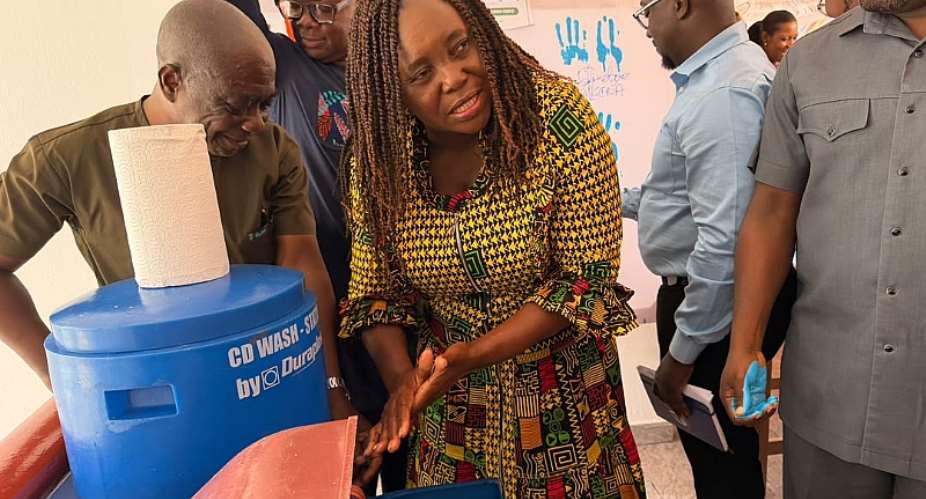
The Deputy Minister for Local Government, Chieftaincy, and Religious Affairs, Mrs Rita Naa Odoley Sowah (MP), has described handwashing with soap as a critical public health and national productivity investment as Ghana commemorates the 2026 Global Handwashing Day.
Speaking at the national launch in Accra on October 15, Mrs Sowah said hand hygiene must no longer be treated merely as an environmental concern but as an important component of governance and national development.
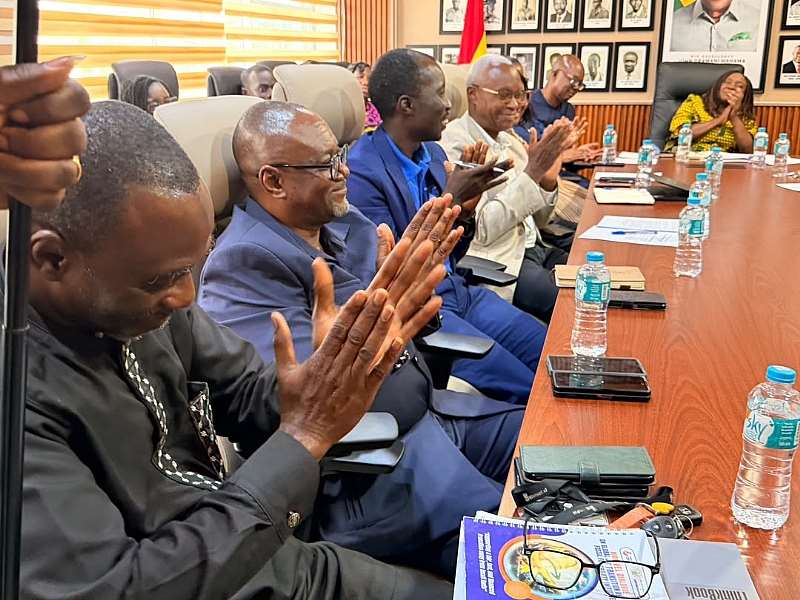
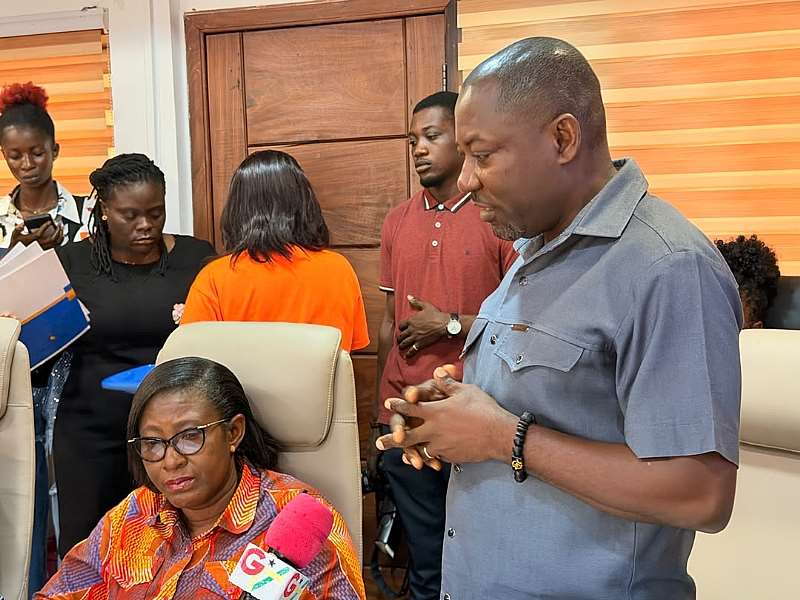
The event was held under the theme, "I Am A Handwashing Hero," and brought together representatives of UNICEF, WHO, the World Bank, WaterAid, World Vision, CONIWAS, the Ghana Health Service, the Ghana Education Service, the Media Coalition Against Open Defecation (M-CODe), the private sector and traditional authorities.
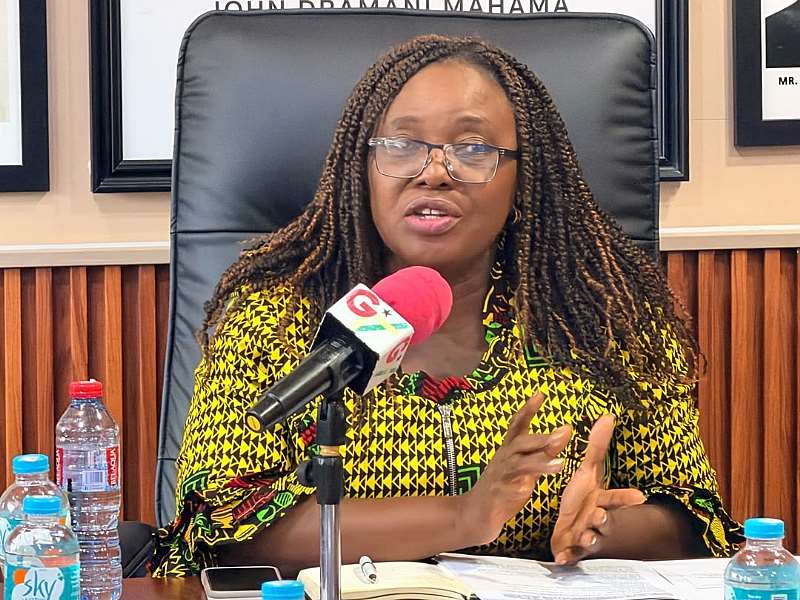
Mrs Sowah, who represented the Sector Minister, Mr Mahama Ayariga, said Ghana's public health, workforce productivity and the dignity of its citizens were closely linked to proper hand hygiene practices.
"For far too long, hand hygiene and sanitation have been viewed as an environmental issue or a responsibility left solely to Environmental Health Officers and waste management companies.
“The reality, however, is quite different. Hand hygiene is a governance issue; it is a public health issue, an economic issue, a social responsibility issue, and above all, it is a development issue," she stated.
She warned that the country continues to bear significant costs from inadequate hand hygiene, with preventable illnesses affecting children, families, businesses and the wider economy.
“Every year, thousands of children miss school, and parents miss work due to diarrheal diseases, respiratory infections, and other preventable illnesses that can be significantly reduced by handwashing with soap.
"The cleanliness of our hands influences the health of our citizens, the attractiveness of our towns and cities, the productivity of our workforce, the safety of our environment, and ultimately the dignity of our people. No country can genuinely aspire to sustainable development while struggling with preventable infections caused by poor hand hygiene."
Mrs Sowah said handwashing with soap remained one of the simplest and most cost-effective interventions available to protect public health, particularly after using the toilet, before eating or preparing food and after cleaning a child.
"These realities demand a different approach. They require leadership, accountability, innovation, and above all, collective action from all," she said.
She cautioned that the success of Ghana's handwashing campaign should not be measured by the number of facilities installed in schools, markets and health facilities alone.
According to her, the focus must also be on whether the facilities remain functional, have adequate supplies of soap and water, and are actually being used.
"The health and hygienic condition of the communities must matter. A community that cannot effectively practice hand hygiene will inevitably face challenges in public health, child survival, and community well-being," she said.
Mrs Sowah acknowledged efforts to provide Veronica Buckets, soap and improve water systems but said infrastructure alone would not guarantee sustainable improvements unless accompanied by behavioural change.
"We can provide Veronica Buckets, provide soap, and improve water systems, but unless attitudes and behaviours change, our progress will remain limited. The long-term solution, therefore, lies in building a culture of hand hygiene responsibility, and that culture must be nurtured from an early age. This is where schools become critically important," she noted.
She urged stakeholders to focus on educating children and young people about hand hygiene as part of responsible citizenship and the protection of public health.
"If we want healthy communities tomorrow, we must invest in hygiene-conscious children today and help our young people understand that handwashing is not only about cleanliness. It is about responsibility, citizenship, protecting public health, and safeguarding the future."
Government shifts focus to functionality
In a speech read on his behalf by Mrs Sowah, the Sector Minister, Mr Mahama Ayariga, raised concerns about Ghana's hygiene infrastructure, warning against a situation where attention is placed on construction while the functionality of facilities is neglected.
"A household may have a tap or water storage tank, but if there is no soap near the facility, or if the water has run out, the household cannot practice proper handwashing. A bucket without water, a tap without soap, or a station that has broken down cannot support handwashing in any way," Mr Ayariga stressed.
He said poor hygiene also imposes economic costs beyond medical expenses, as parents lose working hours, children lose learning time, businesses lose income and health facilities face avoidable infection risks.
Mr Ayariga subsequently announced that hygiene performance would now be assessed based on the functionality of handwashing facilities rather than their mere existence.
Under the new approach, Metropolitan, Municipal and District Assemblies (MMDAs) will be assessed on the availability of soap and water, accessibility of facilities to children and persons with disabilities, and the existence of maintenance budgets.
"An assembly may install ten handwashing stations at a market and announce the achievement, but if three months later half have no water or soap, the real public health benefit cannot be realized. We must be careful not to reward construction while overlooking service delivery," he declared.
The Minister linked the campaign to Ghana's Hand Hygiene for All Strategy and Roadmap and the 2030 deadline for Sustainable Development Goal 6.2.
He also called on Environmental Health Officers to intensify inspections at markets, lorry stations, slaughterhouses, schools and health facilities to ensure that handwashing facilities are available and functional.
Mr Ayariga reminded Ghanaians that handwashing with soap at critical moments, including after using the toilet or cleaning a child and before preparing food, eating or feeding someone, remains a simple but effective defence against diarrhoeal and respiratory infections.

 Attorney-General appeals ruling halting trial of former Buffer Stock CEO, wife
 NAIMOS destroys 1,970 changfans, 863 Illegal mining structures in three months —...
 Let's see how Asiedu Nketia becomes NDC flagbearer with same people he conspired...
 Asiedu Nketiah opts out of NDC chairmanship race amid flagbearership speculation
 NDC insists Nkwanta North elections will proceed despite court injunction
 'My side of the story will shock you; I'm waiting for court days' – Obuasi SHTS ...
 Obuasi SHTS sexual abuse: 'GES must distant itself, allow the law to work' — For...
 Upper East: Fear grips nine Kusaug communities over mysterious fish deaths in da...
 NDC suspends Amasaman Communications Officer over 'irresponsible' remarks on Obu...
 Parliament secures religious leaders’ support to end witchcraft accusations


