




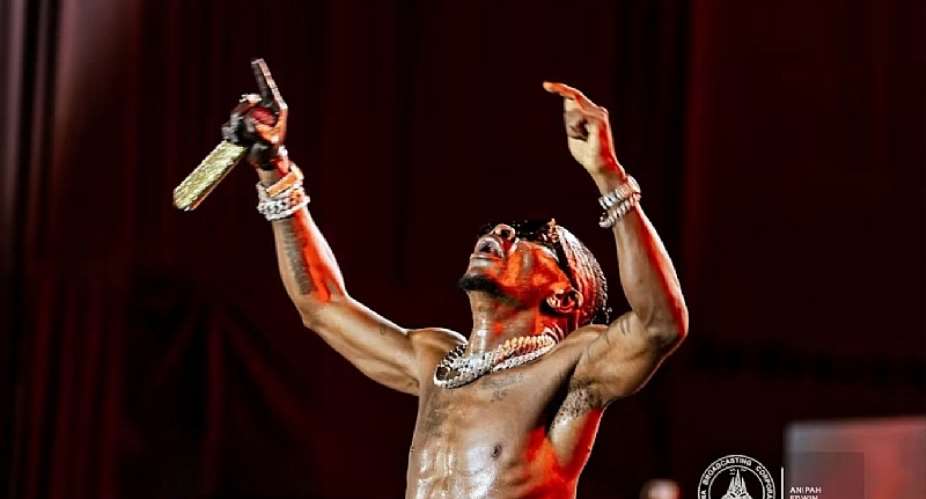
One of the major challenges facing Ghana’s entertainment scene is the struggle to separate an entertainer's professional persona from the moral expectations society places on them. We crave musicians who can entertain us, energize us, speak our language, echo our frustrations, and resonate with our daily lives. Yet, when these same artists step outside our comfort zones, we quickly turn into moral arbiters, insisting they behave like preachers, politicians, lawyers, doctors, or corporate leaders.
What a contradiction in our society: we want entertainers to stay genuine enough to connect with the masses while also being respectable enough to meet the moral standards we set for them.
Few Ghanaian musicians embody this contradiction as vividly as Shatta Wale.
Regardless of whether you enjoy his music, personality, public remarks, or his unconventional take on fame, it’s hard to overlook his grasp of the dynamics between entertainment, public attention, and the audience that engages with his brand.
Shatta Wale knows that music goes beyond just creating songs; it’s about identity, emotion, connecting with the audience, cultural expression, and staying relevant in a fiercely competitive landscape.
He has a deep understanding of the streets, and that insight has become a crucial part of his public persona.
We need to start by recognizing a basic truth: entertainment is a business.
The music industry isn’t a religious organization, a law office, a hospital, or a government agency. It functions based on its own commercial realities, audience tastes, cultural influences, and competitive dynamics.
Musicians market music, performances, experiences, personalities, and increasingly, entire personal brands. Their success hinges on their ability to draw in audiences, cultivate loyal fan bases, spark public interest, and turn that attention into commercial success.
This doesn’t mean that musicians should throw their principles out the window or act recklessly. What it really means is that we need to grasp the essence of their profession before we start judging their actions.
At the heart of a musician's job is the creation and performance of music, entertaining audiences, and carving out a sustainable career. Sure, the public might have certain expectations of entertainers, but those shouldn’t automatically become the yardstick for measuring professional success.
Sadly, it seems that some Ghanaians think a musician has to adopt the demeanor of a clergyman to earn respect. They want entertainers to choose their words carefully, steer clear of controversy, uphold a specific public image, and live their private lives by traditional social standards.
But why is that?
Why should every musician be held to the same standards of personality, values, and public behavior?
Why should an artist who thrives on an unconventional persona suddenly be pressured to morph into a conservative figure just because some people in society feel uneasy about that persona?
Entertainment flourishes on diversity. Some musicians are celebrated for their spirituality, others for their love songs, some for their political insights, and others for their rebellious spirit, street credibility, humor, or their knack for challenging the status quo.
The industry thrives on diversity in identities.
A musician doesn’t need to turn into a preacher to find success, just as a preacher doesn’t have to pick up a guitar to fulfill their spiritual mission.
We should learn to value individuals based on their contributions rather than forcing everyone to fit into a single mold of societal expectations.
Take Shatta Wale, for instance, his connection with his audience is a fascinating case of how street credibility can be a major asset in the entertainment world.
His public persona is all about confidence, defiance, and straightforward communication, along with a conscious choice to break away from the typical celebrity norms. His charm isn’t solely rooted in the technical aspects of his music; it’s also tied to the personality he showcases, the language he speaks, his interactions with fans, and the way many supporters resonate with him.
For countless individuals, the streets symbolize much more than just a place. They embody the everyday struggles, aspirations, frustrations, survival, and the yearning to be heard in a world where status and privilege often dictate whose voices matter.
An artist who communicates in a way that resonates with everyday people can forge a strong bond with their audience.
That bond isn’t something that can be easily crafted by PR teams or corporate image consultants. It develops over time through familiarity, consistency, shared cultural experiences, and the belief that an entertainer truly understands the world their audience lives in.
This is why Shatta Wale’s public image warrants a deeper look beyond the usual debates about whether people approve of his actions.
He has built a unique identity that his fans can easily recognize. His readiness to defy expectations is a key part of that identity, and to truly grasp his relationship with his audience, we need to take that into account.
The key takeaway here isn’t that we should celebrate everything Shatta Wale does or says. No entertainer is above criticism. What’s crucial is recognizing that his success can't be measured by traditional standards of respectability when it comes to his public persona.
Instead, we should be asking a more pertinent question: what has allowed him to forge and maintain a strong bond with a large segment of Ghanaian music fans?
Part of the answer lies in his grasp of the fact that entertainment is about more than just talent; it’s also about personality, positioning, and emotional resonance.
One of the most harmful myths in Ghana’s entertainment scene is the belief that success must always conform to a conventional idea of respectability.
In many professional settings, qualities like discretion, restraint, formal communication, and a carefully curated public image are essential. For instance, a banker is expected to showcase professionalism and financial savvy, while a corporate executive often needs to uphold a specific image to nurture relationships with clients, investors, and partners.
However, the entertainment industry operates on a different wavelength.
A musician’s public persona can thrive on creativity, individuality, emotional expression, humor, controversy, or the ability to defy established norms. This doesn’t mean musicians should overlook financial management, professional discipline, or responsible behavior, those traits are vital in any business. It simply means that we shouldn’t equate corporate respectability with the only valid model of professional success.
A musician can be unconventional in the spotlight while still being disciplined behind the scenes. Conversely, someone might keep a low profile yet still make questionable professional choices. A polished image doesn’t automatically translate to talent, financial success, or longevity.
Similarly, just because an entertainer is outspoken doesn’t mean they lack the ability to run a business effectively.
We really need to stop thinking that every successful person has to show their success in the same way.
The problem with applying corporate standards to every entertainer is that it can push musicians to create personas that don’t truly represent who they are or what their fans expect from them.
When entertainers start to shed the unique traits that set them apart just to please everyone, they risk diluting the very identities that made them appealing in the first place.
The real question isn’t whether musicians should act professionally, they absolutely should.
The question is whether professionalism has to mean being silent, conforming, and putting on a fake front of respectability.
It shouldn’t have to.
In Ghanaian society, there’s a strong tradition of holding public figures to certain social standards. Musicians, actors, footballers, politicians, and other celebrities often face scrutiny not just for their work but also for how they speak, who they associate with, what they wear, their lifestyles, and their personal choices.
Now, public scrutiny isn’t necessarily a bad thing. Celebrities gain visibility, influence, and commercial opportunities partly because people are interested in their lives. Their actions can have real consequences, especially when they impact young fans or make statements that affect others.
However, there’s a big difference between valid criticism and the unreasonable expectation that every public figure must fit into the same moral mold.
Far too often, it seems like we’re more focused on policing the personal lives of entertainers rather than grasping the professional realities of the entertainment industry.
We often expect musicians to act in ways that make us feel comfortable, even if those expectations don’t really align with what their job actually requires.
We want them to speak like they’re giving a sermon, dress in styles we approve of, steer clear of any controversy, and show a level of self-control that we don’t necessarily expect from people in other professions.
This contradiction becomes glaringly obvious when society praises entertainers for their rebellious spirit when it’s profitable, yet turns around and criticizes them for that same spirit when it makes us uncomfortable.
We can’t ask for authenticity and conformity at the same time without creating a real contradiction.
If we truly want artists to be genuine, we have to accept that genuine personalities come in all shapes and sizes. Some will be quiet, while others are outspoken. Some will choose diplomacy, while others will be more confrontational. Some will hold onto tradition, while others will push against it.
The public has every right to disagree with them, but that disagreement shouldn’t morph into an attempt to mold every entertainer into the same cookie-cutter image.
There’s another contradiction worth noting. Consumers often find themselves enjoying the very traits they later criticize in entertainers.
They might cheer for a musician’s confidence, rebelliousness, boldness, or street-savvy language when those traits shine through in a song or performance. Yet, when those same traits show up in the musician’s personal life, they might suddenly want a completely different persona.
This raises a tough question: do we want entertainers to be authentic, or do we prefer them to fit a version of respectability that satisfies our expectations?
An entertainer’s public persona is often tied closely to the product they’re selling. In today’s music scene, audiences don’t just consume songs in a vacuum; they also engage with the stories, identities, attitudes, and cultural connections that come with the artist.
That's why celebrity branding is so important.
A musician can become well-known not just for a catchy hit but also for their unique way of speaking, a signature fashion sense, a public feud, a political stance, or an unconventional relationship with the media.
These traits can really enhance a brand when they connect with the audience.
However, it's important to remember that controversy alone doesn't guarantee lasting success. Just because something grabs attention doesn't mean it's artistically valuable, and being popular doesn't always lead to profit. An entertainer still needs to create value, keep the audience engaged, and handle the industry's commercial pressures.
Still, we can't overlook the fact that an artist's public persona can be a genuine part of their entertainment offering.
Criticizing every unconventional action without considering how it ties into the artist's identity is a shallow way to analyze the business.
The advisors of Ghanaian entertainers also deserve some attention.
Publicists, managers, PR consultants, friends, family, and other advisors play crucial roles in shaping an artist's career. Good guidance can safeguard an entertainer's reputation, enhance business choices, manage crises, and open doors for long-term success.
On the flip side, poor advice can be just as harmful.
One common pitfall is the assumption that every controversy should be handled by making the artist seem more conservative, diplomatic, or palatable to the widest audience.
This strategy might work for some entertainers, especially those whose public personas rely on sophistication, discretion, or mainstream appeal. But for others, it could backfire.
A truly effective advisor needs to first grasp the essence of the person they're advising.
What does the artist truly represent? Who are they trying to reach? What sets their brand apart? What aspects of the artist's personality draw in supporters? And what behaviors could potentially lead to real commercial or reputational risks? Lastly, what’s the long-term goal here?
These questions are crucial for providing sound professional advice.
It’s not enough to simply tell every musician to act like a corporate executive. Advisors need to grasp the fine line between safeguarding an artist’s brand and stripping away what makes them unique.
For an entertainer whose charm lies in their boldness, a strategy focused solely on silence and conformity could actually dilute their brand instead of bolstering it.
At the same time, advisors shouldn’t promote reckless behavior just because it stirs up controversy. There’s a clear distinction between genuine authenticity and actions that could lead to unnecessary legal, financial, or reputational troubles.
The aim should be to support an artist in staying true to themselves while making smart choices.
When it comes to Shatta Wale, any serious evaluation of his management strategy must start with a clear understanding of his established public persona and the audience that persona attracts.
The key question isn’t whether he should change who he is. It’s about how he can keep evolving his career without sacrificing the qualities that make him stand out.
Another point of confusion for the public is the tendency to equate celebrity with moral authority.
A musician can be incredibly talented without being a moral philosopher. An actor can achieve great success without being a political guru. A footballer can gain international fame without having expertise in economics or public administration.
Excelling in one area doesn’t automatically mean someone is an expert in every other field.
This principle holds true for Shatta Wale as well.
He’s a musician and entertainer, and his main gig revolves around music and the entertainment scene. While people might value his take on social or political issues, it’s important to judge those opinions on their own merits instead of just accepting or dismissing them because he’s famous.
Likewise, it’s unrealistic to expect him to act like a religious leader just because some folks think every celebrity should be a moral compass.
There’s a clear difference between expecting someone to act responsibly and insisting they completely change their professional identity.
Musicians shouldn’t get a free pass when their actions hurt others, encourage risky behavior, or break the law. But accountability should focus on what they actually do, not on the idea that every entertainer has to live like a saint.
We also need to remember that a person’s public image doesn’t capture the full picture of who they are. What we see is just a curated version, and it often doesn’t show the complexities of an entertainer’s private life.
Expecting celebrities to be morally perfect is neither realistic nor consistent.
One reason some people misinterpret entertainers like Shatta Wale is that they overlook the cultural and commercial importance of street culture.
In certain circles, using street language, rocking unconventional fashion, being outspoken, and communicating informally are often seen as signs of poor judgment or a lack of sophistication.
This view is misguided.
Street culture can give rise to powerful artistic expressions, social commentary, entrepreneurship, and cultural innovation. It offers musicians a rich tapestry of language, rhythms, stories, and experiences that resonate with audiences who often feel overlooked by mainstream institutions.
Understanding how to connect with everyday people is far from a lesser skill.
In fact, many thriving businesses invest a lot of time and money into grasping their customers' needs, dreams, and crafting products that truly resonate with their lives.
An entertainer who taps into the emotional landscape of a specific audience holds a treasure trove of cultural insight.
However, this doesn’t imply that everything tied to street culture is positive, nor does it mean that every artist claiming to represent the streets genuinely gets the people. Street credibility can often be blown out of proportion, manipulated, or even exploited for commercial gain.
To dismiss street culture as primitive, smokers, drunks, drug users and criminals simply because it doesn’t align with elite standards is a serious intellectual oversight.
The language of the streets can wield significant commercial power. The lived experiences of everyday folks can inspire art that captivates. The frustrations of youth can lead to music that strikes a chord across generations.
A society that looks down on these cultural expressions risks missing out on understanding some of the very forces that shape its own entertainment landscape.
We also need to acknowledge that popularity isn’t a one-size-fits-all concept.
Some musicians draw in crowds with elegance, spirituality, romantic tunes, and a polished public persona. Others gain followers through humor, controversy, political insights, street credibility, or a bold personality.
Different audiences are drawn to different things.
So, it would be a misstep to think that a single approach to fame will work for every artist.
An entertainer who builds their brand around sophistication might tarnish that image with unnecessary drama. Conversely, an artist whose identity is rooted in rebellion could undermine their brand by trying too hard to fit into conventional norms.
Different public figures can face varying consequences for the same actions, and that’s largely due to their unique identities, audiences, and business goals.
This is a core concept in branding.
It’s not just about whether an artist is acting in a way that society deems respectable. We also need to consider if the artist grasps the connection between their personal behavior, what their audience expects, their professional duties, and their long-term career goals.
For Shatta Wale, keeping a recognizable identity has been crucial to his public persona. We should evaluate whether his choices enhance or hinder his future opportunities within the right context, rather than assuming that traditional behavior always leads to better outcomes.
His journey serves as a reminder that the road to fame can look different for every musician.
While the case for artistic freedom is vital, it’s important not to misinterpret it.
Standing up for an artist’s right to express an unconventional personality doesn’t mean we have to agree with every statement, action, or controversy that comes with them.
Being authentic doesn’t give anyone a free pass to hurt others.
Freedom of expression doesn’t mean there’s no accountability, and just because someone is commercially successful doesn’t mean they’re above criticism.
An artist can be true to themselves and still make mistakes. A musician can relate to the streets yet still make unwise choices. A celebrity can have a devoted fan base and still require professional advice.
The key difference lies in criticism that targets specific actions versus criticism that demands conformity simply because a public figure doesn’t fit conventional molds.
If a musician makes false claims, incites violence, takes advantage of others, or breaks the law, those issues warrant serious examination. The response should be appropriate to the evidence and the seriousness of the behavior.
Ghana needs to shake off the old-fashioned notion that every successful individual must fit into the same mold. Just because the public craves moral perfection doesn’t mean a musician has to act like a preacher. Similarly, an entertainer shouldn’t have to conform to the standards of a corporate executive just because some folks aren’t fans of their unique style.
Let musicians express themselves, perform, shape their identities, and grow their businesses, all while staying within the law and fulfilling their professional duties.
We can certainly critique them when it’s warranted and voice our disagreements when we feel differently. But we really need to stop acting like there’s only one right way to achieve success in the entertainment world.
Maybe the issue isn’t just that some artists don’t meet our expectations. Perhaps it’s that we haven’t fully grasped that entertainment is a business with its own cultural nuances, commercial realities, and specific demands.
Shatta Wale doesn’t need to turn into a preacher, banker, or politician to validate his role in the music scene. What he truly needs is to understand his craft, connect with his audience, build his brand, and navigate the business he’s chosen.
This is a crucial lesson that Ghana’s entertainment industry, its advisors, and the general public should take to heart.


 Martin Kpebu explains why Afi Agbenyo should resign over EC appointment
 South Africa evacuation: NPP desperate to see government commit scandal – Appiah...
 Mahama announces GH¢200m for reclamation of lands destroyed by galamsey
 Ghana working to stop exporting raw mineral ores by 2030 – Mahama
 Invest in cocoa, shea processing to create jobs for Ghanaian youth – Veep to Chi...
 'Hypocrisy is the problem of NDC government’ – Elvis Darko on EC appointment
 GHS to vaccinate eligible girls against HPV in nationwide school campaign
 NAIMOS destroys 92 chanfang machines, arrests three suspected illegal miners on ...
 High HIV prevalence in Eastern Region calls for urgent intervention – GAC
 District Mining Committees to issue mining licences under new law — Lands Minist...


