




For two nights this week the Ukrainian military were stunned by apparent restrictions on its access to Starshield – the satellite internet service owned by billionaire Elon Musk – and claimed that US intelligence warnings had also been cut off, leaving civilians especially vulnerable to ballistic missile attacks.
The restrictions occurred amid simmering tensions between Washington and Kyiv and sparked concerns that the US was pulling back on intelligence-sharing with Ukraine after ratcheting up rhetoric against Zelensky.
Read more What is Starshield, SpaceX's military version of Starlink?
Zelensky said in an interview during a visit to the UK on Wednesday that he felt betrayed by the US.
Connectivity to Starshield – which is a SpaceX satellite internet service reserved for military use – was restored on Thursday, Ukrainian authorities said.
But much damage was already done. As well as multiple casualties from Russia's overnight attacks, the restrictions revived fears in Kyiv that the US is an essential but increasingly unreliable ally.
Zelensky called for “honesty” on Thursday after Musk denied responsibility for the lapse – saying the Pentagon was responsible for any restrictions to the satellite service – and US President Donald Trump denied that the US intelligence-sharing policy had changed.
Going 'too far'
But fears of a change in the US commitment to Ukraine have not come out of the blue.
Trump last week announced a deal to obtain diesel from Russia, reversing years of US sanctions on Moscow to ensure “lower prices for Americans” who have hit by an ongoing cost of living crisis.
Zelensky criticised the deal as a “weak decision” to which Trump responded on Saturday by saying that it was "time for Ukraine to get a new president".
He also also claimed that Ukrainian attacks on Russian oil refineries were the reason for rising diesel prices in the US.
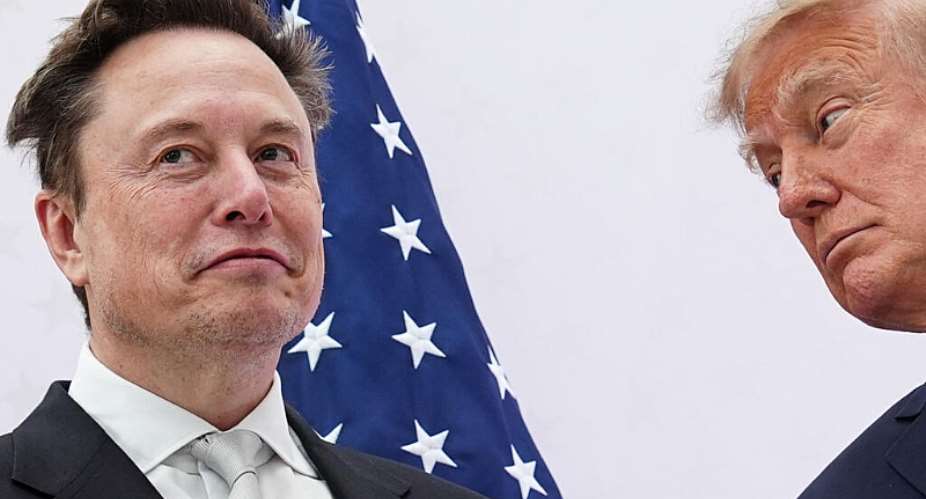
Meanwhile, Musk – who has recently renewed his alliance with Trump since a public fallout back in June – has started speaking out against Ukraine's attacks on Russian data centres.
“Elon Musk came out specifically to say that that was going “too far” so it's no surprise that just a couple of days later this change has happened,” said David Galbreath, professor of War and Technology at the University of Bath, in an interview on Wednesday with FRANCE 24.
Midterm pressure
Musk and Trump's reconciliation comes as the tech billionaire has become the biggest Republican donor ahead of November's US midterm elections, spending $245 million to back key candidates.
The upcoming vote – which will define the next two years of Trump's presidency – may be one reason for the changing attitude towards Ukraine.
“Republicans are facing poor electoral prospects due to high energy prices and affordability pressures arising from Iran war,” said Majda Ruge, senior policy fellow for the US at the European Council on Foreign Relations. “These pressures explain why President Trump has become particularly hostile towards Ukrainian attacks on Russian refineries just weeks before the midterms.”
Similarly, Trump's surprise announcing of an energy ceasefire between Kyiv and Moscow was an attempt to demonstrate “a foreign-policy success” to voters, Ruge said.
“Whether reality aligns with claims of this foreign policy success is less relevant. The story of the president as a dealmaker and his foreign policy 'wins' is not intended for the audience that follows the international affairs closely,” she said.
Dramatic interventions related to international oil supply are similarly “to demonstrate that Trump is doing something about the cost-of-living problem”, added Jonathan Monton, associate professor in political science and director of the International Public Policy Programme at University College London.
“There's very little that he can do practically to change the real cost-of-living issues anytime between now and the midterms, so these kinds of gestures are all he has.”
'Targets in a shooting gallery'
Although Musk has said any restrictions on Starshield were decided by the US military, he doubled down on his criticism of the Ukrainian president.
“Time for Zelensky to go,” he wrote on Thursday in a post on X.
Both Trump and Musk “understand significantly” how disruptions to Starlink would affect Ukraine, Galbreath said.
The satellite internet service enables mid-range drone flights without which the Ukrainian military would unlikely be able to continue its frontline pushback in the east or use interceptors to protect its cities from Russia's high-speed Shahed drones.
Read more Hybrid warfare: The threat of Russia looms over the Mediterranean
“Without that protection, Russian drones will strike residential buildings, hospitals, and schools like targets in a shooting gallery,” Ukrainian human rights lawyer and Nobel Peace Prize winner Oleksandra Matviichuk wrote on social media.
“Let me be blunt: the blood of Ukrainian children will be on the hands of the owner and the entire team of this American company,” she added with reference to SpaceX.
The reasons for Musk's recent decision to become an outspoken critic of Ukraine's military strategy are unclear.
So entrenched has his technology become in the Ukrainian military apparatus that in August Musk was awarded Ukraine's Order of Freedom for his "outstanding personal merits" in protecting human life and strengthening ties with the United States.
“He's putting up big money to help the Republican side in the midterms,” said Monton. “So maybe he just genuinely agrees with Trump that alleviating these supply constraints would help the Republicans, and this is his way of pressuring Zelensky into going along with that. But it's very hard to tell.”
Zelensky, meanwhile, indicated he is unlikely to bow to the pressure. Ukraine initially complied with Trump's impromptu "energy ceasefire" last week – even as Zelensky said the announcement of the agreement was “news to [him]” and Russia continued striking Ukrainian infrastructure.
But on Thursday he signalled a change of heart: "The block [on attacking refineries] is out,” he told the Financial Times. “We're done."


 Ms. Emelia Affi Agbenyo must honourably resign as new EC Deputy Chairperson to p...
 Why have US-Ukraine relations soured ahead of the midterms?
 Govt to meet Free Zones Authority, Trade Ministry over Customs Act concerns
 Kojo Bamba was never my driver or bodyguard — Nana B
 Ekow Assafuah petitions OSP to probe alleged World Cup visa facilitation irregul...
 Africa attracting wrong waste management solutions – GAIA report
 Summon Kofi Adams, GTA boss over 2026 World Cup visa scandal — NPP tells Parliam...
 Obuasi SHS headmaster accused of sexual abuse is NDC constituency secretary – Ma...
 Family demands answers over death of 14-year-old student at Abomosu STEM SHS
 Osahen Afenyo-Markin reflects on loneliness of public service, says survival is ...


