




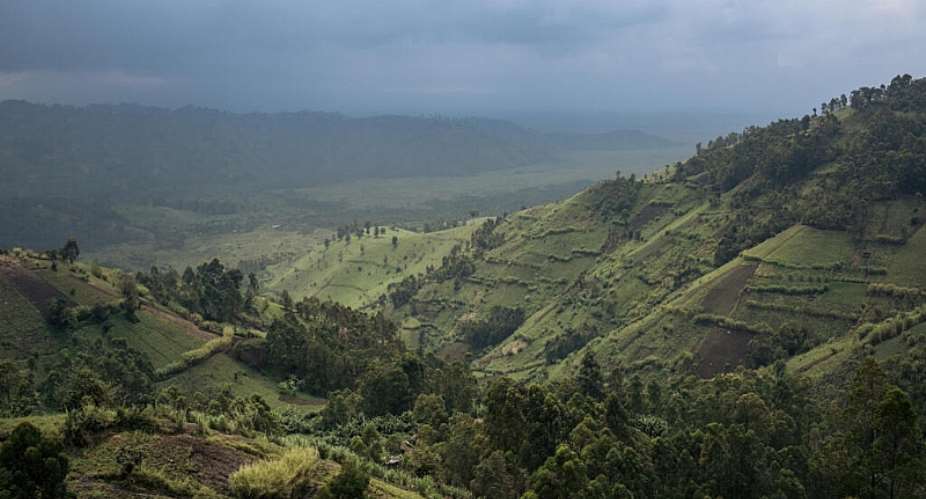
Seven million hectares of forest – roughly the size of Ireland – were lost to deforestation in 2025, down 15 percent from 2024, according to the Forest Declaration Assessment.
The drop still leaves the world off track to meet a pledge, made at the UN climate talks in 2021, to end deforestation by 2030.
The 2025 figure is “encouraging but so far it's the exception, not a new trajectory”, Erin Matson, the study's co-author, from advisory group Climate Focus, told journalists.
Africa's wildlife population plunges by 80 percent in five decades, WWF warns
Fragile gains in Amazon
Latin America, historically a global deforestation "hotspot", saw a 33 percent drop in forest loss, with the authors pointing particularly to Brazil's action plan against forest clearing and increased enforcement in the Amazon.
That progress depends heavily on a small number of governments and remains vulnerable to recent and upcoming elections across the Amazon basin, the study said.
Brazil's left-wing President Luiz Inacio Lula da Silva, who has vowed to end illegal deforestation by 2030, faces populist right-wing Senator Flavio Bolsonaro in a presidential runoff on 25 October.
Deforestation rose sharply under the senator's father, far-right former president Jair Bolsonaro.
Gains could also be at risk in Colombia and Peru, where right-wing presidents were recently elected, the researchers said.
Tropical forests still under pressure despite slowdown in losses
Congo Basin under pressure
Rainforest loss in the Congo Basin, the world's second-largest tropical forest area, reached 2.4 million hectares in 2025 – close to the Amazon's level for the first time.
“Losing such a size of forest every year is a disaster,” said Samuel Nguiffo, a lawyer and founder of the Centre for Environment and Development in Cameroon.
Population growth, intensive logging, agro-industry, mining and major infrastructure projects are putting increasing pressure on land and resources, Nguiffo said, adding that governments also lack the capacity and political will to change how forests are managed.
“The erosion of the forest, both in size and in number of species, reduces the space available for communities and fuels conflicts.”
Madagascar and Congo-Brazzaville team up to protect vanishing forests
El Nino warning
El Nino, the warming phase of a natural climate cycle, poses another threat to forests because it can bring droughts that create conditions for wildfires.
“If projections of the historically strong 2026-27 El Nino materialise, drought and fire risks will intensify further across tropical forest regions,” the assessment said.
The current event, which emerged in June, is already developing into an exceptionally strong El Nino, with forecasters warning it could become one of the strongest on record.
Tree-cover loss saw a “huge spike” during the last “super” El Nino in 2015-2016, Matson said.
“We can't fully predict the future but it's unlikely, I would say, that in 2026 we'll see the same kind of reductions that we saw last year.”
(with newswires)


 ‘We have turned the tide’ – Ato Forson says Ghana is ready to take off
 Sammy Gyamfi refuses to file defence, hides behind technicalities — Lawyers
 Osahen Afenyo-Markin vows to pursue case against Sammy Gyamfi despite high court...
 Let us all be mentors to our younger generation - Mahama
 Court stops Osenase homecoming over security concerns
 Supreme Court dismisses Solomon Asamoah's bid to stop Sky Train trial
 GRA denies imposing new 20% tax on Netflix, Google and Amazon subscriptions
 Police arrest 16 suspects, seize 209 rounds of ammunition at Gbane mining site
 ‘Mahama has lost his moral high ground’ – Dr Zaato on Affi Agbenyo’s EC appointm...
 Cassava, hemp could offer alternatives to plastics – Zanetor challenges scientis...


