




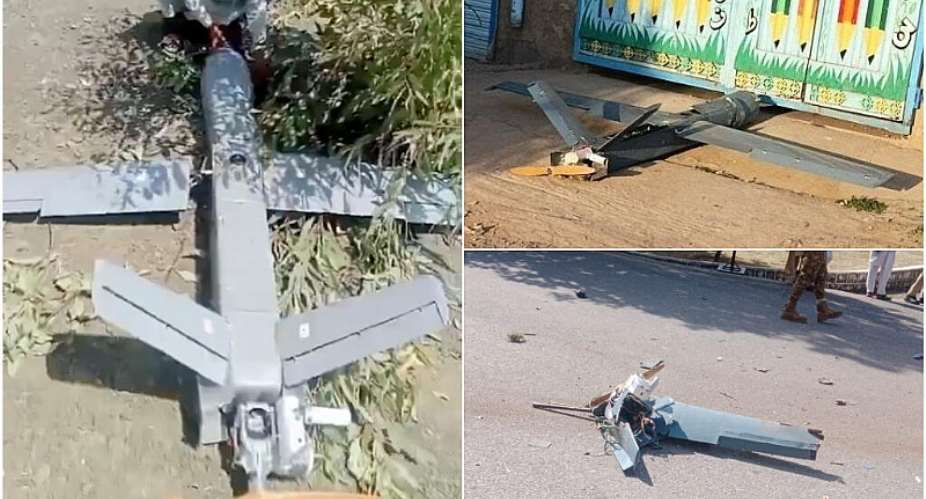
The Pakistani army on September 23 said it hadshot down at least eight fixed-wing drones in Pakistan's Khyber Pakhtunkhwa province, less than 1,000 metres from the Afghan border. It was the latest reported attempt by the Taliban to target Pakistani forces using this type of drone.
Since the conflict between Pakistan and the Taliban began in February of this year, the Taliban have deployed armed first-person-view (FPV) drones – small quadcopters carrying munitions such as mortar shells – to attack Pakistani positions near the border. They have also used larger, fixed-wing suicide drones equipped with more powerful engines, potentially capable of flying hundreds of kilometres.
On September 28, Pakistan's Foreign Ministry said it had delivered a diplomatic protest note to the Taliban over what it described as "provocative incursions", citing 23 drones launched from Afghanistan into Pakistani airspace since the beginning of the month.
From friends to foes
Once close allies, Pakistan and the Taliban entered into open conflict about eight months ago when Pakistan's Defence Minister Khawaja Mohammad Asif publicly declared that “relations with the Taliban had deteriorated into an 'open war'.”
The conflict escalated after Pakistan began targeting positions of the Pakistani militant group Tehreek-e-Taliban Pakistan (TTP) inside Afghanistan. Also known as the Pakistani Taliban, the TTP is officially recognised as a terrorist organisation by multiple countries and international bodies, including the United Nations, Pakistan and the European Union.
The TTP has carried out attacks in Pakistan for nearly two decades and has long-standing ties with the Afghan Taliban, which Pakistan accuses of sheltering and supporting the group.
When Pakistan, which has aerial military superiority over Afghanistan, has struck suspected TTP positions deep inside Afghanistan, the Taliban has retaliated with ground attacks and drones.
'Making a fixed wing drone is not that complicated anymore'
UAV expert Mark Grozel explains:
These drones are roughly two metres in size and could carry between half a kilogram and one kilogram of explosives. They have a very limited military effectiveness and are easy to intercept. They are slow and fly at low altitude. The difficulty is detecting them: they are hard to spot, but once detected, they are easy to shoot down.
There are multiple scenarios. One is that a foreign government supplies them. Or they could be, to some extent, homemade. Today, making a fixed-wing drone is not that complicated anymore.
Autopilot software that controls a drone's trajectory is widely available.
On [the e-commerce site] Alibaba, you can easily buy components such as the engine and battery. The body could be made with a 3D printer, or from polystyrene or even balsa wood…
After examining photos and videos of drones that Pakistan's army said it had intercepted, FRANCE 24 identified what appear to be DLE55 engines fitted to each of the suicide drones shown. These 55cc single piston engines and are commercially available online. 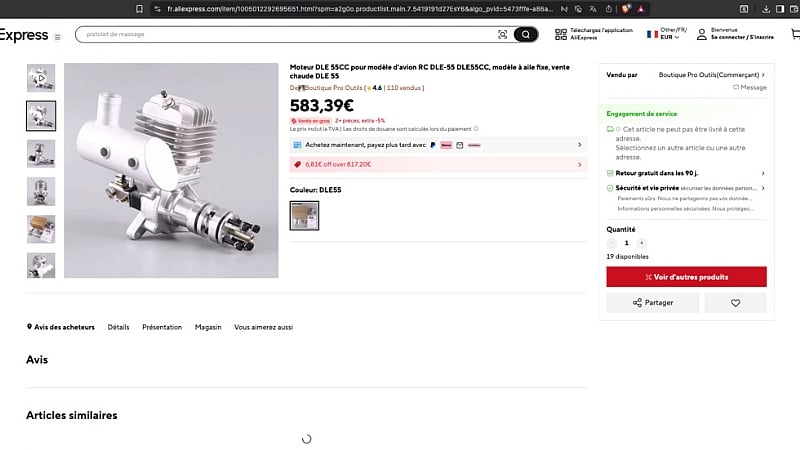
Pakistan also launched a mass expulsion campaign, with 2.39 million Afghans returning from Pakistan to Afghanistan over a period of more than two years.
There is a very deep ideological relationship between the Afghan Taliban and the TTP rooted in the extremist Islamist religious schools in Pakistan. They share the same ideology, come from the same religious tradition and follow the same teachings. They can no longer be separated. They are effectively one group.
A few months after the Afghan Taliban returned to power, the TTP leader stated very clearly in Pashto that Tehreek-e-Taliban Pakistan and the Islamic Emirate of Afghanistan, meaning the Afghan Taliban, were one group. He said: “We are not two groups. We are one group, following one programme, one ideology and one method.”
This is particularly revealing because the TTP leader himself explicitly described the two movements as one.


 ‘We have turned the tide’ – Ato Forson says Ghana is ready to take off
 Sammy Gyamfi refuses to file defence, hides behind technicalities — Lawyers
 Osahen Afenyo-Markin vows to pursue case against Sammy Gyamfi despite high court...
 Let us all be mentors to our younger generation - Mahama
 Court stops Osenase homecoming over security concerns
 Supreme Court dismisses Solomon Asamoah's bid to stop Sky Train trial
 GRA denies imposing new 20% tax on Netflix, Google and Amazon subscriptions
 Police arrest 16 suspects, seize 209 rounds of ammunition at Gbane mining site
 ‘Mahama has lost his moral high ground’ – Dr Zaato on Affi Agbenyo’s EC appointm...
 Cassava, hemp could offer alternatives to plastics – Zanetor challenges scientis...


