




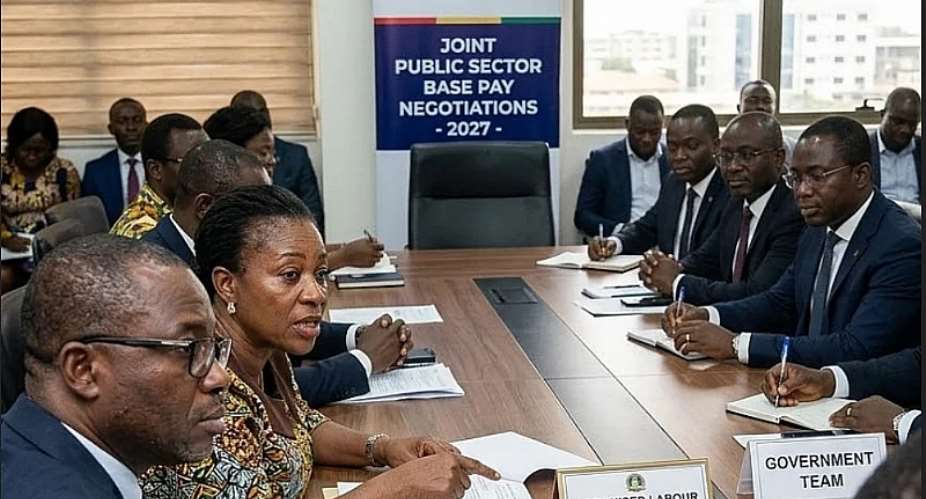
A critical meeting of the Fair Wages and Salaries Commission (FWSC) is scheduled for this coming Thursday, October 15, 2026. This gathering will see representatives from the government and organised labour come together to begin negotiations on the 2027 National Base Pay. The stakes are high for hundreds of thousands of public sector workers, and this article aims to remind all attendees of the harsh economic realities that must inform these discussions.
The negotiation table cannot be an ivory tower; it must reflect the daily struggles of ordinary Ghanaians. The FWSC's core mandate, as stated, is to determine a fair and equitable base pay. This mission has never been more vital.
The Cold Facts: A Failing Economy for Workers
For several years, Ghanaians have been living under the shadow of a relentlessly rising cost of living. Workers in the public sector, many of whom form the backbone of our essential services, have watched in dismay as their "dying" wages become increasingly insufficient to meet basic needs.
The Crushing Burden of Transport
One area of particular concern is the transport sector. This vital component of daily life has become a source of profound exploitation. The government, it appears, has "sat aloof" while trotro drivers, responding to the escalating cost of fuel and general operations, continue to increase fares at will.
This unbridled exploitation is most keenly felt by public sector workers, who make up a substantial portion of the trotro-using public. These are not luxury trips; these are essential journeys to work, making the inaction of the authorities even more disheartening. The current state of transport is a clear and present danger to the financial stability of the very people the state employs.
The Rent Trap
The housing situation is another critical pain point. While wages have stagnated, rent costs have continued their relentless ascent. For many public sector workers, the dream of a decent home is becoming an unattainable reality. The combination of stagnant wages and skyrocketing rent creates a dangerous financial gap that is pushing many further into poverty. It is a cruel irony that those who serve the nation are often the most precarious in their living arrangements.
A Call for Principled Negotiations
As negotiations begin, it is paramount that all parties commit to a process based on honesty and transparency. This means rejecting any attempt to use "artificial inflationary figures" that do not reflect the reality on the ground. The true cost of living, as experienced by workers at the petrol station, in the market, and in paying for transport, must be the sole yardstick. Any other approach will result in a base pay that is not only unfair but also unsustainable for workers.
The Akufo-Addo Standard
In addition, the negotiation should be measured against the historical precedent set by the erstwhile Akufo-Addo government. Organised labour must be vigilant and reject any offer that falls below the standards previously established by the same administration. Consistency and fairness require that workers are treated with the same level of respect and consideration that was extended in previous negotiations. Accepting anything less would be a dereliction of duty and a failure to protect the interests of hard-working Ghanaians.
The Case for a 30% Minimum Increase
Given the severe erosion of purchasing power, a mere tokenistic increase will not suffice. To restore a modicum of financial dignity to public sector workers, any base pay adjustment must be substantial. We firmly believe that workers deserve nothing less than a 30% increase. This is not an arbitrary number; it is a calculated and necessary demand that aims to narrow the gap between wages and the soaring cost of living. It is a call for a return to fairness and an acknowledgement of the sacrifices that workers make for this country.
A Hopeful Note
The upcoming meeting on Thursday presents an opportunity. The Fair Wages and Salaries Commission has a chance to demonstrate its commitment to its mandate by engaging in a negotiation that is rooted in reality, driven by fairness, and prioritises the well-being of the people it serves. Let this meeting be remembered not as another failure to act, but as a turning point towards a future where hard work is rewarded and a decent living wage is a reality for all public sector workers.
The author is an Information Officer.


 ‘We have turned the tide’ – Ato Forson says Ghana is ready to take off
 Sammy Gyamfi refuses to file defence, hides behind technicalities — Lawyers
 Osahen Afenyo-Markin vows to pursue case against Sammy Gyamfi despite high court...
 Let us all be mentors to our younger generation - Mahama
 Court stops Osenase homecoming over security concerns
 Supreme Court dismisses Solomon Asamoah's bid to stop Sky Train trial
 GRA denies imposing new 20% tax on Netflix, Google and Amazon subscriptions
 Police arrest 16 suspects, seize 209 rounds of ammunition at Gbane mining site
 ‘Mahama has lost his moral high ground’ – Dr Zaato on Affi Agbenyo’s EC appointm...
 Cassava, hemp could offer alternatives to plastics – Zanetor challenges scientis...


