




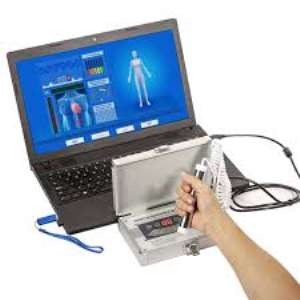
Imagine holding a small sensor connected to a laptop for a few minutes. Shortly afterwards, a computer produces an elaborate report about your health, listing possible problems with your organs, blood, vitamins, minerals and other bodily functions. To an ordinary person, this may look like a medical breakthrough. The machine appears sophisticated, the report looks scientific, and the speed with which the results are produced can be impressive. But there is one fundamental question we must ask: Are the results accurate?
I have a personal reason for asking this question. I recently underwent a test using a device known as the Quantum Resonance Magnetic Analyzer (QRMA). The machine generated its report, and I decided to verify the findings through conventional laboratory testing. To my disappointment, the QRMA results did not agree with the laboratory findings. In my experience, the discrepancies were so extensive that I could not rely on the machine's report. I am sharing this experience because other people may be paying for similar tests and making decisions about their health based on the results. My concern is not to attack any individual or clinic. It is to protect the public from accepting medical claims without adequate evidence. But my experience has also led me to a much broader question: Are we doing enough in Ghana to protect ordinary citizens from unqualified, inadequately regulated or commercially motivated health screening and treatment? I am afraid the answer may be no.
What Exactly Is the QRMA?
The Quantum Resonance Magnetic Analyzer is marketed as a computer-assisted health assessment device. The user holds a sensor, and software generates a report purporting to assess different organs and bodily functions. Depending on the product and software, the report may include claims about cardiovascular health, liver and kidney function, blood parameters, vitamins, minerals, bone health and other conditions.
The attraction is obvious. Rather than undergoing several separate examinations, a person is presented with what appears to be a comprehensive assessment in a matter of minutes. For people who cannot afford extensive medical investigations, such a device may seem like an affordable alternative. For those who fear needles or find hospital visits inconvenient, it may appear even more attractive.
However, a machine's ability to produce a report is not proof that it has measured the conditions listed in that report. The crucial question is whether the device has been independently tested and demonstrated to diagnose those conditions accurately.
What Does the Scientific Evidence Say?
The concern about QRMA devices is consistent with wider concerns about bioresonance and similar alternative diagnostic technologies. The United Kingdom's Advertising Standards Authority, in its guidance on bioresonance therapy, states that it has not seen robust evidence demonstrating that these devices can diagnose existing or future medical conditions or prevent or treat disease. The guidance also explains that a device's conformity marking, by itself, does not establish that its medical claims are effective. This distinction is important. A machine may be manufactured, connected to a computer and programmed to generate an impressive report. None of these features establishes diagnostic accuracy.
For a device to be trusted for medical diagnosis, its claims must be supported by appropriate clinical studies. Those studies should compare its results against accepted diagnostic methods, involve sufficient numbers of patients, and demonstrate how often it produces correct results, misses genuine disease or incorrectly identifies disease in healthy people. For the QRMA's broad claims, convincing independent clinical validation is lacking. That is reason enough for caution.
The Danger of False Reassurance and False Alarms
The unreliability of a diagnostic test is not merely an academic concern. It can have serious consequences for patients. Consider two possible situations. A person with a genuine medical condition receives a reassuring QRMA report and concludes that nothing is wrong. The person may delay seeking proper medical attention until the condition becomes more serious. Another person is told by the machine that they have a problem with the liver, kidneys, heart or some other organ. Frightened by the report, they may spend money on unnecessary supplements, herbal preparations or other treatments. Neither situation is acceptable.
The same concern applies when a report claims to identify vitamin or mineral deficiencies. Such findings should not automatically be accepted as evidence that a person needs particular supplements. A diagnostic test must do more than generate possibilities. Its results must be sufficiently reliable to guide appropriate medical decisions. A false diagnosis can be harmful, but a false assurance that one is healthy can be equally dangerous.
A Laptop and a Sensor Are Not a Substitute for Medical Evidence
We must be careful not to confuse technological sophistication with scientific validity. A laptop can process data quickly, display charts and generate hundreds of lines of information. But the accuracy of its conclusions depends on the quality of the measurements, the validity of the underlying method and the evidence supporting its interpretation. The word "quantum" in a product's name does not establish that it uses a scientifically validated quantum-based method of diagnosing disease. Nor does the word "magnetic" make the device equivalent to magnetic resonance imaging (MRI).
An MRI scanner uses established physical principles and specialized equipment to produce images of internal body structures. A hand-held QRMA sensor has not been demonstrated to provide an equivalent examination simply because its software generates information about numerous organs. The public deserves an explanation of what the sensor actually measures, how those measurements relate to each claimed disease, and what independent studies establish the accuracy of its results. Where such evidence is unavailable, broad diagnostic claims should not be accepted at face value.
Ghana's Bigger Public Health Problem
My concern about QRMA is not an isolated concern. Walk through some Ghanaian communities and one encounters people moving from neighbourhood to neighbourhood carrying weighing scales, blood-pressure machines, stethoscopes, testing kits, scanners and other equipment. Some advertise themselves as conducting health screening. Some measure blood pressure. Some test blood sugar. Some use various machines to produce elaborate health reports. Some go further and tell people what diseases they supposedly have. And, in some cases, the next step is the sale or prescription of herbal preparations, supplements or other products. This is where a seemingly harmless health screening exercise can become dangerous.
There is nothing wrong with legitimate community health screening. Indeed, preventive healthcare and early detection are essential to improving the health of the population. The problem is who is conducting the screening, what equipment is being used, whether the equipment is scientifically validated, whether the facility is properly licensed, whether the person interpreting the results is qualified, and what happens after the result is produced.
A blood-pressure reading taken with a properly validated device is one thing. A person using an unvalidated scanner to announce that a citizen has problems with the liver, kidneys, heart, blood, bones and several vitamins is something entirely different. The public must be protected from the latter.
We Cannot Allow Quackery to Become Normal
Ghana cannot afford to allow people with questionable qualifications and questionable equipment to operate openly among the public simply because they have found a commercial opportunity in people's fear of illness. The danger is not only that somebody may pay for an inaccurate test. The greater danger is what may happen afterwards.
A person may be falsely told that he has a serious illness. Another may be falsely reassured that he has no problem. A third may be persuaded to buy expensive herbal preparations. A fourth may abandon prescribed medication. A fifth may postpone a visit to a hospital. And someone with a genuine illness may lose precious time because an unreliable screening exercise has given him a false sense of security. These are not minor matters.
Health information can change behaviour, and wrong health information can therefore cause real harm. Ghana already has regulatory institutions whose responsibilities include protecting the public. The Health Facilities Regulatory Agency (HeFRA), established under the Health Institutions and Facilities Act, 2011 (Act 829), is responsible for licensing and monitoring health facilities and determining standards relating to facilities, equipment and personnel. Its regulatory scope includes laboratories and diagnostic centers.
The Food and Drugs Authority (FDA), for its part, regulates medical devices. Its responsibilities include relevant aspects of registration, market authorization, safety, quality and post-market surveillance. The issue, therefore, is not necessarily the absence of institutions. It is whether these institutions are sufficiently visible, proactive and effective in protecting ordinary Ghanaians from questionable health practices taking place outside conventional healthcare facilities.
What about Health Screening in Schools?
There is another area that deserves particularly serious public discussion: health interventions involving children in schools. Our schools are trusted institutions. Parents send their children there to learn, and when a health exercise is organized through a school, many parents naturally assume that it has been properly authorized and medically supervised. That trust must never be abused.
I personally had an experience that made me extremely concerned about this issue. I had to go to my child's school to prevent my child from receiving a Hepatitis B vaccination. Let me make my position clear: I am not opposed to vaccination. If the Ministry of Health, Ghana Health Service or another properly authorized public health programme recommends and administers a vaccination that is a different matter.
My concern is when a private laboratory or commercial organization, operating through a school, becomes involved in administering vaccines to children without parents having clear information about who is conducting the exercise, who authorized it, what vaccine is being used, why it is being given, what the indications are, and who assumes responsibility for any adverse reaction.
Children are not customers in a commercial marketing exercise. They are minors whose medical decisions require appropriate safeguards. Parents and guardians should receive adequate information and, where required, provide appropriate consent before non-routine medical interventions are undertaken on their children. Schools should also be extremely careful about entering into arrangements with private health providers.
A school's responsibility is not simply to provide access to its pupils. It must also protect them. At the same time, vaccination decisions should be informed by qualified medical advice and established public health guidance. Hepatitis B vaccination is an important preventive measure against a serious viral infection. Questions about how a vaccination programme is organized, authorized and communicated should not be confused with claims that the vaccine itself is unsafe. The issue is accountability, proper authorization, transparent communication and appropriate safeguards for children.
Commercial Imperatives Must Not Override Medical Judgment
This is where the public needs to understand an important distinction. A commercial laboratory, clinic or health company may legitimately provide healthcare services. Commercial status alone does not make a provider untrustworthy. But when there is a commercial incentive to conduct a test, sell a product, recommend a treatment or administer an intervention, the safeguards must be especially strong.
The person who conducts the screening should not also benefit financially from frightening the patient with a diagnosis that has not been properly established. The person who identifies a supposed deficiency should not automatically be the person selling the supplement to correct it. The person who claims to have discovered a medical problem should be able to identify the accepted medical test that can confirm the diagnosis. And a child should never become the subject of a medical intervention merely because a commercial arrangement has been made between a school and a healthcare provider. The public deserves transparency about who is providing a service, who is paying for it, what the service is intended to achieve and what safeguards are in place.
Public Health Screening Must Be Properly Regulated
I believe Ghana needs a much stronger approach to public health screening. Health screening exercises involving medical tests, diagnostic devices and the interpretation of clinical results should be conducted through appropriately licensed and regulated health facilities, laboratories and qualified health professionals. Where medical devices are used, they should be authorized for their intended purpose.
Where laboratory tests are performed, the laboratory should meet the applicable regulatory requirements. Where a diagnosis is made, it should be made or confirmed by appropriately qualified professionals. And where medication or treatment is recommended, the person making that recommendation should have the legal and professional authority to do so. This is not about preventing people from accessing healthcare. It is about ensuring that the healthcare they receive is safe, evidence-based and accountable.
HeFRA's responsibilities include licensing health facilities, inspecting them and monitoring the standards of healthcare provided. The FDA has responsibilities relating to the regulation of medical devices. The public should therefore be encouraged to ask a simple question before participating in a health screening exercise: Who is conducting this exercise, and under whose license and professional authority? That question could save lives.
Ghana's regulators should also establish a clear and accessible system for reporting questionable screening practices, misleading diagnostic claims, unsafe devices and the inappropriate sale of treatments. Where individuals or organizations are operating outside the law, the authorities should investigate and take appropriate action. Where operators are properly qualified and their equipment and methods are validated, they should have nothing to fear from reasonable regulatory scrutiny.
What about Foreign Medical Personnel Coming to Ghana?
The same principle should apply when medical teams from outside Ghana come into the country to provide medical services. Ghana welcomes medical expertise from elsewhere. Foreign specialists can make an important contribution to healthcare delivery, particularly where specialist expertise is limited. But the fact that somebody is called "Doctor" in another country should not automatically mean that the person can practice medicine in Ghana without scrutiny.
There must be proper verification of qualifications, professional standing, registration and the circumstances under which the person is permitted to practice. The Medical and Dental Council of Ghana has formal requirements for temporary registration, including documentation relating to qualifications, professional standing, experience and proposed employment. These safeguards exist for a reason. A country should know who is practicing medicine within its borders. It should know where that doctor trained. It should know whether the qualifications are genuine. It should know whether the doctor is in good professional standing. It should know what the doctor is authorized to do. And it should know who bears responsibility if something goes wrong.
Ghana should therefore ensure that visiting foreign doctors, surgeons and other medical practitioners are properly scrutinized and authorized under the applicable requirements of the Medical and Dental Council and other relevant regulatory authorities before they are allowed to perform procedures on Ghanaian patients. A patient's body should never become the testing ground for an inadequately verified practitioner.
This scrutiny should not be interpreted as hostility towards foreign doctors. Ghanaian practitioners are also subject to professional registration and disciplinary requirements. The principle must be the same for everyone: competence, authorization and accountability.
What Should Ghana's Health Authorities Do?
I believe the FDA, the Ministry of Health, HeFRA, the Medical and Dental Council and other relevant professional and regulatory bodies should take a broader look at health screening practices in Ghana.
With respect to QRMA devices specifically, the authorities should establish:
- Whether the particular QRMA models being used in Ghana have the appropriate regulatory authorization for their stated medical purposes.
- Whether manufacturers and distributors can provide credible, independent clinical evidence supporting each diagnostic claim.
- Whether operators are presenting the results as established medical diagnoses rather than unvalidated assessments.
- Whether patients are being encouraged to purchase supplements, herbal preparations or other treatments on the strength of QRMA reports.
- Whether the devices are being used outside the purposes for which they may have been authorized.
- What information should be given to the public to prevent people from mistaking unvalidated screening reports for reliable medical diagnoses.
The investigation should distinguish between the registration or importation status of a device and evidence that it can perform the medical functions claimed for it. These are related but different questions. But the authorities should go beyond QRMA. They should also examine the wider phenomenon of mobile and roadside health screening.
Who is conducting these exercises? What qualifications do they have? Are the facilities or organizations behind them licensed? What devices are being used? Are those devices registered or otherwise authorized for the purposes for which they are being used? Are test results being interpreted by qualified professionals? Are people being prescribed medicines or herbal products on the basis of questionable screening? Are schools entering into health arrangements with private organizations without adequate safeguards for parents and children? Finally, are complaints investigated promptly, and are the public informed about the outcome where appropriate? These questions deserve answers.
What Should Members of the Public Do?
Until the reliability of a particular device has been established, members of the public should exercise considerable caution. If you have already undergone a QRMA test, do not panic if its report lists possible illnesses. Equally, do not assume that you are healthy simply because it reports normal findings. Consult a qualified health professional and undertake appropriate conventional investigations where necessary. If the machine identifies a possible problem with your blood, liver, kidneys, heart or another organ, ask what medically accepted test can confirm or exclude that condition. Do not stop prescribed medication, postpone necessary treatment or begin taking supplements solely because of a QRMA report.
Before participating in a public screening exercise, ask:
- Who is conducting the test?
- Is the facility licensed?
- Is the equipment authorized for the purpose for which it is being used?
- Who will interpret the results?
- If something abnormal is found, what qualified professional will confirm it?
- And perhaps most importantly: Is the person who is diagnosing me also trying to sell me the treatment?
Parents should similarly ask who is organizing a school health exercise, whether the relevant health authorities are involved, what intervention is proposed and what information and consent procedures apply.
Anyone who has experienced discrepancies between QRMA findings and conventional medical results should retain the reports and discuss them with a qualified clinician. Such records may also help the relevant authorities assess complaints about the devices.
The Public Has a Right to Reliable Healthcare
Healthcare is too important to be left to impressive presentations and unverified claims. We should welcome genuine medical innovations. Portable diagnostic devices, rapid laboratory testing and appropriately validated artificial intelligence can improve access to healthcare, particularly in communities where specialist services are limited. But innovation must be accompanied by evidence.
My experience with the QRMA has left me deeply concerned. I took the test, received its report and sought verification through conventional laboratory testing. The findings did not agree. My experience alone cannot establish the performance of every model or every test marketed under the QRMA name. Nevertheless, it reinforces the need for independent scrutiny, especially when such devices claim to assess numerous aspects of human health through a single hand-held sensor.
But perhaps the bigger lesson is this: Ghana must take public health regulation more seriously. We cannot have people roaming our neighbourhoods with scales, blood-pressure machines, testing kits, scanners and other devices, making medical claims and selling treatments without adequate oversight. We cannot allow vulnerable people to become easy targets for health-related commercial exploitation. We cannot allow questionable diagnostic devices to create fear, false reassurance or unnecessary treatment. We cannot allow schools to become convenient venues for medical interventions without adequate safeguards for children and parents. And we cannot allow medical personnel from outside Ghana to practice or perform procedures without proper verification and professional authorization.
The answer is not to reject modern medicine, traditional medicine, technology or foreign expertise. The answer is regulation, evidence, professional competence, transparency and accountability. I therefore urge the public to be cautious and Ghana's health authorities to investigate these matters.
Let us not mistake a computer-generated health report for a medically established diagnosis. Let us not mistake a stethoscope, blood-pressure machine or scanner for professional qualification. Let us not mistake commercial availability for medical legitimacy. And let us not mistake a medical intervention offered through a school for an automatically authorized public-health programme.
The ultimate test of any medical diagnostic device is not how quickly it produces a report, how colourful the display is, or how many diseases it claims to detect. It is whether it can demonstrate, through credible and independent scientific evidence, that its results are accurate enough to be trusted. When it comes to human health, Ghana must demand nothing less.
FUSEINI ABDULAI BRAIMAH
+233208282575 / +233550558008
[email protected]


 Court dismisses Afenyo-Markin’s GH¢15m defamation suit against Sammy Gyamfi over...
 NDC’s Affi Agbenyo appointment seeks to balance EC’s partisan composition – Hamz...
 MoMo payments also attract 20% digital services tax, not only banks – GRA
 October 14: Cedi sells at GHS12.30 on forex market, GHS11.71 on BoG interbank
 Majority's accusation against Asafo Adjei to divert attention from South Africa ...
 PMMC audits were initiated in 2024, not 2025 – Former MD replies Sammy Gyamfi
 Fire at GRIDCo’s Mallam Substation disrupts power supply to parts of Accra
 Chairman Wontumi’s lawyer says plea-bargaining talks with state ended over unfav...
 University Administrators demands 114% market premium before calling off strike
 We need your support in fight against illegal mining - Mahama appeals to chiefs


