




"Given the security situation, French nationals are strictly advised against travelling to or transiting through King Khalid International Airport in Riyadh, King Abdulaziz Airport in Jeddah, and King Fahd Airport in Dammam," the French embassy in Saudi Arabia said.
It also advised citizens "not to travel to Riyadh, Jeddah, and Dammam unless necessary".
Blasts were heard across Riyadh on Monday night as Iran-backed Houthi forces from Yemen struck oil facilities, tankers and transport hubs.
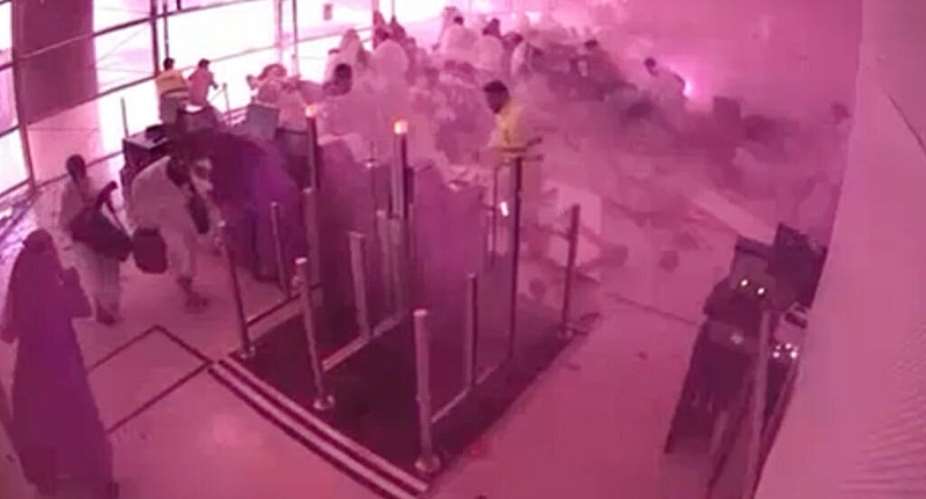
The attacks followed Saturday's strike on King Khalid International Airport – the deadliest attack on Saudi soil in more than a decade. Thirteen people were killed and hundreds more injured.
CCTV footage released by Saudi authorities showed Muslim pilgrims in religious clothing waiting in departure lounges before a blast tore through the building, bringing down flaming debris.
Saudi authorities on Monday extended the suspension of operations at Riyadh's international airport until further notice.
Attacks continued on Tuesday, with the Saudi-led military coalition fighting the Houthis saying its forces had intercepted three drones north of Riyadh.
Western leaders slam Houthi attack on Riyadh airport, warn citizens to stay away
Tit for tat threats
The coalition issued an evacuation warning for an oil facility in Yemen's Houthi-controlled capital Sanaa ahead of an operation there.
The Houthis responded on social media platform X, saying they would target Riyadh's airport, a refinery and an Aramco facility in Dammam if the coalition carried out its threat to strike the Sanaa oil facility.
They also warned that employees at oil facilities had become "legitimate" targets.
Several countries have issued travel warnings to their citizens in Saudi Arabia. Belgium advised against all unnecessary travel to the kingdom, while the United Kingdom told its nationals to avoid all Saudi airports except Medina. London said further attacks on airports were "highly likely."
France to send military to protect Saudi Arabia on Red Sea oil route
Saturday's Riyadh airport attack prompted US President Donald Trump to say he was considering joining Saudi strikes against the Houthis, after reportedly rejecting previous requests for help from the kingdom.
The Houthis warned the US against intervening, saying American interests in the region would be targeted.
"If the US becomes involved in the aggression against Yemen, we will not deliberate over the decision to respond, rather, there will be a swift and painful response," Houthi political bureau member Mohammed Al Bukhaiti told French news agency AFP.
The US embassy in Saudi Arabia said US government employees must obtain authorisation before using any airport in the kingdom. It urged US citizens to "take extreme caution" if they chose to use them.
Airline traffic disrupted
The United Arab Emirates's national carrier Etihad Airways announced on Monday that it was cancelling all flights to and from Riyadh until next week, and also suspended flights to Dammam and Jeddah.
Bahrain's national carrier Gulf Air said it too was cancelling all Riyadh flights until Saturday.
US operator Delta announced it would delay the launch of direct flights from Atlanta to Riyadh, scheduled for 23 October.
Meanwhile, the Red Cross called Tuesday for urgent de-escalation in the Middle East, warning that further fighting would be disastrous for tens of millions of civilians.
Hunger and disease spread in Yemen as Houthi and government forces clash
The Saudi coalition has supported Yemen's government militarily since 2015, in a long-running civil war against the Houthis that has created a deeply entrenched humanitarian crisis in the impoverished country.
"Civilians are paying an unacceptable price as a result of military operations in the Middle East," said Mirjana Spoljaric, the president of the International Committee of the Red Cross.
Spoljaric said civilians and civilian objects had to be spared from attack, while parties to conflict must, at all times, distinguish between civilians, civilian objects and military targets.
Strikes on ports, airports and essential infrastructure risk severe consequences for communities who rely on them, she added.
"A further intensification of hostilities would be disastrous for tens of millions of people. Urgent efforts must be made to de-escalate and protect civilians from further harm," Spoljaric said.
(with AFP)


 Sammy Gyamfi refuses to file defence, hides behind technicalities — Lawyers
 Osahen Afenyo-Markin vows to pursue case against Sammy Gyamfi despite high court...
 ‘No amount of history will prove Akufo-Addo right’ – Solomon Owusu
 Let us all be mentors to our younger generation - Mahama
 Court stops Osenase homecoming over security concerns
 Supreme Court dismisses Solomon Asamoah's bid to stop Sky Train trial
 GRA denies imposing new 20% tax on Netflix, Google and Amazon subscriptions
 Police arrest 16 suspects, seize 209 rounds of ammunition at Gbane mining site
 ‘Mahama has lost his moral high ground’ – Dr Zaato on Affi Agbenyo’s EC appointm...
 Cassava, hemp could offer alternatives to plastics – Zanetor challenges scientis...


