




Imagine a boy who loves roller coasters. He rides the biggest one in the park, and his heart pounds and his hands shake. Then he gets off, and the ordinary world feels dull and quiet. So he goes straight back to the line. Ride after ride, he chases the feeling.
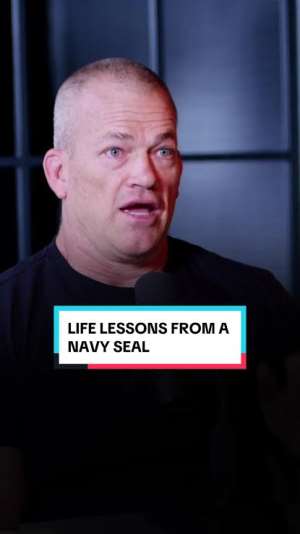
Now imagine a grown man who spent years in the most dangerous places on earth, and the roller coaster was real. That, in simple words, is part of what Shawn Ryan describes in a recent conversation on *The Diary of a CEO*. Ryan is a former U.S. Navy SEAL and CIA contractor, and he now hosts *The Shawn Ryan Show*, one of the most widely watched independent podcasts in America. His story asks a question every one of us should answer: what does it profit a man to chase everything and lose himself?
**The adrenaline trap**
Ryan explains that many elite operators struggle badly after they leave service. Civilian life, with its traffic, bills, and quiet Tuesdays, cannot match the rush of combat. The body gets used to danger, and when the danger stops, the mind can sink into a deep sadness.
The numbers show this is a serious problem. The U.S. Department of Veterans Affairs reports in its yearly suicide prevention studies that roughly seventeen veterans die by suicide every day. Not every case has the same cause, and experts are careful about that. But the struggle to find purpose after service is something veterans and researchers talk about openly.
The lesson reaches far beyond soldiers. A student who lives only for applause, a businessman who lives only for the next deal, and a young person who lives only for likes on a phone can all fall into the same trap. When the high fades, the emptiness remains.
**The psychedelic path, and its dangers**
Ryan says he sought healing through ibogaine, a powerful substance made from a West African plant. Scientists are studying it seriously. In 2024, Stanford researchers published a study in the journal *Nature Medicine* following thirty special operations veterans who took ibogaine in a clinic setting. Their symptoms of PTSD, depression, and anxiety dropped sharply afterward. The researchers also gave the veterans heart monitoring and magnesium, because ibogaine is known to affect the heart's rhythm and has been linked to deaths when used without medical care. In the United States it is still an illegal Schedule I drug, though states like Texas have begun funding research into it.
So the science is real, but so are the risks. Ryan says his own experience did not bring peace. He describes it as terrifying, as if a door opened to the spiritual realm and left him feeling oppressed by dark forces. Science can measure a heartbeat, but it has no instrument for measuring the soul. I am not telling you what happened to him. I am telling you what he says happened, and I think we should take seriously what he says it cost him.
**The cost of staying true**
Ryan also speaks about what he calls a shedding phase. Becoming a better person, he says, means letting go of things: money from sponsors, circles of friends, and quick rewards that pull you away from your values. That is not easy. A sponsor's check is real and a friend's approval feels good. But he argues that you cannot stay aligned with what you believe if you keep selling it.
He also warns against imitation. Copying what worked for someone else may feel safe, but it leaves you stuck, because nobody can be the best version of someone else. A voice built on your own beliefs is the one that lasts.
**The price paid at home**
The part that struck me hardest is about family. Ambition is hungry and will take every hour you give it. Ryan says no business success can make up for being absent from your children's lives. Money can be earned again, but a child's seventh birthday cannot be replayed. As a Ghanaian, I grew up hearing that a man's real wealth is the home he builds, and no podcast chart or bank balance changes that.
**What I make of it all**
Here is my honest view. I am not sure every choice Ryan made was wise, and he would probably say the same. But I respect a man who tells the truth about his pain in front of millions of people. Strength does not mean never breaking. It means being honest about the break and doing something about it.
His story shows three things. Thrills cannot heal an empty heart. Shortcuts for the soul can be dangerous. And success without family and faith is a house built on sand.
**The word for the weary**
Nearly two thousand years ago, a question was asked that fits Ryan's story perfectly: "For what shall it profit a man, if he shall gain the whole world, and lose his own soul?" (Mark 8:36, KJV).
Jesus did not ask this to shame anyone. He asked it because He loves us and knows what we are really hungry for. The adrenaline, the applause, and the money are all echoes of something deeper.
Notice also what the Bible says about the spiritual world. "For we wrestle not against flesh and blood, but against principalities, against powers, against the rulers of the darkness of this world" (Ephesians 6:12, KJV). The Scripture also warns us: "Beloved, believe not every spirit, but try the spirits whether they are of God" (1 John 4:1, KJV). Not every spiritual experience is of God, and we must test everything against His Word.
And for those who feel empty, Jesus offers an invitation: "Come unto me, all ye that labour and are heavy laden, and I will give you rest" (Matthew 11:28, KJV). He does not give a rush that fades. He gives rest, and a peace the world cannot match.
For the father who is always working, there is this: "Lo, children are an heritage of the LORD" (Psalm 127:3, KJV). And for everyone who wants a life that lasts: "But seek ye first the kingdom of God, and his righteousness; and all these things shall be added unto you" (Matthew 6:33, KJV).
So here is my charge to you, whether you are ten or ninety. Put first things first. Love God, guard your family, and stay true to the voice He gave you. Do not trade your soul for the thrill of the moment. Come to Jesus Christ. Read His Word, and let Him make you whole.
Joshua said it best, and I say it with him: "As for me and my house, we will serve the LORD" (Joshua 24:15, KJV).
*Chief Tutu Baffour Asare Brownsy Williams is an author, columnist, and filmmaker.*


 Don’t let speed of information become your judgement — Chief Justice tells new l...
 ‘Big Push’: Government assures contractors of prompt payments
 GES to develop plan to recover teaching time lost during teachers’ strike – Clem...
 Fire guts Kumasi Central Market near Aboabo Station
 'All human emotions': French astronaut Sophie Adenot's first words since returni...
 French astronaut recounts 'astonishing' emotions after return to Earth
 India's 'cockroach' movement chief detained ahead of major protest
 Strike suspended, but negotiations for teachers’ benefits not over — GNAT
 CSA rejects FBI claims, insists Ghana led cybercrime operation
 Govt suspends enforcement of ban on preaching in moving vehicles


