




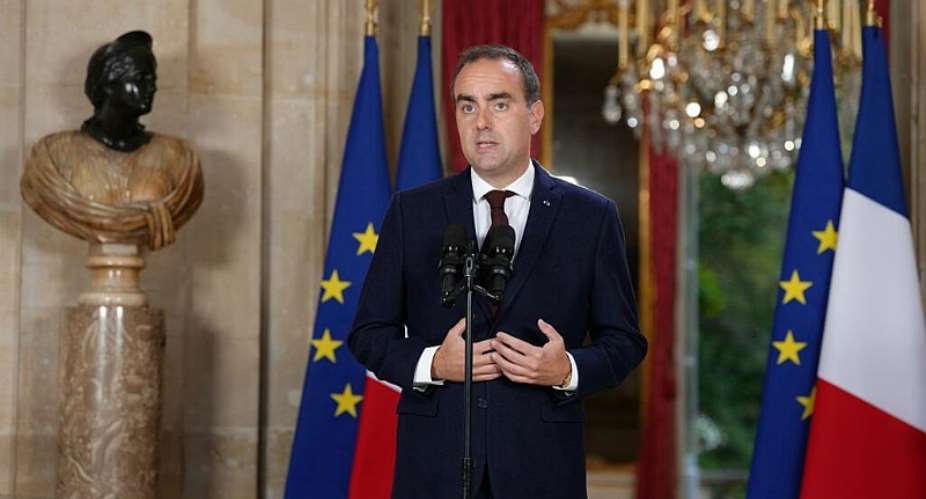
Speaking in a televised address on Wednesday evening, Prime Minister Sébastien Lecornu said France could not remain “indifferent” to the concerns being raised by high school students, acknowledging that “the anger of young people does not come from nowhere”.
He denied that police and gendarmes had been given “orders to confront” protesters and said the government would present a plan at the end of October aimed at addressing the crisis.
His intervention came as the scale of the unrest continued to mount. Hundreds of students, police officers and education staff have been injured since the protests began, while more than 6,500 people – most of them minors – have been arrested.
The movement has spread rapidly across France, driven by complaints over missing teachers, overcrowded timetables, deteriorating school buildings and classrooms increasingly ill-equipped to cope with high temperatures.
At the same time, the police response has come under growing scrutiny, with rights groups, trade unions and student organisations accusing the authorities of using disproportionate force during demonstrations and school blockades.
Student groups have meanwhile vowed to keep up the pressure, with organisers calling for fresh demonstrations on Thursday and several education unions backing new nationwide strike action.
Student representatives have asked for a meeting with Lecornu, saying they have drawn up and costed proposals aimed at improving conditions in secondary schools.
France's Prime Minister Lecornu to address the nation over student protests
Stun grenades suspended
The government has sought to ease tensions by suspending the use of stun grenades by police at high school demonstrations, following several serious injuries.
A 15-year-old student lost a hand on Monday after police fired one of the grenades during a protest.
Interior Minister Laurent Nunez told RTL radio on Wednesday that their use would be suspended while the circumstances surrounding the incident were investigated.
“I am suspending their use in the high school student protests until the facts of the incident have been clarified,” Nunez said.
He stressed that the measure applied only to protests involving high school students and would remain in place for “just long enough to understand what happened”. Police officers spray students with pepper spray near Sciences Po university as they protest against under-resourced schools, in Paris, Wednesday, 7 October 2026. The decision followed another serious incident last week, when a 14-year-old student in north-west Paris was struck in the face by a tear gas grenade fired at close range, causing him to lose several teeth.
A police officer was charged on Tuesday in connection with that case.
Nunez said 18 internal investigations had been opened into allegations of police misconduct since the protests began.
Lawyers representing minors taken into police custody have also raised concerns over their treatment after arrest.
Ainoha Pascual, who represents three minors in Paris, said they had been “terrorised” and alleged that many young detainees arrived in custody with injuries caused by baton blows or after being dragged along the ground.
Prisca Ancion, from the Collective for Judicial Action, said high school students detained during the protests had repeatedly reported verbal abuse and physical mistreatment, including slaps, chokeholds and having their heads forced to the ground.
French PM slams violence at student protests and promises 'timeout' for democracy
Government under wider pressure
The controversy over policing comes as Lecornu's government confronts several other political and economic challenges, including preparations for the 2027 budget and rising public concern over fuel prices.
In his Wednesday evening address, Lecornu said the government would release diesel stocks in an attempt to bring prices down.
He also reiterated his objective of reducing France's budget deficit to five percent of gross domestic product next year, as the government struggles with a heavy debt burden.
The unrest is unfolding less than a year before France is due to elect a successor to President Emmanuel Macron, with the political climate already increasingly shaped by the presidential race.
Far-right leader Marine Le Pen remains a prominent force in polling, while opposition parties on the left have sought to capitalise on anger over the government's handling of the student protests.
Manuel Bompard, national coordinator of the hard-left France Unbowed party (LFI), strongly criticised the authorities over the decision to suspend stun grenades.
“It took several children being maimed for life for Nunez to give up using grenades against high school students,” he said.
The government, for its part, has accused France Unbowed of helping to inflame tensions surrounding the demonstrations.
Most schools reopened on Wednesday, but more than 500 remained at least partially closed, with students continuing to block entrances in some areas using piles of rubbish bins and other makeshift barricades.
(with newswires)

 Wontumi’s lawyers want Exim Bank case treated as civil, not criminal
 Mahama to cut sod for Accra Convention Centre project – Kwakye Ofosu
 Mahama administration committed to stamping out cybercrime – Sam George
 Ghana joins International Big Cat Alliance to strengthen wildlife conservation
 Africa must strengthen strategic positioning amid global power shifts – ECOWAS
 PAC grills GHS over transport officer who allegedly sold seven state vehicles wi...
 Pentecost Church elder was arrested over GH¢200,000 fraud case, not kidnapped – ...
 Banning preaching in vehicles will not succeed, we will even preach at the back ...
 Banks threaten to suspend new loans to public sector workers over Controller rep...


