




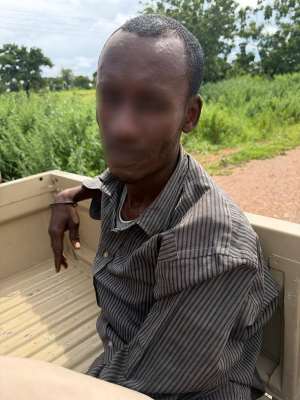
The arrest of three suspects over a ransom demand of GH¢100,000 (about $8,700) near Yendi should not be read as an isolated criminal story. In Nigeria, the ransom economy began the same way: a few cases, a few payments, and criminals who learned that abduction pays.
How Nigeria got here
Nigeria's kidnapping industry grew in stages. It began in the Niger Delta as a tactic against oil workers and foreigners. Boko Haram's mass abductions, notably Chibok in 2014, then showed how much leverage and publicity a single large abduction can bring. In the northwest, armed gangs turned kidnapping into steady income, and highways, farms and schools became hunting grounds.
The latest figures show how far it has gone. SBM Intelligence recorded 7,825 people abducted in 1,713 incidents between July 2025 and June 2026, with at least 1,142 killed. That is a 66 per cent rise on the previous cycle's 4,722 victims. At least 7.78 billion naira, about $5.8 million, was paid in ransom.
SBM also recorded at least six cases where victims were killed even after the ransom was paid.
From small gangs to terror financing
The payments are concentrating in fewer hands. One faction of Boko Haram (JAS) collected 90 per cent of all ransom paid, from just eight incidents.
Its biggest hauls were about 5 billion naira (roughly $3.7 million) for the Ngoshe captives and 2 billion naira (roughly $1.5 million) for the Papiri students. The Ngoshe payment is the largest single ransom SBM has ever recorded.
The dollar value of ransoms is also rising fast. Because the naira strengthened, the dollar value of ransom paid more than tripled, from about $1.66 million to about $5.7 million. Earlier years looked very different.
Between July 2021 and June 2022, ransom payments totalled about 653 million naira, roughly $1.2 million at the time.
Ordinary criminal gangs are far less successful. Bandits and criminal gangs demanded 13.5 billion naira but collected just 719 million, a collection rate of 5.3 per cent.
That is a warning in itself. Small-time kidnapping often fails to pay, which is why the trade drifts toward mass abductions and armed groups able to demand big sums. SBM's analyst puts it plainly: every ransom paid gives birth to another kidnapping incident.
Note, too, that SBM compiled its figures from media reports, interviews and public information, and calls them conservative because many payments are never disclosed.
Why Ghana is not immune
Several conditions that fed Nigeria's problem exist in pockets of Ghana:
Porous northern borders and Sahel spillover, with jihadist and criminal networks moving toward coastal states.
Unresolved local conflicts, such as Bawku, that create arms, grievances and ungoverned space.
Youth unemployment and easy access to illegal firearms.
Isolated farming communities with thin police presence and slow response times.
Mobile money, which makes collecting ransom quick and hard to trace.
The Sang case shows early signs: an armed gang, a targeted family, a fixed ransom demand, and suspects linked to other robberies. That is the pattern of criminals professionalising.
What must be done now
Treat every kidnapping case as a security signal, not a local crime.
Strengthen intelligence-led policing and rapid-response units in the Northern, North East, Savannah and Upper regions.
Track ransom flows through mobile money and informal channels, working with banks and the telecoms regulator.
Build community early-warning systems with chiefs, assemblymen, farmers and Zongo leaders.
Support victims and families so they report instead of quietly paying.
Tighten control of illegal arms and cross-border movement.
Nigeria's lesson is that kidnapping does not become an industry overnight. It grows quietly while authorities treat each case as a one-off. Ghana still has time to act, but not much.
Mustapha Bature Sallama
Medical/ Science Communicator,
Private Investigator, Criminal Investigation and Intelligence Analysis,
International Conflict Management and Peacebuilding. (USIP)
[email protected]
+233555275880
Sources
SBM Intelligence, The Capture of Nigeria's Kidnap Economy (2026), via allAfrica: https://allafrica.com/stories/202608280075.html and https://allafrica.com/stories/202608280127.html
Associated Press via ABC News, "Kidnappers in Nigeria collected more than $5 million in ransoms in a year": https://abcnews.com/Business/wireStory/kidnappers-nigeria-collected-5-million-ransoms-year-analysts-136004421
West African Pilot, "7,825 Nigerians Kidnapped in One Year": https://www.westafricanpilotnews.com/2026/08/29/7825-nigerians-kidnapped-in-one-year-as-ransom-payments-hit-n7-8bn-report/
Nigeria Stories, SBM report summary: https://nigeriastories.com/2026/08/27/nigerians-paid-n7-78-billion-ransom-to-kidnappers-in-one-year-sbm-intelligence/
The Whistler, "Kidnapping: Ransom Rises By 750% In Two Years" (SBM historical data): https://thewhistler.ng/kidnapping-ransom-rises-by-750-in-two-years/


 I will rebuild demolished La Pleasure Beach if elected in 2028 to save jobs — Ba...
 Free primary healthcare requires recruitment of more nurses – GRNMA
 Ethiopia's Tigray rebels abandon regional capital as govt advances
 Mahama in Egypt for AU Mid-Year Summit
 SSNIT defends La Beach demolition, cites encroachment and security concerns
 Dame criticises Baffour Awuah’s EOCO detention, alleges abuse of state power
 Russia strikes another major bridge across Kyiv's Dnipro river
 Co-pilot on Flydubai flight was banned from flying by Oman for holding extremist...
 Spanish lawmakers vote down affordable housing bills in blow to Sanchez’s govern...


