




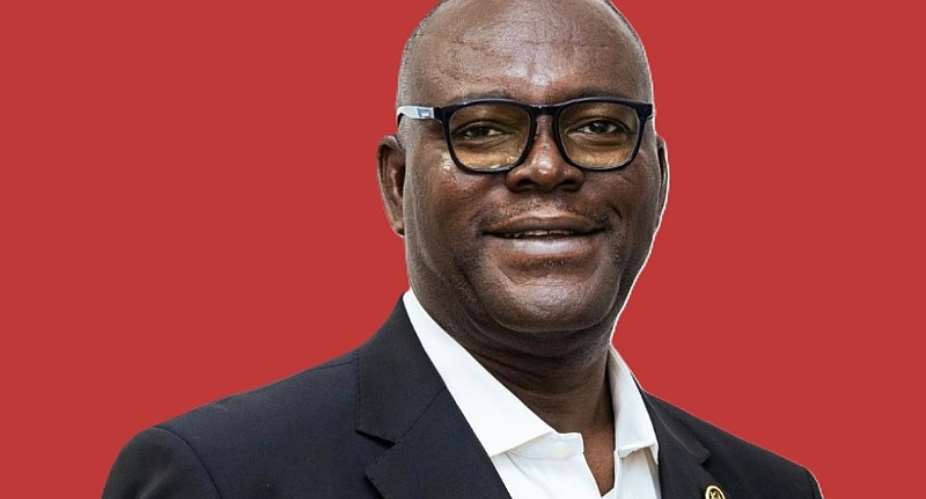
Ghana will only achieve its medium-term revenue target of 18 to 20 per cent tax-to-GDP by 2027 if it enforces voluntary tax compliance through accountability and fairness, not through more levies, Prof. Abdallah Ali-Nakyea, Director, Ali-Nakyea and Associates PRUC, has argued.
Addressing the theme "Bridging Ghana's Tax Revenue Gap: A Call for Voluntary Tax Compliance, An Accountable and Fair System" at the second Transparency International Ghana (TI Ghana), the local chapter of the global anti-corruption movement Integrity Dialogue Series, he said technology and simplification reduce the cost of complying, but trust builds the will to comply.
Citing Kirchler, Hoelzl & Wahl (2008) and Kleven et al. (2011), he explained that because Ghana lacks systems to independently verify income in the informal sector, GRA depends on taxpayers to accurately disclose turnover — making voluntary honesty critical, especially under modified taxation.
The TI Ghana’s new Governance and Integrity Policy Dialogue Series (GIPDS) aims to confront systemic corruption and strengthen public accountability across key sectors.
GIPDS is to serve as a holistic platform and calculated step in the nation’s collective journey to strengthen integrity, transparency, and accountability in Ghana’s governance systems.
"Historically, intricate VAT rules and cascading levies complicated filing and discouraged voluntary registration, especially for SMEs without accounting capacity. Complexity functions as a hidden compliance tax," Prof. Ali-Nakyea, Professor of Tax Law and Policy, University of Ghana School of Law, stressed.
He warned that corruption within tax collection and unresolved conflict of interest allegations undermine GRA's efforts, quoting UNODC: "When this promise is broken, it sends a message that public service is for sale."
His policy recommendations were three-tiered: For Government/ GRA: Publish revenue collection and expenditure data tied to specific public services; resist new levies during low growth.
For Civil Society/TI Ghana: Sustain social auditing and support civic tax education, framing tax as both a duty and right, and for Citizens: Comply and report, invoking Article 41(j) of the 1992 Constitution, which makes it the duty of every citizen to declare income honestly, and demand local accountability at district budget hearings.
"The path to 18-20 per cent runs through both at once, towards a tax system Ghanaians choose to fund because they can see and shape what it funds," he said.
Mrs Mary Awelana Addah, Executive Director of TI-Ghana, said TI-Ghana aims to sustain social auditing, support civic tax education, and facilitate multi-stakeholder dialogue that co-designs reforms perceived as procedurally fair — a critical condition experts say is needed to rebuild trust that makes citizens willing to pay taxes already on the books.
She said, “GIPDS is a further demonstration of the commitment of anti-corruption bodies to promote integrity and accountability. TI-Ghana recognises the critical role of sustained civic engagement and informed policy dialogue in advancing anti-corruption reforms.”
Mrs Addah stressed that corruption, procurement fraud, and weak enforcement continue to cost the state billions in lost revenue each year, eroding public trust and undermining voluntary tax compliance and development financing.
The TI Ghana Executive Director indicated that the GIPDS serves as a platform for rigour, evidence-based discussions to translate governance research, policy ideas, and analysis into actionable reform proposals.
The Dialogue Series has been designed to provide a structured, evidence-based forum where diverse perspectives converge to generate practical policy solutions.
Mrs Addah explained that expected outcomes include a more informed membership, stronger interaction with governance experts, and evidence-based contributions that will enhance the credibility and influence of TI Ghana’s advocacy in national reform processes.
“We invite you to engage fully, share your insights, and contribute to shaping actionable proposals that will strengthen Ghana’s governance landscape,” she told participants.
“Together, let us make this maiden dialogue series a catalyst for reforms that uphold transparency, accountability, and integrity in public life,” she stated.
Mrs Addah disclosed that the year-long programme will combine both routine policy roundtables and virtual meetings, each focused on a high-risk sector — including taxation, public procurement, natural resource governance, and public financial management.
TI-Ghana members, civil society organisations devoted to the fight against corruption, governance institutions, faith-based organisations, and distinguished personalities, signalling a broad coalition approach to integrity reform.
The initiative aligns with current national conversations on bridging Ghana’s tax revenue gap, where experts have linked low tax morale to perceived corruption and weak accountability, and the government's own commitment in the 2026 budget to simplification over new levies.








 Talensi: Three persons injured in deep underground chaos in Gbane
 Yendi: Police arrest three over alleged abduction at Dobini Bunban
 Labadi Pleasure Beach demolition not part of flood mitigation exercise – Stan Do...
 Importers petition GRA to probe alleged 28 missing containers at Tema Port
 Sniffer dog intercepts prohibited Ghanaian food at JFK International Airport in ...
 Three Chinese Massage Spas shut down in Kumasi over lack of licence
 Ghana’s Freezy Macbones defeats Nigeria’s Zodsolo to win WBO Africa light heavyw...
 Veterinary Officer warns Dagaabas and Frafras against eating unvaccinated dogs
 EOCO to arraign lawyer Baffour Awuah before weekend court
 AU urges Ethiopia, Eritrea and Egypt to exercise restraint amid rising diplomati...


