




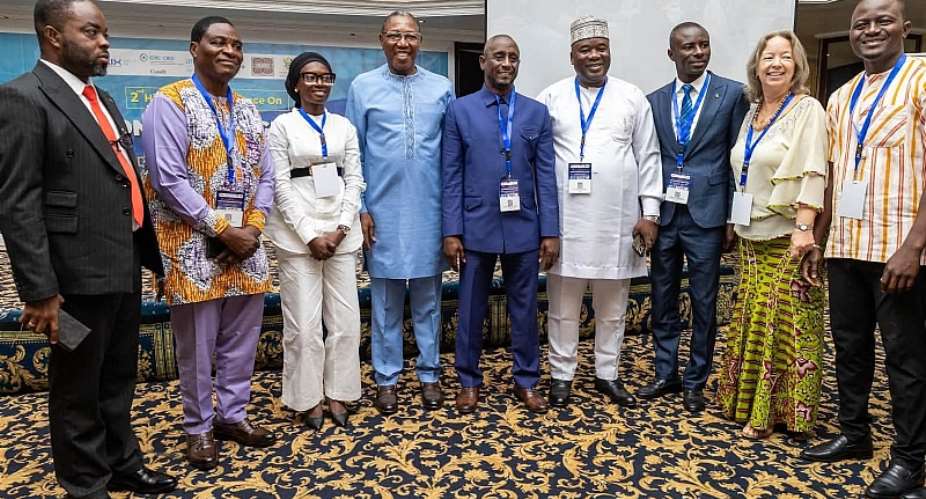
The Deputy Minister for Education, Dr Clement Apaak, has urged West African countries to strengthen their education systems before emergencies occur, warning that waiting for crises to disrupt learning often comes at a much higher cost.
He said conflicts, climate-related shocks, health emergencies and economic pressures were increasingly putting pressure on education systems across the region, making preparedness essential to protecting children’s access to learning.
Dr Apaak made the call in Accra when he addressed the 2nd High-Level Conference on Scaling Education Initiatives in Emergencies, organised to explore practical ways of improving education responses for children affected by crises.
He said governments needed to move beyond reacting to emergencies and place greater emphasis on risk analysis, contingency planning and the development of safe and resilient school infrastructure.
According to him, investing in preparedness was more cost-effective than rebuilding education systems after a crisis had already caused significant damage.
Dr Apaak also called for stronger capacity at the regional and district levels to ensure that education authorities could respond quickly when emergencies occurred. He said this would require reliable data, clear institutional mandates and effective planning tools to help keep children in school and sustain learning during periods of disruption.
He further appealed to governments and development partners to provide sustained and predictable funding for proven interventions that support children whose education has been interrupted. These include Accelerated Education Programmes, community-based learning and low-technology remote learning initiatives.
The Deputy Minister identified equity, increased domestic financing and stronger regional cooperation as important areas requiring continued attention.
He said the Second High-Level Conference on Education in Emergency (ACCELERATE+) provided an important platform for governments, development partners and other stakeholders to draw on evidence and research to improve education responses, particularly for vulnerable and out-of-school children.
Dr Apaak stressed that building education systems that can withstand crises would not only protect learning during emergencies but also help ensure that children who are already at greater risk of being excluded from education are not left further behind.

 Contractors begin construction of 120-bed trauma hospital at Bole – Kwakye Ofosu...
 Gov’t procurement must prioritise local farmers for school feeding – Dr. Ato For...
 Vacate by October 4 or face demolition – KMA warns Abrepo Junction occupants
 Star Oil and GOIL assure no fuel price increase for new window
 Diesel will not hit GH¢22 at pumps – NPA CEO assures
 Ghana records 3,876 cybersecurity incidents in seven months – Communications Min...
 “We never knew life was going to be hard like this in Ghana; we can’t even get j...
 $1.17bn GoldBod gave BoG is repayment, not new money’ – Dr. Gideon Boako
 Baffour Awuah didn’t help his case if he ignored EOCO’s invitation – Appiah Danq...
 Carlos Queiroz leaves Black Stars role after poor AFCON qualifying start


