




South Africa has been on a decades-long journey of reforming its public service. But serious problems persist.
In September 2026 the urgency for change was again underscored during the Madlanga Commission of inquiry into corruption in the police and security forces. In his testimony, the chairperson of the Public Service Commission, Somadoda Fikeni, lamented the state of governance and accountability. He said it sustained a culture of impunity in which officials directly benefited from the inconvenience suffered by members of the public. He called it the “political economy of inefficiency”.
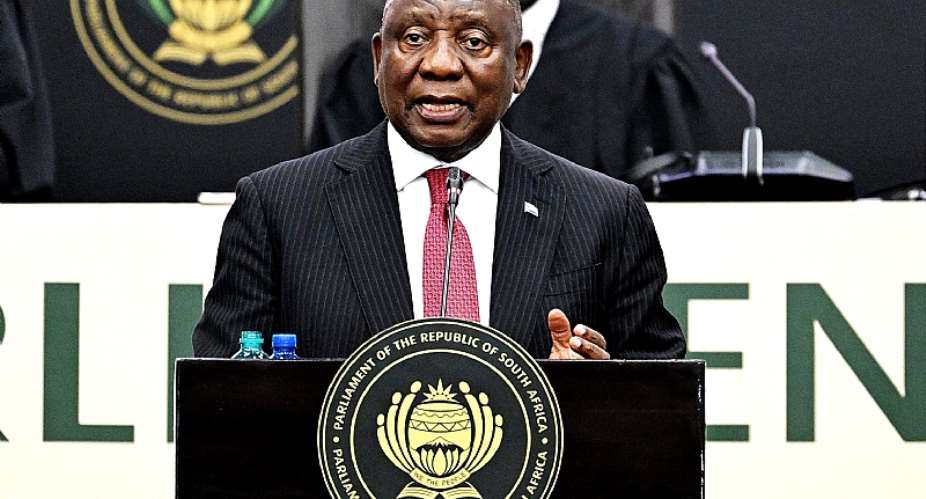
His testimony coincided with the signing of the Public Service Commission Act into law by President Cyril Ramaphosa. The hope is that this will close gaps in accountability.
The new legislation completes a trio of public sector reforms. The other two pieces are the Public Service Amendment Act 9 of 2025 and the Public Administration Management Amendment Act 7 of 2025.
I am a researcher who also served as head the National School of Government, where I led the development of a national framework for the professionalisation of the public sector.
How significant is this moment for governance?
The three laws make important changes to the rules governing South Africa's public administration system. These include:
who exercises administrative authority
how senior administrators are held accountable
how public servants are developed.
They also set out how to manage conflicts of interest and how to protect the constitutional values governing public administration.
New laws do not, by themselves, produce a capable and developmental state. South Africa has enough experience to know the distance that can exist between law and practice.
The real test is whether these changes alter how authority is exercised, how appointments are made, how public servants are developed and how breaches of constitutional standards are dealt with.
The foundation
The foundation for the new laws is section 195 of the country's constitution.
It requires the promotion and maintenance of “a high standard of professional ethics”, and that public resources be used efficiently, economically and effectively. It says public administration must be development-oriented and people's needs must be addressed.
It also requires accountability, transparency, fair and impartial service, good human resource management and a public administration broadly representative of the South African people.
Section 196 gives the Public Service Commission the power to promote the section 195 values and principles throughout the public service. They apply to all organs of state, not just public administration (national and provincial departments).
This is where the work of the late Stan Sangweni becomes relevant to the new laws. He chaired the Public Service Commission from 1999 to 2009.
The history
Much of what the new legislation does responds to the work of the commission under Sangweni's leadership. The commission was concerned with how to protect merit in appointments, hold senior administrators accountable, manage the boundary between political authority and administration, make ethical conduct routine and ensure public administration was answerable to citizens.
There was no legal certainty on its mandate in these areas until now, however.
This I appreciated in 2020 when I was asked to develop the framework to make the civil service professional.
Going back through the Public Service Commission archives, I found evidence that many of the questions confronting the drafting team had been examined during Sangweni's tenure. This reinforced the fact that institutional memory is a form of state capability. A state that keeps starting again condemns each generation of public servants to rediscover problems that others have already studied.
There is a longer history connecting this work of Sangweni to the present reforms. The National Development Plan: Vision 2030 chapter on building a capable and developmental state called for a professional public service, stronger technical and specialist skills, and clearer delegation, accountability and oversight.
The Professionalisation Framework, published in 2022, also addressed how:
people enter the public sector
senior appointments should become more merit-based and technically rigorous
public servants should be inducted, developed, assessed and supported throughout their careers.
The framework set the policy basis for the legislative process. The result is the three laws that have now been passed.
What's been put in place
The Public Service Amendment Act changes the balance of authority inside departments. Heads of department will now have some powers that used to belong to ministers, including power to make appointments.
Political executives are still responsible for political leadership, policy and strategic direction. Heads of department have clearer administrative responsibilities.
This raises the stakes around who becomes a head of department. If they have more authority, there must be greater confidence in the integrity and professional rigour of their appointment.
The Public Administration Management Amendment Act addresses another part of the problem. It strengthens the statutory position of the National School of Government and the basis for education, training, assessment and professional development across public administration.
The new law also strengthens integrity provisions, like restrictions on employees doing business with the state.
The Public Service Commission Act strengthens the commission itself, through a secretariat. It also extends its mandate to municipalities and public entities. This is closer to the idea of a single public administration system.
Seen as a whole
The significance of these reforms becomes clearer when they are considered together.
Administrative authority is being moved closer to those who must account for what departments do. Senior appointments are to be more professional. The machinery for professional education and development is being strengthened. Integrity provisions are being tightened. Most importantly, the constitutional institution charged with promoting the values of section 195 is being strengthened and given wider reach.
South Africa will hold local government elections on 4 November. The South African Local Government Association, the National School of Government, provincial governments and other institutions preparing the induction of incoming councillors and municipal executives will have to incorporate the new legal framework into those programmes.
Busani Ngcaweni is affiliated with the South African Association of Public Administration and Management and a Distinguished Fellow of the National School of Government.
By Busani Ngcaweni, Director: Center for Public Policy and African Studies, University of Johannesburg

 EOCO could have written to Speaker Bagbin instead of seeking arrest warrant for ...
 Reduce unnecessary remands, utilise Community Service Act – Chief of Staff urges...
 Ablakwa reaffirms Ghana’s support for ICC at UN racism anniversary
 Accra needs a new transport plan, not Ayalolo contra-flow – Akim Swedru MP
 Ghana’s legal profession must not be divided by politics – Bobby Banson
 Court authorises EOCO to arrest Manhyia South MP, conduct searches
 Chief Justice Baffoe-Bonnie is Mahama's surrogate to control the judiciary — Mar...
 Court gives OSP four more weeks to serve Ofori-Atta, Akore in US
 Dangote's $16bn Kenya refinery 'new chapter' for Africa
 September 30: Cedi sells at GHS12.20 on forex market, GHS11.70 on BoG interbank


