




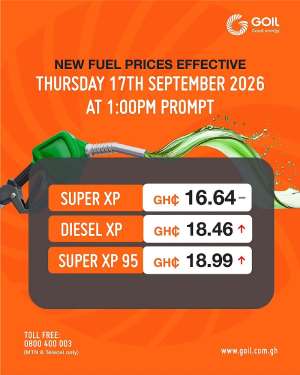
There is an insidious culture fast taking root in Ghana’s political discourse—a culture where opportunistic political actors and their partisan cheerleaders, masking as neutral commentators, treat every national event as a partisan scoreboard. When fuel prices dipped in early 2025 following shifts in the international oil market, a chorus of political operatives rushed to credit the newly sworn-in John Dramani Mahama administration. They knew, as did every discerning analyst, that global crude dynamics and Deregulation Policy mechanics governed pump prices, not instantaneous domestic policy interventions. Yet, truth was sacrificed on the altar of political opportunism.
The hypocrisy became even more absurd when partisan commentators sought to tie the performance and victories of the Senior National Team, the Black Stars, to the political goodwill of the executive branch.
Today, reality has caught up with the narrative. Global market trends have pushed petroleum prices past the rates inherited by the government, and the Black Stars have returned to a familiar pattern of erratic pitch performances. The same political communicators who leapt to claim victory for market shifts and sporting luck are now silent—or worse, manufacturing excuses. This practice of "seasonal praise-singing" is not only intellectually dishonest; it poses a fundamental danger to the health of our republic.
The Illusion of Partisan Omnipotence
Politicizing external economic shocks or national sporting achievements creates a false sense of governance. When politicians and hired partisan commentators take credit for favorable events outside their direct control, they implicitly assume responsibility for the inevitable downturns that follow.
A government does not control OPEC decisions, geopolitical conflicts, or crude oil futures. Crediting a government for a temporary, market-driven drop in fuel prices misleads the public about how the national economy functions. When prices eventually rise due to the same external forces, citizens are left with artificial frustration, believing the government intentionally "withdrew" a benefit it never truly generated in the first place.
Similarly, sports, particularly football in Ghana, serve as a rare unifying thread across our social and tribal divides. Appropriating the Black Stars' fleeting moments of glory for partisan point-scoring degrades national unity. When a national team's victory is tagged with a party label, its subsequent defeat becomes a source of partisan mockery rather than collective introspection.
The Threat to State Institutions and Neutrality
The greater danger, however, lies in how this attitude undermines our state institutions. When political commentators and partisan actors routinely politicize every sector, they erode public trust in independent bodies. This phenomenon comes with its own problems as outlined in the ensuing paragraphs.
Firstly, it erodes institutional integrity. Statutory institutions such as the National Petroleum Authority (NPA), central economic planning bodies, and national sports governing federations require public trust to function. When their operations are framed through political lenses, citizens lose confidence in their regulatory impartiality.
Secondly it breeds the "Hired Neutral" Phenomenon. Perhaps the most damaging element in modern Ghanaian discourse is the proliferation of partisan surrogates presenting themselves as objective commentators on radio and digital media. By echoing tailored party lines under the guise of neutrality, these actors pollute public discourse, making it difficult for citizens to distinguish between objective analysis and coordinated propaganda. If this phenomenon is not dealt with, a time would come when the citizens will no longer pay heed to expert opinion on important national issues.
This phenomenon can also result in policy short-termism. When every issue is viewed through the immediate news cycle, long-term policy solutions take a backseat to quick political scoring. Real structural reforms in energy security or sports administration are abandoned in favor of cosmetic fixes aimed at securing headlines.
A Call for Intellectual Honesty in the Public Square
Ghana’s political class and its network of media allies must recognize that partisan opportunism is a double-edged sword. Winning a temporary narrative victory by claiming credit for favorable external events inevitably leads to credibility bankruptcy when conditions change.
Our national development demands a shift toward intellectual honesty. Government successes should be evaluated on deliberate policy choices, legislative accomplishments, and measurable developmental metrics and not on global market fluctuations or the bounce of a football.
It is time for political communicators and self-styled neutral commentators to desist from turning every national issue into an electoral weapon. If we continue to strip our state institutions and national symbols of their non-partisan identity, we will eventually find ourselves with a public square devoid of truth, trust, or collective purpose.
The author is an Information Officer with the Information Services Department (ISD).

 EOCO could have written to Speaker Bagbin instead of seeking arrest warrant for ...
 Reduce unnecessary remands, utilise Community Service Act – Chief of Staff urges...
 Ablakwa reaffirms Ghana’s support for ICC at UN racism anniversary
 Accra needs a new transport plan, not Ayalolo contra-flow – Akim Swedru MP
 Ghana’s legal profession must not be divided by politics – Bobby Banson
 Court authorises EOCO to arrest Manhyia South MP, conduct searches
 Chief Justice Baffoe-Bonnie is Mahama's surrogate to control the judiciary — Mar...
 Court gives OSP four more weeks to serve Ofori-Atta, Akore in US
 Dangote's $16bn Kenya refinery 'new chapter' for Africa
 September 30: Cedi sells at GHS12.20 on forex market, GHS11.70 on BoG interbank


